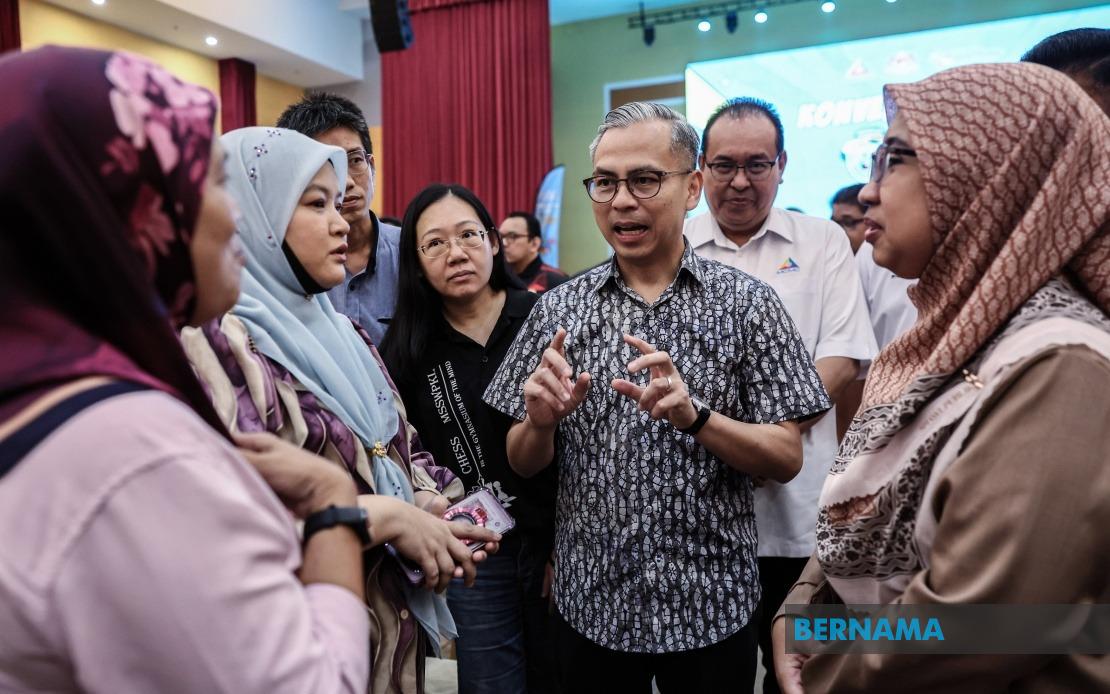
The government has moved to clarify the purpose and administration of MyKhas, rejecting any suggestion that the fund operates as a personal benefit for elected representatives. Communications Minister Datuk Seri Fahmi Fadzil stressed that the mechanism exists exclusively to serve the welfare and needs of people within parliamentary constituencies, with disbursement authority resting solely with the Prime Minister's office.
Fahmi's comments came in response to questions about how MyKhas functions within Malaysia's governance structure. He emphasised that the allocation has been formally enshrined in both the Malaysia Plan and government budget documents as a special provision under the Prime Minister's direct control. This positioning reflects a deliberate policy design to ensure that constituency-level funding flows toward public benefit rather than enriching individual politicians or their networks.
The PKR Information Chief noted that even he, as a senior minister and MADANI Government spokesman, cannot access MyKhas for personal use. This statement carries weight given his position within the administration and suggests the government is serious about preventing misuse. The fund is intended exclusively for residents and voters in the designated parliamentary constituencies, with the Prime Minister determining how and when disbursements occur based on community needs.
This clarification aligns with Prime Minister Datuk Seri Anwar Ibrahim's broader governance philosophy that public allocations belong to the people rather than to politicians. Yesterday, Anwar reiterated that government funds channeled to constituencies represent a public trust, not an exclusive right belonging to any elected official. He outlined examples of legitimate use, including infrastructure improvements such as school facilities, religious institutions, mosques, and drainage repair projects that directly benefit residents.
The timing of this clarification suggests potential concerns about how MyKhas has been perceived or utilised. By explicitly defining the fund as a Prime Minister-controlled mechanism rather than an MP discretionary allocation, the government appears intent on establishing clearer boundaries around spending authority. This distinction matters significantly in Malaysian politics, where concerns about politician misuse of public resources have periodically dominated public discourse.
For opposition-controlled constituencies, the government has established a pathway for accessing these resources. Fahmi explained that applications for assistance can be submitted through the Implementation Coordination Unit under the Prime Minister's Department. This mechanism theoretically prevents the ruling coalition from weaponising the fund against opposition MPs, though the practical effectiveness of this safeguard remains to be seen.
The MyKhas framework reflects a structural choice about how Malaysia distributes development funds at the constituency level. Rather than devolving spending decisions entirely to individual MPs—a practice that could encourage pork-barrel politics—the design concentrates authority in the Prime Minister's office. This centralised approach potentially allows for more consistent governance standards and reduces the risk of individual legislators using public money for clientelist purposes.
For Malaysian constituencies, the clarification carries practical implications. Residents seeking assistance for community projects should understand that applications funnel through the Prime Minister's Implementation Coordination Unit rather than their local MP's office. This procedural distinction may affect how quickly requests are processed and which projects receive priority funding, particularly in constituencies represented by opposition lawmakers.
The emphasis on MyKhas serving public needs rather than individual politicians reflects international best practices in governance, where clear separation exists between elected officials' personal interests and public resources. Many democracies have faced scandals when this boundary blurs, so Malaysia's attempt to formalise the distinction suggests learning from such cautionary tales.
Beyond the mechanics of fund distribution, this clarification signals the government's commitment to transparency around how constituency allocations function. By publicly stating that no MP can personally benefit from MyKhas, officials are establishing an accountability standard against which their performance can be measured. This approach invites scrutiny of actual disbursement patterns to verify whether rhetoric matches reality.
The clarification also addresses a fundamental tension in representative democracy: how to ensure that elected officials serve constituent interests without allowing them to treat public resources as personal property. Malaysia's approach through MyKhas suggests an attempt to balance providing MPs with tools to serve their constituencies while preventing those same tools from becoming vehicles for self-enrichment or political patronage.
Moving forward, the success of MyKhas will depend on consistent implementation and public confidence that the system operates fairly across constituencies regardless of political affiliation. The government's current emphasis on clarifying the fund's purpose represents an important first step, though sustained effort will be required to demonstrate that MyKhas genuinely prioritises constituent welfare over political calculations in practice.

