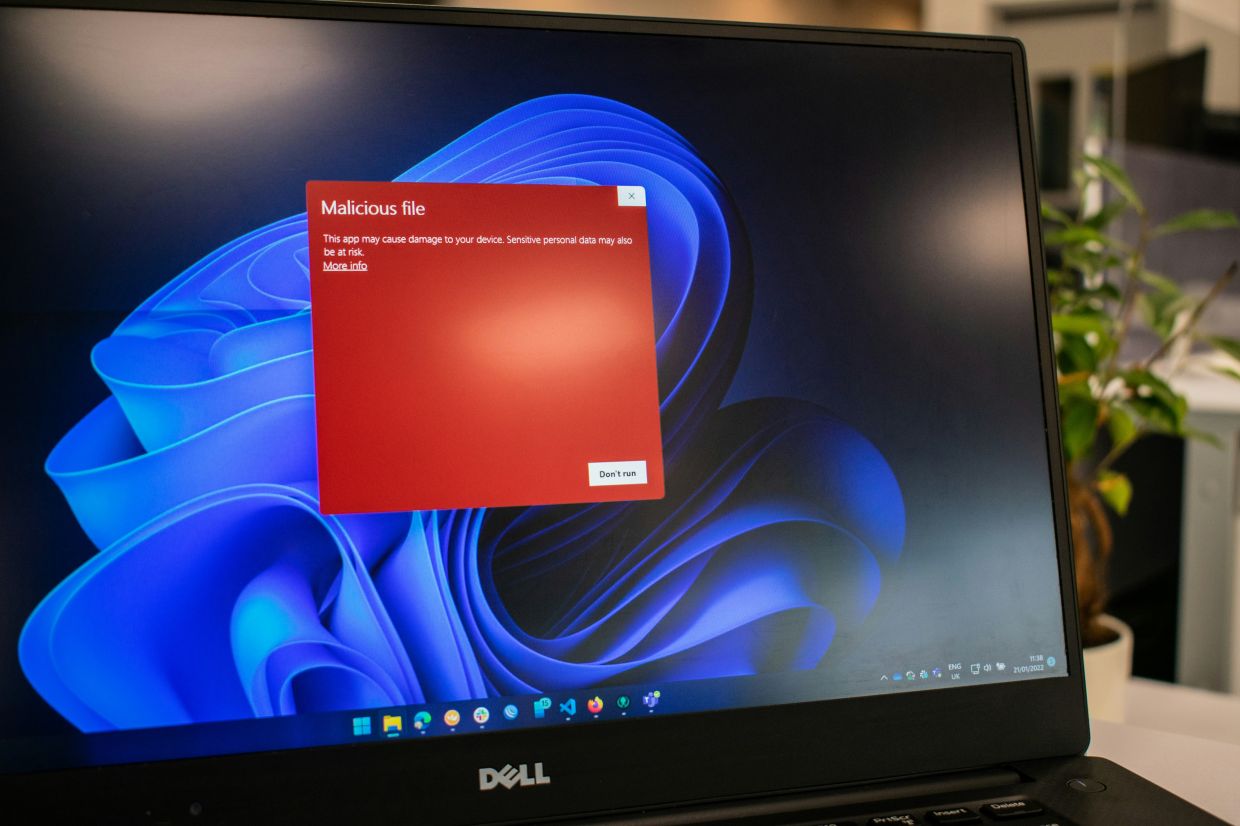
Malaysia's cybersecurity authority MyCert has issued an urgent warning about an active malware distribution campaign leveraging WhatsApp Web and Desktop platforms to compromise Windows computers across the region. The operation employs social engineering tactics to lure victims into opening seemingly legitimate business documents, which upon execution unleash destructive malware capable of granting attackers complete remote control over infected systems.
The attack vector centres on deceivingly named files that masquerade as common financial and legal paperwork. Samples identified in the wild include "Acknowledgment of Debt.vbs", "Sila semak bil anda.vbs" (Malay for "Please check your bill"), "December statement of account.vbs", and "Reconciliation.vbs". The use of Malay language filenames in particular suggests targeted efforts towards Malaysian users, exploiting familiarity with local business communication patterns. These files leverage the .vbs extension, a format for Visual Basic scripts that executes automatically when opened, yet the naming convention deliberately mimics PDF documents to bypass user suspicion.
The technical mechanics of this threat represent a sophisticated approach to system compromise. Once a user opens the malicious script file, it immediately executes a series of automated instructions that establish persistence on the infected device. The payload typically includes installation of a Remote Access Trojan (RAT), a particularly dangerous class of malware that enables attackers to maintain persistent backdoor access to the compromised system. Critically, this remote access persists even after system reboots, meaning attackers can maintain their foothold indefinitely unless the malware is specifically removed.
What distinguishes this campaign from standard ransomware or information-stealing malware is its ability to operate silently in the background while capturing sensitive user activity. The RAT disables standard Windows security prompts and notifications, allowing attackers to conduct surveillance and data theft without triggering antivirus alerts or alerting the system owner to suspicious activity. Attackers gain visibility into everything displayed on screen or entered via keyboard, including passwords, banking PINs, and one-time passwords (OTPs) used for two-factor authentication. This capability represents a particularly severe threat to online banking security and corporate account access.
The targeting of WhatsApp Web and Desktop platforms reflects evolving cybercriminal tactics in Southeast Asia. Rather than relying solely on email distribution—which corporate filters increasingly block—this campaign exploits the trusted nature of WhatsApp communication channels. The messaging platform's encryption and apparent legitimacy make users more inclined to accept and open attachments from purported contacts. For Malaysian users accustomed to receiving financial and billing information through various digital channels, the context of receiving payment statements or debt acknowledgments through WhatsApp feels sufficiently plausible to bypass critical thinking.
MyCert's response prioritises immediate defensive measures for users who may have already encountered this malware. Those who have opened or executed suspicious .vbs files should assume their devices are compromised and take emergency action to limit damage. The first critical step involves immediately disconnecting the infected device from internet connectivity to sever the attacker's remote access channel. This action cuts the command-and-control connection that allows remote manipulation, though it does not remove the malware itself. Corporate users face additional obligations to notify their organisation's IT security teams immediately, as infected corporate devices pose risks to entire network infrastructure and sensitive business data.
Password and credential management demands particular urgency in response to suspected infection. Users must change all passwords associated with accounts previously accessed on the compromised device, but this change must occur using a completely separate, clean device that was never connected to the infected system. Any password, PIN, or authentication credential entered on an infected computer should be assumed compromised and immediately cycled. This includes banking passwords, email credentials, social media access details, and any passwords used to access corporate systems or sensitive business applications.
MyCert's guidance also addresses the limitations of standard cybersecurity tools in combating this threat. Conventional antivirus scanners frequently fail to detect or remove RATs installed by this particular malware, as such trojans often employ sophisticated evasion techniques specifically designed to hide from security software. This means users cannot rely solely on running antivirus scans to restore system integrity. Instead, MyCert recommends engaging professional cybersecurity specialists with expertise in advanced malware removal and forensic analysis. These professionals possess specialised tools and techniques necessary to identify and completely remove RAT infections while also identifying what data the attacker may have accessed.
Users who have not yet opened suspicious files but have received them should refrain from replying to the sender, as any response confirms to attackers that the phone number is active and legitimate, likely resulting in intensified targeting with future malicious messages. Instead, users should report suspicious messages directly to WhatsApp's built-in reporting mechanisms and simultaneously notify MyCert through its dedicated Cyber999 reporting channel ([email protected]), providing screenshots of the message, precise timestamps, and the sender's phone number. This intelligence gathering helps MyCert track the scope and evolution of the campaign while enabling the platform to take enforcement action against attacker accounts.
The broader context of this campaign reflects the increasing sophistication of cybercriminal operations targeting Malaysia and Southeast Asia more broadly. As traditional attack vectors become better defended, threat actors adapt by leveraging trusted communication platforms and exploiting cultural and linguistic familiarity to increase engagement rates. The use of Malay language filenames and references to local financial practices demonstrates reconnaissance and customisation effort, suggesting this operation targets Malaysia specifically rather than operating as a generic, region-wide campaign. For Malaysian businesses and individuals, this underscores the necessity of maintaining heightened vigilance around unexpected digital communications, particularly those requesting immediate action or containing attachments, regardless of apparent legitimacy or familiarity of the communication channel.

