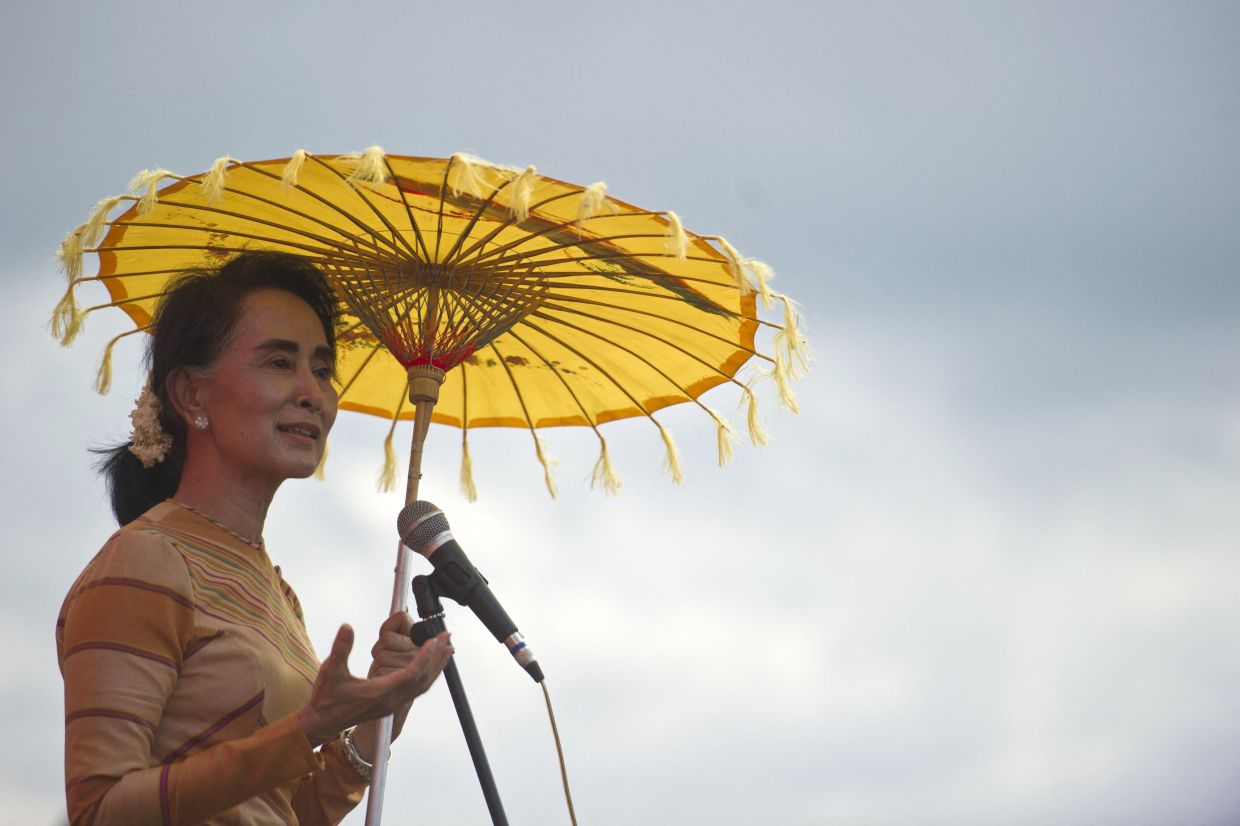
As Aung San Suu Kyi marked her 81st birthday recently, renewed calls for her release or at least diplomatic access to her gained momentum. Yet Myanmar's military regime has systematically rejected these overtures, including the latest plea from fellow Asean member states seeking to meet the imprisoned former leader who has languished in detention since the 2021 military coup. This pattern of refusal speaks volumes about how the junta perceives its place within the regional architecture and the leverage it believes it possesses.
The most recent rejection came at the end of June, when regime spokesperson Khaing Khaing Soe flatly stated that Aung San Suu Kyi could not receive international visitors because she was a convicted prisoner serving out sentences handed down by military courts. This represented the second time that Philippine Foreign Secretary Maria Theresa Lazaro, acting in her capacity as Asean chair, was denied the opportunity to see the deposed Myanmar leader during official visits to Naypyitaw. The first attempt had occurred in January when Lazaro met with regime leader Min Aung Hlaing but was prevented from accessing Suu Kyi.
What makes the regime's position particularly revealing is its selective application of this restriction. While ordinary Asean delegations and envoys have been systematically blocked, former Thai foreign minister Don Pramudwinai was permitted to visit Suu Kyi in July 2023, and Chinese Foreign Minister Wang Yi reportedly met her during an April visit this year. This bifurcation of access tells a geopolitical story that extends far beyond Myanmar's borders. Analysts at institutions like the Lowy Institute note that the junta's willingness to grant audiences to Bangkok and Beijing while snubbing Asean capitals demonstrates which partnerships Min Aung Hlaing genuinely values and which he regards as inconsequential.
The Myanmar regime's behaviour reflects a calculated assessment that Asean lacks the enforcement mechanisms to compel compliance with its stated objectives. According to observers, the junta leadership operates from the conviction that the regional bloc needs Myanmar far more than Myanmar requires Asean's blessing or cooperation. This asymmetry of dependence—or rather, the regime's perception of it—fundamentally undermines Asean's ability to project influence over Myanmar's internal conduct. The grouping's emphasis on non-interference and consensus decision-making, while philosophically coherent within the Southeast Asian context, leaves it poorly equipped to pressure a determined and defiant member state.
The restrictions placed on who may visit Aung San Suu Kyi serve a dual purpose for the junta. Practically speaking, keeping her isolated prevents international observers from verifying her condition, gathering information about her treatment, or allowing her to communicate grievances to the outside world. Following reports in April that she was placed under house arrest, independent sources have had no direct visual or verbal confirmation of her wellbeing. Diplomatically, however, these access controls function as a statement of sovereignty and dominance. By dictating precisely which foreign representatives may see her and when, Min Aung Hlaing signals that Myanmar's internal political settlement remains entirely within his purview, exempt from external scrutiny or conditional requirements.
This approach directly challenges one of Asean's foundational commitments to Myanmar's crisis. The Five-Point Consensus adopted by the grouping following the coup explicitly called for the junta to grant the Asean special envoy access to all relevant parties, which logically should encompass meetings with Suu Kyi given her status as a major political figure. Min Aung Hlaing's refusal to permit such meetings represents not merely a minor obstruction but a fundamental rejection of the consensus framework itself. The regime acknowledges Asean's desire for recognition and legitimacy on the world stage, but it steadfastly refuses to accept the scrutiny and conditionality that would accompany genuine compliance with regional demands.
Suu Kyi's imprisonment underscores the stakes involved in this diplomatic standoff. Originally sentenced to 33 years on charges widely dismissed by international observers as politically motivated—including violations of the Official Secrets Act and corruption allegations—she currently faces approximately 18 years remaining after several rounds of sentence reductions by regime courts. Her detention has allowed Min Aung Hlaing to neutralise Myanmar's most formidable political rival while simultaneously staging a carefully controlled election earlier this year that virtually all international observers characterised as a sham. The junta leader himself transitioned from military chief to president in April, effectively consolidating power while maintaining the fiction of constitutional governance.
The broader humanitarian toll of the regime's intransigence cannot be overlooked. Since the coup, independent conflict monitors estimate that at least 100,000 people have perished in the violence that has consumed Myanmar, a figure that underscores the stakes of Asean's failed diplomatic engagement. The Five-Point Consensus was designed to arrest this spiral by calling for a cessation of hostilities, expanded humanitarian access, and dialogue between the regime and opposition elements. Yet Min Aung Hlaing has largely disregarded these prescriptions, continuing to prosecute military operations against armed resistance movements and civilian populations alike.
Observers suggest that the junta's refusal to grant Asean representatives access to Suu Kyi represents a deliberate assertion that Myanmar recognises Asean's authority only insofar as that authority respects its complete autonomy over internal matters. As independent Myanmar historian Phyo Win Latt observes, the regime desires Asean's diplomatic recognition and legitimacy but rejects any suggestion that the regional bloc possesses supervisory capacity over Myanmar's political arrangements. From Naypyitaw's perspective, Asean wants the benefits of Myanmar's membership without bearing the costs of effective intervention—a position the junta views as fundamentally hypocritical, particularly given Asean's historical reluctance to intervene in disputes between other member states, such as the unresolved Thailand-Cambodia territorial disagreements.
For Suu Kyi's son Kim Aris, the regime's continued refusal to permit visits or communication represents both a personal tragedy and a political statement. Now 48 years old, Aris has been denied contact with his mother for five years, a restriction the junta justifies through reference to her prisoner status. Yet this explanation rings hollow to observers who note that other foreign officials have managed to visit her, suggesting that the restrictions are selective rather than absolute. Aris characterises the isolation as raising profound questions about what the regime believes it must conceal, a concern that carries weight given the junta's historical opacity regarding conditions of detention and treatment of high-profile prisoners.
Asean itself has attempted to maintain pressure through symbolic measures, maintaining a ban on Min Aung Hlaing's attendance at leaders' summits until the regime fulfils its commitments under the Five-Point Consensus. Yet this punishment—if it can be called that—appears to have little practical impact on the junta's calculations. The regime evidently views association with Asean as less valuable than complete autonomy over its political arrangements, suggesting that traditional carrots and sticks available to the regional organisation simply lack sufficient weight to alter Min Aung Hlaing's behaviour.
The situation reveals a deeper structural crisis within Asean's institutional framework. The bloc's commitment to non-interference and consensus decision-making produces a framework that struggles to respond meaningfully when member states engage in conduct that most regional neighbours find abhorrent. Myanmar's treatment of its civilian population, the apparent orchestration of Suu Kyi's imprisonment, and the rejection of diplomatic overtures designed to de-escalate violence all fall technically within Myanmar's sovereignty, yet they occur against a backdrop of humanitarian catastrophe that demands collective action. The regime's messaging, in effect, declares that Asean possesses no legitimate authority to demand accountability or to prescribe conditions for participation in regional institutions.
Looking forward, the standoff over access to Aung San Suu Kyi serves as a microcosm of Asean's broader predicament in Myanmar. The grouping lacks both the coercive capacity and the internal unity necessary to compel compliance from a determined junta. Meanwhile, the selective access granted to Thai and Chinese officials demonstrates that Myanmar's strategic orientation increasingly tilts away from Southeast Asian peers toward external powers with greater capacity to offer military support, economic investment, and political cover. For Malaysian policymakers and other regional observers, the situation underscores the fragility of Asean's consensus-based model when confronted with a member state willing to defy collective opinion and institutional norms.

