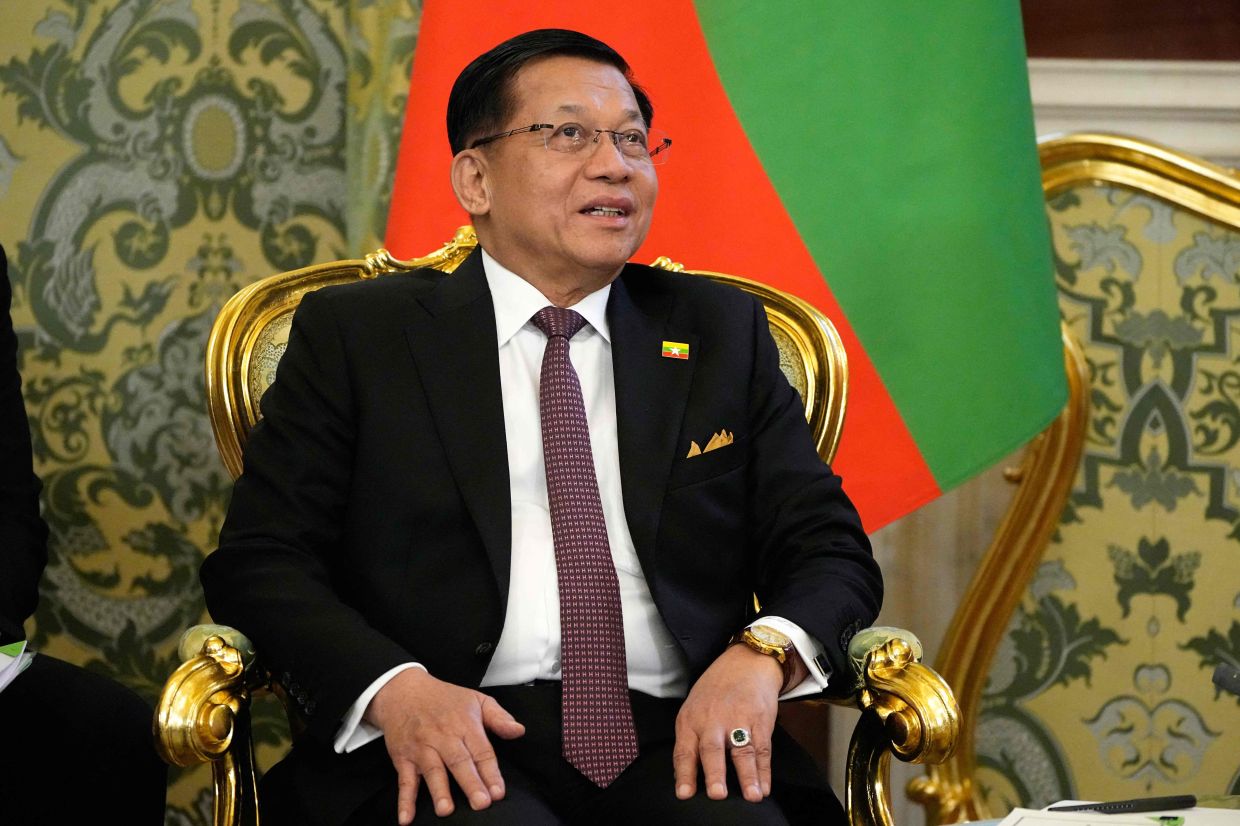
Myanmar's leader Min Aung Hlaing is set to arrive in Cambodia in early September for an official visit aimed at deepening bilateral engagement between the two Southeast Asian neighbours. The Cambodian Senate has confirmed the trip, with palace officials and festival organisers already scouting appropriate venues for the Myanmar military leader's reception. Spokespeople from the Cambodian government have framed the visit as an opportunity to reinforce longstanding friendship and pursue mutually advantageous cooperation across multiple sectors.
The Cambodia visit represents the latest stop on an increasingly ambitious international tour undertaken by Min Aung Hlaing since his April ascension to the Myanmar presidency. Within months of taking office through an election process widely dismissed as lacking democratic legitimacy, he has already conducted state visits to India, China, Laos, Thailand and Russia. Each journey has attracted the careful attention of international observers who interpret these diplomatic forays as part of a deliberate strategy to rehabilitate Myanmar's standing in the global community and consolidate Min Aung Hlaing's authority domestically and internationally.
The timing and scope of these travels have not gone unnoticed by critics. Human rights organisations, democracy advocates and civil society groups view the diplomatic campaign with considerable scepticism, pointing to the extensive catalogue of alleged abuses that have accumulated under Min Aung Hlaing's administration. These violations include the 2021 military coup that deposed democratically elected leader Aung San Suu Kyi and led to her prolonged imprisonment, as well as widespread arbitrary detention of thousands of activists, dissidents and ordinary citizens demanding restoration of civilian governance. From this perspective, the foreign visits serve as a calculated effort to normalise relations with a government whose domestic record contradicts the very values of rights and democracy that many nations purport to champion.
Cambodia's role in hosting Min Aung Hlaing carries particular symbolic weight given the kingdom's history of diplomatic engagement with Myanmar during regional crises. When Cambodia held the rotating Asean chairmanship in 2022, Phnom Penh made concerted attempts to mediate the escalating Myanmar situation and facilitate dialogue among the military leadership and opposition elements. Kin Phea, president of Cambodia's International Relations Institute, has suggested that the upcoming visit reflects mutual interest in strengthening the bilateral relationship, while also acknowledging the broader pattern of legitimacy-building that characterises Min Aung Hlaing's travels. Phea noted that Cambodia could potentially share insights drawn from its own complex historical experiences with national reconciliation, peace-building initiatives and efforts to forge unity following periods of profound division.
However, analysts stress important limitations to what individual bilateral visits can accomplish within the framework of broader Asean politics. The ten-member regional bloc has maintained a measured but firm stance toward Myanmar's political crisis, anchored in the five-point consensus adopted in 2021. This agreement establishes conditions for Myanmar's full participation in Asean summits and collective decision-making, including cessation of violence, commencement of inclusive political dialogue and respect for humanitarian principles. Kin Phea emphasised that decisions regarding formal recognition of Min Aung Hlaing's government and Myanmar's return to Asean leadership forums cannot be determined by individual states, regardless of whether they choose to host state visits or extend ceremonial welcomes to the Myanmar leader.
The distinction between bilateral hospitality and multilateral legitimacy remains crucial for understanding the actual impact of Min Aung Hlaing's diplomatic calendar. While countries such as Thailand, Russia and China have accepted his visits and engaged in official ceremonies, this does not translate into broader international consensus or Asean-wide endorsement. The regional bloc's unity on Myanmar has been tested but not fractured, maintaining that implementation of the five-point consensus—rather than individual diplomatic gestures—must guide Myanmar's path toward rehabilitation within Asean structures. Cambodia's willingness to host Min Aung Hlaing demonstrates the diversity of approaches member states adopt, but does not signal a shift in collective Asean policy regarding Myanmar's governance legitimacy.
For Malaysia and other Southeast Asian nations monitoring these developments, the Cambodia visit illustrates the complex balancing act that smaller states navigate between bilateral relations and multilateral principles. Each interaction with Min Aung Hlaing's government generates tension between pragmatic engagement and principled concern about democratic backsliding and human rights deterioration in Myanmar. Regional governments must weigh the benefits of maintaining diplomatic channels against the risk of appearing to condone the military coup and associated violations. The Cambodia precedent suggests that bilateral visits do not necessarily indicate broader policy shifts, allowing states to pursue relations without committing to formal legitimacy endorsements.
The deeper question concerning Myanmar's future involves whether diplomatic rehabilitation can proceed independently of substantive political change within the country itself. Kin Phea's observations on this matter prove particularly insightful: Cambodia's experience with reconciliation and national healing demonstrates that external diplomatic engagement, while potentially supportive, cannot substitute for genuine internal commitment to political reform and human rights protection. Myanmar's transformation will ultimately depend on decisions made within Yangon, not on ceremonial visits to regional capitals. Until the military leadership demonstrates concrete movement toward the five-point consensus—ending violence, opening genuine dialogue with opposition forces and marginalised communities, and respecting humanitarian principles—even a full calendar of international visits cannot repair Myanmar's standing within Asean or secure broader international legitimacy.

