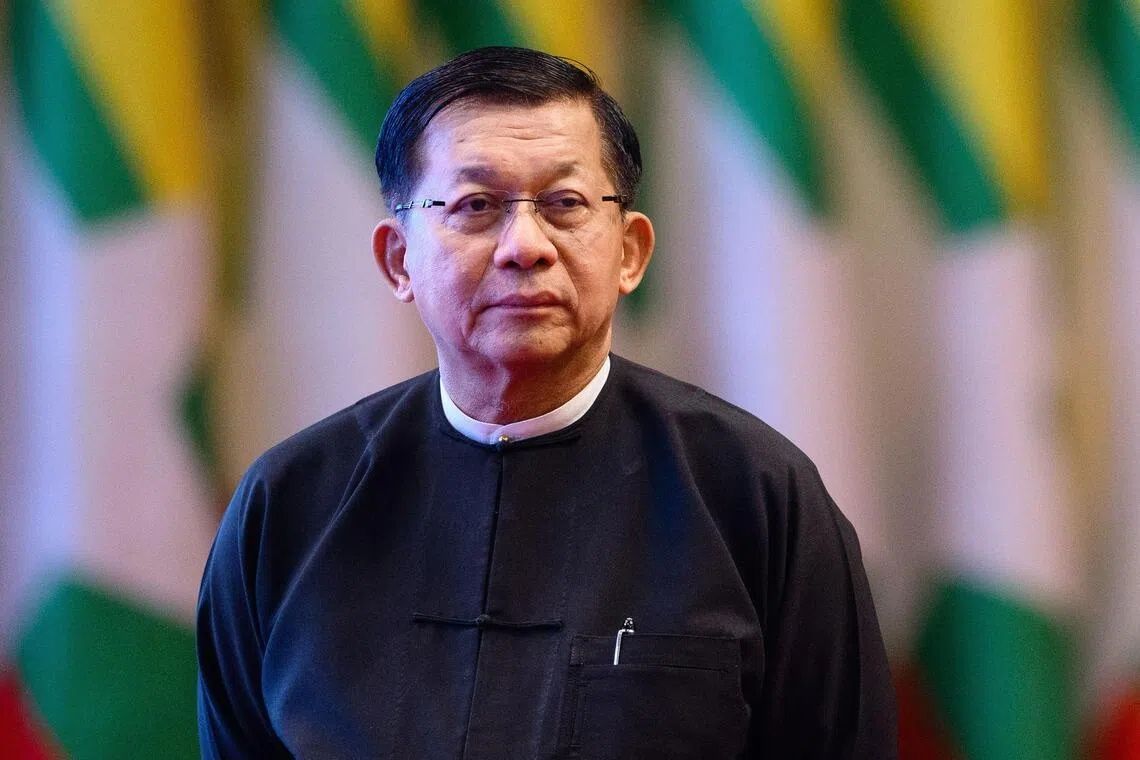
Myanmar's former military strongman Min Aung Hlaing arrived in Bangkok this week to begin what observers regard as a calculated campaign to restore his country's standing in Southeast Asia. The visit represents a significant diplomatic moment for a nation that has remained in turmoil since the 2021 coup that toppled democratically elected leader Aung San Suu Kyi and plunged Myanmar into prolonged internal conflict. Min Aung Hlaing's transition from military commander to civilian president earlier this year has opened the door to renewed engagement with regional neighbours, particularly Thailand, which is spearheading efforts to bring Myanmar back into the diplomatic mainstream.
The humanitarian toll of Myanmar's internal struggle since the putsch has been devastating, with credible estimates suggesting more than 100,000 deaths across all combatants and civilian populations. The country remains fractured between the military-backed government, led nominally by Min Aung Hlaing after elections in April that international observers widely dismissed as orchestrated, and numerous armed resistance groups operating across the countryside. This ongoing instability has created serious complications for neighbouring states, making the calculus of regional engagement with Myanmar's leadership a delicate balancing act for Asean members.
Thailand's willingness to host Min Aung Hlaing reflects Bangkok's pragmatic approach to a destabilised neighbour. The Thai government faces concrete security challenges emanating from Myanmar's disorder, including the spillover of armed conflict across the shared border, the presence of millions of Myanmar refugees within Thai territory, and criminal networks operating from Myanmar's borderlands. These pressures have pushed Thailand to pursue normalisation of relations rather than continued isolation, believing that dialogue may serve Thai national interests better than an indefinite freeze on official ties.
Min Aung Hlaing's diplomatic itinerary since assuming the civilian presidency reveals a carefully orchestrated campaign to secure legitimacy on the international stage. His recent visits to India and China, followed by travel to Laos, demonstrate a strategy of engaging key regional powers and fellow Asean members before attempting fuller reintegration into the bloc. The Thailand visit represents an escalation of these efforts, with official ceremonies, high-level bilateral meetings with Prime Minister Anutin Charnvirakul, and economic initiatives scheduled. The planned memorandum of understanding on labour cooperation signals an attempt to frame normalised relations around practical cooperation rather than political rehabilitation.
Asean's stance toward Myanmar leadership has remained fraught since the coup, with member states excluding Myanmar's junta representatives from senior-level summits and forums. However, this unified posture has begun showing signs of strain as some members, particularly Thailand, pursue bilateral engagement tracks. The recent attendance of Myanmar's foreign minister at an informal regional meeting in Thailand suggests the beginning of a possible thaw. Thailand's diplomatic initiative appears designed to gradually reintegrate Myanmar's leadership into regional structures, despite the absence of any genuine commitment from the military-backed government to Asean's consensual framework for resolving the conflict.
The so-called five-point consensus, formulated by Asean to address Myanmar's crisis, represents the bloc's agreed mechanism for encouraging dialogue and reducing hostilities. The framework emphasises inclusive negotiations involving all relevant stakeholders and pressure for ceasefire agreements. However, Min Aung Hlaing's government has shown little interest in implementing these principles, maintaining instead an increasingly hardline military posture. This contradiction between seeking Asean reintegration while rejecting the bloc's core conflict-resolution mechanism presents a fundamental challenge to regional diplomacy. Myanmar's leadership appears content to accept the trappings of international legitimacy while resisting any mechanism that might constrain its military prerogatives or require genuine political compromise.
The situation surrounding Aung San Suu Kyi adds another dimension to the diplomatic equation. The former civilian leader remains under house arrest despite minimal international pressure for her release. The recent permission granted to Suu Kyi to meet with an International Committee of the Red Cross representative marked her first documented interaction with a foreign official since her detention, suggesting possible marginal flexibility in the military government's approach. Thai Foreign Minister Sihasak Phuangketkeow's welcoming statement regarding this meeting hints that international engagement might incentivise incremental humanitarian improvements, though sceptics question whether such gestures reflect genuine policy shifts or merely tactical concessions.
Thailand's agenda extends beyond ceremonial normalisation to practical security concerns. Bangkok explicitly plans to raise cybercrime networks during Min Aung Hlaing's visit, recognising that Myanmar's borderlands have become havens for scam operations targeting Southeast Asian populations. The drug trafficking challenges emanating from Myanmar remain equally pressing, with the country's lawless regions serving as production and transit zones for narcotics destined for regional markets. By coupling diplomatic engagement with pressure on concrete transnational crime issues, Thailand seeks to make normalisation conditional on Myanmar's cooperation on matters directly affecting Thai security and society.
The international response to Min Aung Hlaing's rehabilitation efforts has been decidedly mixed. Western nations have maintained sanctions against Myanmar's leadership, and the International Criminal Court has issued arrest warrants for crimes against humanity. Civil society organisations and human rights advocates have condemned Thailand's diplomatic opening as providing undeserved legitimacy to a leader they regard as culpable for mass atrocities. The staging of elaborate state ceremonies and ceremonial welcomes, including honour guards at Government House, lends Min Aung Hlaing's government an appearance of international normalcy that rights groups argue is fundamentally at odds with his record and ongoing human rights concerns.
For Malaysia and other Southeast Asian nations observing this diplomatic trajectory, Thailand's approach presents both precedent and caution. The region faces recurring tensions between pragmatic engagement with unstable neighbours and principled opposition to authoritarian consolidation and human rights violations. Myanmar's case demonstrates how security challenges and refugee flows can pressure democracies toward accepting unsatisfactory diplomatic compromises. Yet accepting the legitimacy of regimes that refuse to acknowledge peaceful conflict resolution pathways may entrench instability rather than alleviate it, potentially requiring indefinite management of border crises and refugee populations.
The broader implications of Min Aung Hlaing's Bangkok visit extend to questions about Asean's collective purpose and the bloc's capacity to enforce its own standards. A regional organisation that permits one member state's military leadership to rejoin senior forums while refusing to implement agreed conflict-resolution mechanisms risks irrelevance or becoming a mere ceremonial association of convenience. The precedent set by Thailand's unilateral engagement strategy could encourage other members to pursue bilateral normalisation independent of bloc consensus, further fragmenting Asean's already tenuous unity on Myanmar policy and potentially establishing a template for future responses to authoritarian consolidation within member states.

