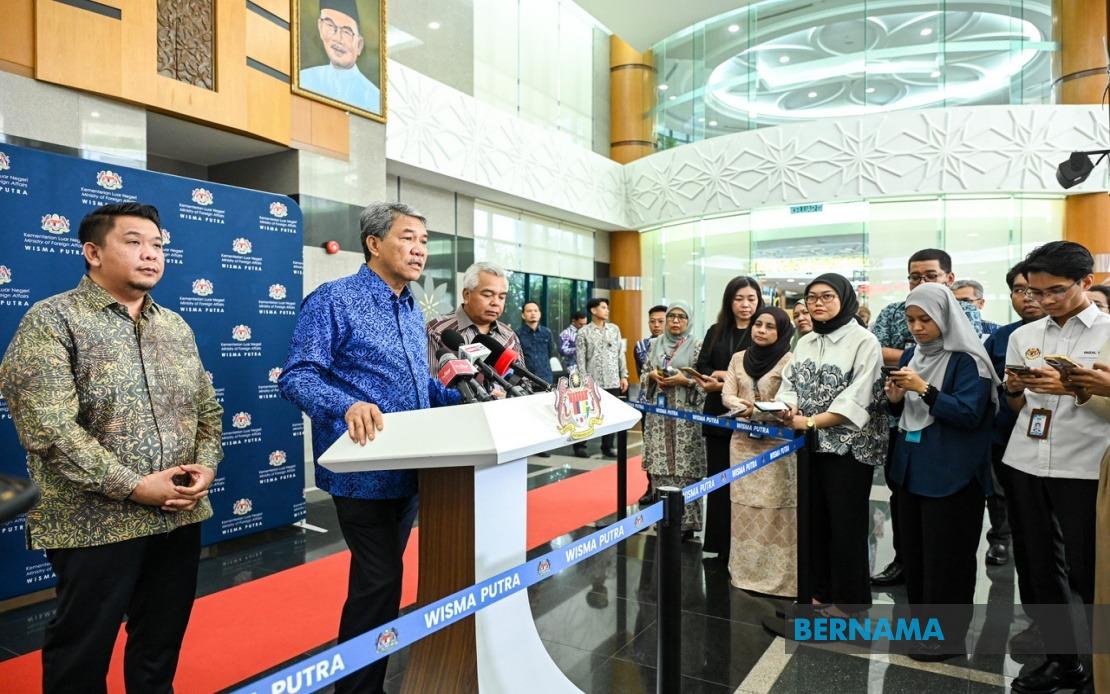
Myanmar has signalled its readiness to facilitate the return of 5,000 refugees through maritime transport, according to Malaysia's Foreign Minister Datuk Seri Mohamad Hasan, who disclosed the development following high-level diplomatic engagement with Yangon's new Foreign Minister Tin Maung Swe. The announcement comes amid Malaysia's ongoing efforts to manage one of the region's most pressing humanitarian challenges, where the country hosts substantial displaced populations fleeing Myanmar's protracted instability.
While Yangon's expressed willingness to coordinate repatriation efforts represents a notable diplomatic step forward, Mohamad Hasan underscored that significant practical and humanitarian hurdles remain unresolved. During remarks made at the 59th ASEAN Day celebration in Putrajaya, the Malaysian foreign minister articulated serious reservations about the proposed maritime operation, questioning whether such transport arrangements would adequately protect vulnerable refugees during passage and upon arrival in their home country. These concerns reflect Malaysia's cautious approach to repatriation schemes that have historically proven complicated and fraught with implementation challenges across Southeast Asia.
The identification process for the targeted 5,000 refugees has been substantially completed by Malaysian authorities, establishing a foundational database for any future repatriation initiative. However, despite this administrative groundwork, both countries have deliberately refrained from establishing concrete timelines for the operation, suggesting that substantive negotiations regarding logistics, security protocols, and post-arrival arrangements remain in preliminary stages. This measured pace reflects the complexity of coordinating large-scale movements of displaced persons across national borders, particularly given Myanmar's volatile security environment and limited capacity to absorb returning populations.
Mohamad Hasan's remarks fundamentally reframed the refugee discourse beyond the frequently cited Rohingya narrative, drawing regional attention to the heterogeneous composition of Myanmar's displaced communities. Ethnic minorities including the Chin and Karen populations have experienced severe displacement owing to internal conflict and persecution, yet their circumstances often receive diminished international and regional attention compared to the Rohingya crisis. This broader characterisation aligns with ASEAN's emerging recognition that Myanmar's refugee phenomenon encompasses multiple ethno-religious groups affected by distinct drivers of displacement, requiring differentiated policy responses rather than monolithic solutions.
The multilateral dimension of the repatriation challenge figured prominently in Mohamad Hasan's discourse, with Malaysia advocating for collective ASEAN engagement rather than bilateral arrangements between individual member states and Myanmar. This positioning reflects Kuala Lumpur's strategic preference for burden-sharing mechanisms within the regional bloc, particularly given the disproportionate burden Malaysia has absorbed in hosting refugee populations. Such an approach theoretically distributes hosting responsibilities more equitably across ASEAN members while strengthening the bloc's negotiating position vis-à-vis Myanmar's transitional military administration.
Central to Malaysia's articulated position on Myanmar remains the Five-Point Consensus, the diplomatic framework established by ASEAN leaders to guide engagement with Myanmar following the 2021 military coup. Mohamad Hasan reiterated that this mechanism must remain the foundational reference point for all regional initiatives addressing Myanmar's multifaceted crisis, including displacement and humanitarian dimensions. The minister's emphatic reaffirmation reflects persistent frustration within ASEAN capitals regarding Myanmar's inconsistent implementation of previously agreed commitments and the perceived need to maintain diplomatic leverage through adherence to established frameworks rather than accommodating Naypyidaw's position shifts.
The minister further asserted that any substantive modifications to the Five-Point Consensus framework would necessitate comprehensive renegotiation among all ASEAN member states, effectively constraining Myanmar's capacity to unilaterally alter the terms of regional engagement. This institutional rigidity, while providing predictability and collective discipline, simultaneously creates friction within ASEAN's consensus-based decision-making architecture, particularly as individual member states' strategic interests diverge regarding optimal approaches to Myanmar engagement. The careful preservation of the Five-Point Consensus thus serves simultaneously as both a tool for regional solidarity and a potential source of internal ASEAN tensions.
Malaysia's diplomatic positioning on the refugee repatriation initiative must be contextualised within the country's extraordinary hosting burden, with Malaysian territories accommodating over 180,000 registered refugees and asylum seekers, predominantly from Myanmar. This demographic reality renders Malaysian policymakers acutely sensitive to both the humanitarian imperatives driving refugee protection and the substantial economic, social, and administrative costs associated with prolonged displacement. Consequently, Kuala Lumpur seeks outcomes that simultaneously advance repatriation while safeguarding returnee welfare, positioning Malaysia as a voice advocating for refugee-centric rather than merely government-centric solutions.
The emphasis on safety considerations reflects accumulated regional experience with repatriation operations that have occasionally resulted in returnees facing persecution, arbitrary detention, or severe livelihood disruption upon arrival. Historical precedent across Southeast Asia demonstrates that inadequately planned or monitored repatriation initiatives can perpetuate displacement cycles and undermine refugee trust in both Myanmar's assurances and ASEAN's protective role. Therefore, Malaysia's insistence on robust safety mechanisms represents not merely diplomatic caution but a evidence-based acknowledgment of documented risks inherent in large-scale population movements involving fragile post-conflict settings.
The repatriation proposal's maritime dimension introduces additional technical and humanitarian complexities, as sea transport of vulnerable populations requires specialised infrastructure, medical capabilities, and experienced personnel. Myanmar's naval capacity and maritime coordination mechanisms remain underdeveloped relative to the scale of the proposed operation, raising legitimate questions about whether contemporary Yangon possesses adequate resources for managing such an undertaking. Alternatively, international or regional maritime support would be required, introducing additional coordination layers and potential cost-sharing negotiations among donor states.
Looking forward, the trajectory of repatriation negotiations will substantially depend on Myanmar's demonstrated commitment to implementing the Five-Point Consensus and creating conditions sufficiently stable and secure to facilitate sustainable returns. Malaysia's diplomatic messaging thus functions simultaneously as encouragement for Yangon's constructive engagement and as signalling to the international community that Kuala Lumpur will not compromise refugee protection standards for mere repatriation headline figures. This calibrated approach reflects Malaysia's recognition that premature or insufficiently safeguarded returns would generate humanitarian catastrophe while simultaneously undermining ASEAN's credibility as a responsible regional steward of human security concerns.

