Myanmar's law enforcement agencies have successfully disrupted what appears to be a coordinated drug trafficking network operating across central Myanmar, with the Central Committee for Drug Abuse Control announcing the seizure of substantial quantities of both heroin and synthetic stimulants in back-to-back operations during late July. The dramatic crackdowns highlight the persistent challenge Myanmar faces as a transit and consumption hub for illicit narcotics flowing through Southeast Asia's complex supply networks.
The first major bust occurred in Amarapura township within Mandalay region, where anti-narcotics police acting on intelligence conducted targeted searches of four motorcycles on Tuesday, July 28. Officers recovered 17.6 kilogrammes of heroin—a quantity substantial enough to supply regional markets for extended periods—alongside apprehending four individuals suspected of involvement in the trafficking operation. The use of motorcycles as transport vessels is typical of distribution networks that exploit Myanmar's porous internal borders and minimal checkpoint infrastructure, particularly in regions where security forces maintain limited presence.
Just three days later, police in Lewe township of Naypyitaw Union Territory executed a second operation that proved equally consequential. On July 23, authorities seized one million stimulant tablets, a haul suggesting industrial-scale production or distribution rather than small-time trafficking. The scale of the seizure indicates sophisticated supply chains capable of moving vast quantities of synthetic drugs—likely methamphetamine variants popular throughout Southeast Asia—to end markets across the region. Five individuals were detained in connection with this operation.
The timing and geographic distribution of these seizures reveal operational patterns that Malaysian narcotics officials should closely monitor. Mandalay, Myanmar's second-largest city and primary commercial hub, serves as a crucial junction for drugs destined for Thailand, Laos, and eventually Malaysia. Naypyitaw, the capital, meanwhile represents an administrative nerve centre where traffickers often maintain distribution infrastructure protected by corrupted officials or tacit arrangements with local authorities.
All nine suspects arrested across both operations have been formally charged under Myanmar's Narcotic Drugs and Psychotropic Substances Law, the framework governing drug-related prosecutions in the country. However, the effectiveness of Myanmar's judicial system in securing convictions remains inconsistent, with widespread corruption, underfunded prosecution services, and competing political priorities often undermining enforcement efforts. These legal proceedings will likely unfold over months or years, during which international cooperation mechanisms—including those involving Malaysian law enforcement—become critical to preventing trafficking networks from regrouping.
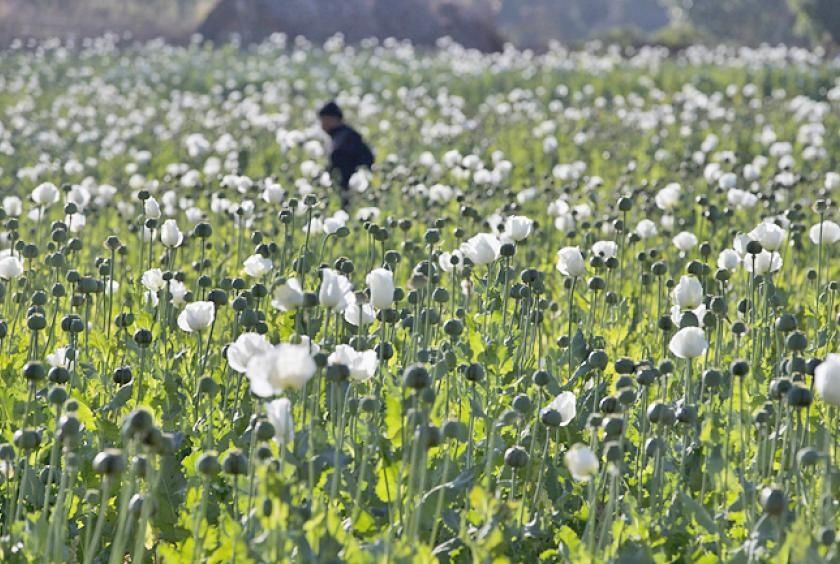
The seizure pattern is particularly significant for Malaysia, which confronts a persistent supply problem originating from Myanmar's drug manufacturing zones. The Golden Triangle region spanning Myanmar, Laos, and Thailand remains the world's second-largest opium-producing area, while methamphetamine production facilities have proliferated in Myanmar's borderlands, particularly in Shan State. Heroin refined from Burmese opium and stimulants manufactured in clandestine labs regularly transit through Thailand before reaching Malaysian ports, airports, and overland checkpoints. The 17.6 kilogrammes confiscated in Amarapura represents material that, if unintercepted, would have likely augmented supplies reaching Malaysian drug markets where demand remains stubbornly high.
Myanmar's Central Committee for Drug Abuse Control has intensified public announcements regarding seizures, suggesting either genuine operational improvements or enhanced publicity efforts aimed at demonstrating commitment to international counternarcotics standards. The transparency itself is noteworthy given Myanmar's recent political upheaval following the February 2021 military coup, which fragmented state institutions and created governance vacuums that traffickers exploited. Whether these seizures reflect genuine capacity-building or represent isolated successes amid broader systemic deterioration remains an open question for Southeast Asian policymakers assessing the region's drug situation.
The stimulant tablet seizure deserves particular analytical attention. One million tablets constitutes commercial-scale distribution infrastructure, suggesting not merely street-level trafficking but wholesale operations serving multiple downstream markets. Stimulants extracted from Myanmar flow into Thailand, Cambodia, and Malaysia through various routes, with Kuala Lumpur and Penang serving as important distribution and consumption centres. The seizure indicates that Myanmar-based networks maintain capacity to produce or accumulate enormous quantities despite international pressure, sanctions, and domestic instability.
For Malaysian readers and policymakers, these developments underscore both the persistent threat emanating from Myanmar's drug production zones and the relative effectiveness of coordinated police operations when intelligence proves reliable. The tip-off that enabled the Amarapura seizure exemplifies how source-country enforcement, when functioning adequately, can meaningfully disrupt supply chains. However, sustained progress requires institutional strengthening in Myanmar—a goal complicated by the country's political fragmentation and the military junta's competing priorities surrounding regime consolidation and internal security.
Regional cooperation mechanisms, including information-sharing arrangements between ASEAN nations' narcotics agencies, will prove increasingly essential as drug trafficking networks adapt to enforcement pressures. Malaysia's Royal Malaysian Police and the Malaysian Anti-Corruption Commission maintain intelligence relationships with counterpart agencies across Southeast Asia, and these seizures provide valuable data regarding trafficking volumes, preferred commodities, and transportation methods. The concentration of operations in Mandalay and Naypyitaw suggests organised networks rather than opportunistic smugglers, a distinction with implications for how Malaysian enforcement resources should be deployed at borders and within domestic markets.
Going forward, sustained pressure on Myanmar's production and trafficking infrastructure requires coordinated international effort extending beyond Myanmar's borders. Thai and Laotian authorities must maintain vigilant checkpoint operations along the northern approaches to Malaysia, while Malaysian customs and police services require adequate resources to intercept drugs at maritime and overland entry points. The seizure of 17.6 kilogrammes of heroin and one million stimulant tablets represents progress, but the larger supply chain remains vast, profitable, and capable of absorbing periodic losses as routine operational costs.

