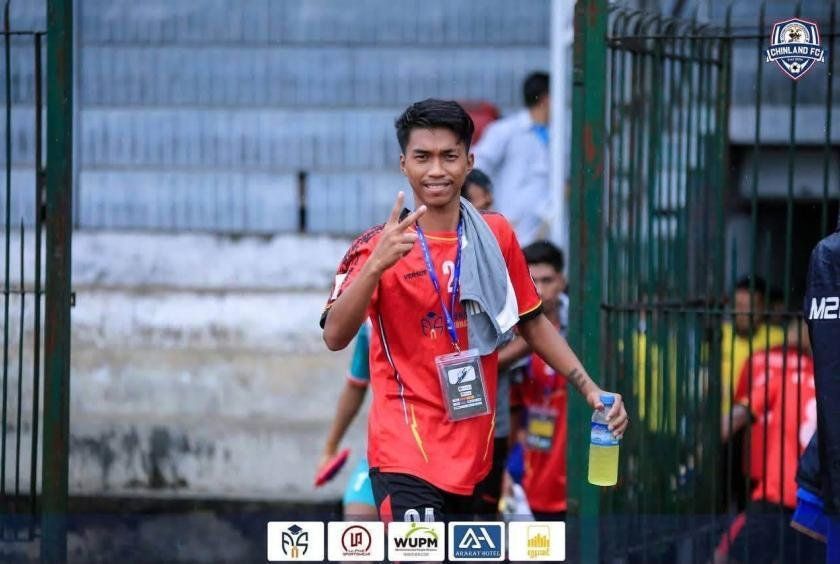
Chinland FC has confirmed the safe recovery of midfielder Pa Lung, ending a week-long search that prompted an official missing-person report and a public appeal for assistance across Myanmar. The club issued a statement on the evening of August 29 announcing that the player had been located and had returned to rejoin the team after an unexpected absence that had triggered widespread concern both within the football community and among supporters who feared the worst.
The circumstances surrounding Pa Lung's disappearance reveal a personal crisis that unfolded without warning. According to Chinland FC's account, the player made the urgent decision to return to his hometown to be with his mother, who was facing a serious health emergency that demanded his immediate presence. The departure occurred without the opportunity for formal notification to club officials, leaving the organisation in the dark about his whereabouts and wellbeing during those critical initial days.
Communication barriers compounded the difficulty of locating Pa Lung during his journey away from Yangon. His mobile phone battery depleted during transit, severing the primary lifeline through which he might have contacted the club or informed them of his status. Beyond the technical failure of his device, additional communication obstacles prevented him from establishing contact through alternative channels, creating a complete information blackout that would persist for several days.
Concerned by the player's sudden silence, Chinland FC escalated the matter to official channels by filing a missing-person report with the appropriate police station. The club's leadership did not wait passively for developments, instead directing resources toward an active search operation that consumed five intensive days of investigation by club officials. This determined response reflected the seriousness with which the organisation took the situation, recognising that unexplained absences by young athletes can indicate various dangers ranging from personal crisis to criminal activity.
When persistent search efforts failed to yield results despite the passage of time, Chinland FC made the strategic decision to bring public attention to the case. The club issued an official public appeal for assistance, broadening the search network beyond internal club capacity to encompass the wider football community and Myanmar's sports-conscious population. Such appeals carry significant weight in Myanmar's football culture, mobilising fans, rival clubs, and community members who understand the sport's role in national identity.
The discovery of Pa Lung's safe status brought substantial relief not only to Chinland FC but to the constellation of organisations and individuals who had become invested in resolving the case. The Myanmar Football Federation and Myanmar National League coordinated with the club, while the Myanmar Police Force deployed official resources to assist in the search operation. Media organisations amplified the public appeal, ensuring that information about the missing player reached audiences across the country who might possess relevant information about his location.
Chinland FC's formal statement carefully acknowledged the diverse networks of support that contributed to the positive outcome. The club extended specific gratitude to officials from the national football governing bodies, relevant state authorities, members of the media landscape, representatives of the Myanmar Police Force, and numerous unnamed individuals and organisations that responded to the appeal. This comprehensive acknowledgment reflects both the genuine anxiety that the case had created and the collective effort required to resolve it satisfactorily.
The resolution carries implications for how Myanmar's football clubs approach player welfare and communication protocols. Pa Lung's case demonstrates the vulnerability that arises when athletes lack access to communication technology during genuine family emergencies, highlighting potential gaps in crisis management systems. While the player's mother's health situation provided legitimate context for his actions, the incident underscores the need for clubs to establish clearer emergency contact procedures and backup communication methods that do not rely solely on mobile devices.
From a broader perspective, the incident also reflects the deep integration of football into Myanmar society's social fabric. The mobilisation of police forces, national football bodies, media organisations, and public concern for a single player's safety illustrates how the sport commands institutional and community attention in ways that transcend athletics. In a nation where football serves as cultural common ground, the disappearance of a young athlete warranted responses typically reserved for matters of significant public concern.
The safe return of Pa Lung to his team provides closure to what could have developed into a more troubling narrative. The player's ability to reunite with his mother during her medical crisis, coupled with his eventual return to Chinland FC, suggests a resolution that addressed both his personal family obligations and his professional commitments. For supporters and organisations that followed the case, the outcome affirms the value of coordinated response systems and the power of public engagement in resolving uncertainty.

