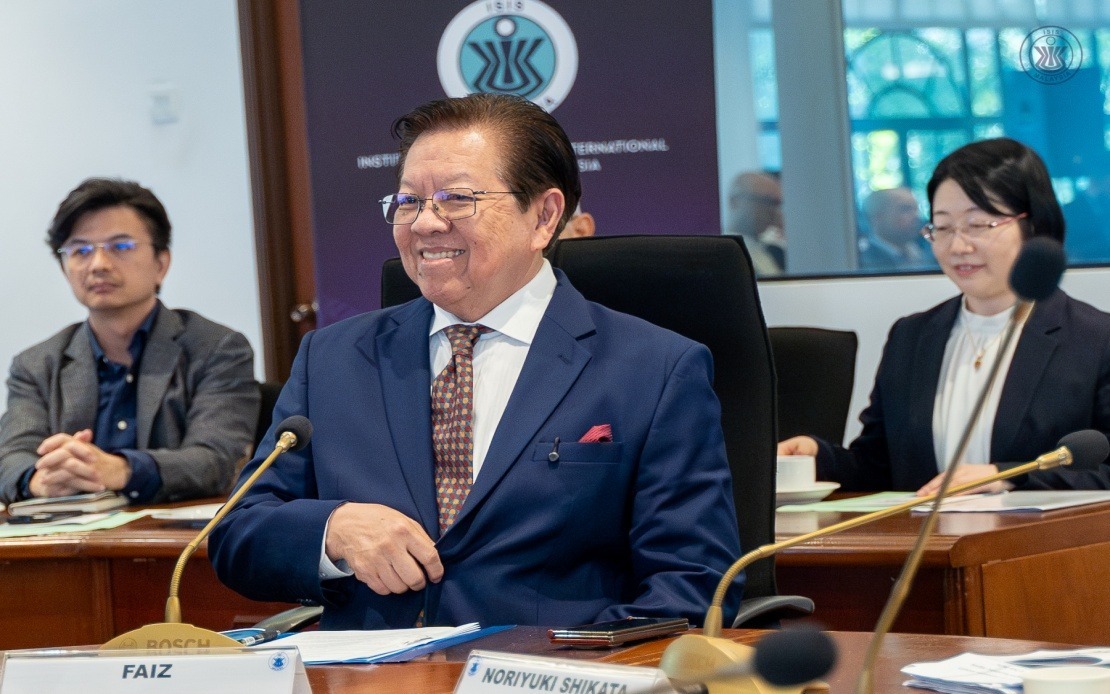
The 39th Asia-Pacific Roundtable, opening on Tuesday June 30 in Kuala Lumpur, will dedicate substantial analytical capacity to Myanmar's deepening political and humanitarian emergency through a dedicated caucus session, according to Institute of Strategic and International Studies Malaysia executive chairman Datuk Prof Dr Mohd Faiz Abdullah. The three-day conference, which runs through July 2, represents a significant pivot from the guarded diplomatic language that characterised recent official statements on Myanmar at the ASEAN Summit held in Cebu, Philippines.
Mohd Faiz highlighted a critical distinction between the tenor of discussion at high-level ASEAN forums and what the APR intends to facilitate. Whereas the Philippines summit saw Myanmar-related remarks constrained by the formal diplomatic positions adopted by individual ASEAN member states, the roundtable will enable Myanmar specialists, strategic practitioners, and research institutions to engage with considerably greater analytical freedom and intellectual depth. This departure from official talking points reflects a fundamental recognition within the Southeast Asian policy community that Myanmar's trajectory demands urgent, sophisticated examination beyond the measured statements typically issued through official ASEAN channels.
The Myanmar caucus exemplifies the APR's broader role as a Track 2 diplomatic platform where non-governmental thinkers and analysts can explore sensitive regional issues with candour that governmental representatives often cannot achieve in multilateral settings. Rather than rehashing predetermined positions, participants will probe the underlying drivers, humanitarian dimensions, and strategic implications of Myanmar's prolonged instability. This space for intellectual exploration addresses a real gap in regional discourse, where official ASEAN statements frequently emphasise non-interference and consensus-seeking rather than direct engagement with the complexities of Myanmar's military junta, ethnic conflicts, and displaced populations.
Beyond Myanmar, the 39th APR agenda encompasses an expansive range of challenges reshaping the Asia-Pacific strategic environment. Discussions will address the South China Sea's continued militarisation, with particular attention to competing territorial claims and their implications for regional stability and freedom of navigation. The conference will also examine the reverberating effects of West Asian instability on Southeast Asia's economic and security interests, along with rising protectionist tariff regimes that threaten the region's export-dependent economies. Energy security concerns, intensified by global supply chain disruptions and the green energy transition, will receive analytical attention, as will the accelerating integration of artificial intelligence across governmental, commercial, and military domains.
The evolution of the APR itself underscores the region's growing appetite for high-level strategic dialogue. When the roundtable commenced 39 years ago, organisers convened merely 30 to 40 participants, primarily from Southeast Asia. This year's edition will host approximately 400 delegates representing 30 countries, reflecting both the APR's enhanced international reputation and the acute recognition across the policy world that Asia-Pacific stability increasingly determines global security trajectories. This expansion has transformed the APR into one of the world's top 20 strategic-security-focused conferences, rivalling established forums in influence and intellectual calibre.
The choice of this year's overarching theme, "Accelerating agency and action," signals important intellectual recalibration within regional policy circles. Building on previous APR explorations of interregnum and recalibration—concepts that captured a period of geopolitical reassessment—the current framing emphasises proactive leadership and concrete regional solutions rather than reactive adaptation to external pressures. This thematic pivot acknowledges that Southeast Asian states and non-state actors possess greater leverage and capability than sometimes recognised, and that the region need not remain passive during profound global shifts. The theme invites participants to identify which regional actors possess the credibility, resources, and strategic vision to shape positive outcomes across security, stability, sustainability, and prosperity dimensions.
The APR operates under the institutional framework of ASEAN-ISIS, a network encompassing Southeast Asia's foremost policy research institutes. This structure grants the roundtable unusual legitimacy within ASEAN circles; while remaining a Track 2 (non-governmental) forum where candid discussion flourishes, ASEAN-ISIS membership ensures that insights generated permeate governmental thinking at senior levels. The network facilitates translation of analytical findings into policy influence without compromising intellectual independence or frank conversation.
For Malaysian readers and regional stakeholders, the 39th APR carries particular significance. Malaysia, as an ASEAN member and host of this edition through ISIS Malaysia, faces direct exposure to most issues under discussion—from Myanmar's refugee flows to maritime security challenges in the South China Sea, from energy transitions affecting domestic industries to artificial intelligence governance that will reshape employment and economic competitiveness. The dedicated Myanmar caucus responds to Malaysia's humanitarian interests and security concerns regarding instability on its eastern border, while broader discussions on tariffs and energy shortages address immediate domestic policy dilemmas.
The contrast between official ASEAN discourse and APR deliberations reflects a broader structural tension within Southeast Asian diplomacy. ASEAN's consensus-based decision-making and non-interference principle, while providing stability and solidarity, sometimes constrain analytical rigour when examining persistent regional challenges. Track 2 forums like the APR offer an essential counterweight, enabling technical experts and strategic analysts to develop sophisticated policy recommendations that can subsequently inform governmental decision-making. The Myanmar caucus exemplifies this complementary dynamic: frank, expert-driven analysis of Myanmar's crisis can inform more effective ASEAN approaches, even if formal ASEAN statements maintain diplomatic restraint.
Participant diversity further enhances the APR's analytical capacity. The attendance of 400 strategists, academics, business leaders, and former officials from 30 countries ensures that discussions incorporate perspectives often absent from purely governmental forums. Regional experts can share their insights while scholars introduce theoretical frameworks and comparative experiences from beyond Asia-Pacific. Business representatives contribute understanding of how geopolitical shifts affect investment, supply chains, and economic resilience—dimensions frequently underemphasised in traditional security discussions.
Looking forward, the roundtable's treatment of Myanmar will likely generate recommendations for both ASEAN and individual member states, though these will carry informal status compared to official ASEAN statements. Nonetheless, the intellectual work conducted during the Myanmar caucus may ultimately shape how Southeast Asian policymakers understand the crisis, identify leverage points for regional pressure, and consider humanitarian responses. This indirect influence—translating expert analysis into governmental awareness and thinking—represents the APR's distinctive contribution to regional strategic culture and decision-making processes.

