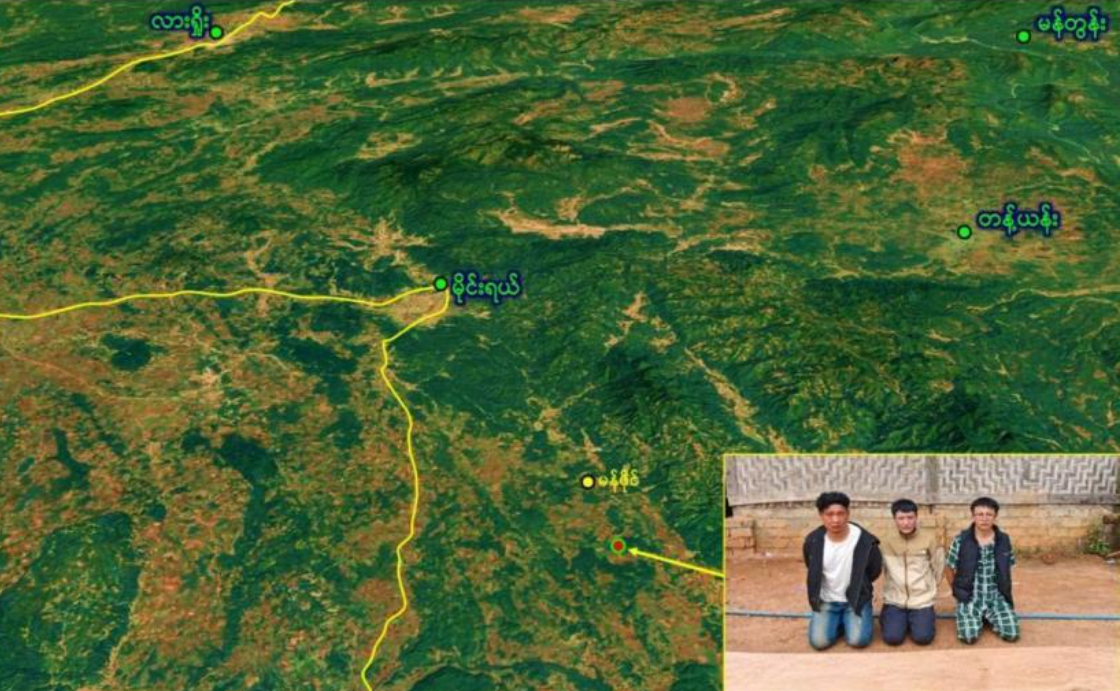
Myanmar's military forces have detained three Chinese citizens suspected of running a sophisticated online scam gambling operation in Mongyai Township, a remote area of northern Shan State. The arrests, made on August 26 in locations roughly 26 kilometres southeast of Mongyai township and 5 kilometres south of Manphai Village, represent the latest enforcement action in Myanmar's escalating campaign against organised digital fraud networks that have proliferated in border regions across Southeast Asia.
The operation highlights a growing regional challenge: criminal syndicates exploiting Myanmar's porous borders and remote terrain to establish operations targeting victims across multiple countries. Online scam gambling schemes have become increasingly sophisticated, often working in coordination with human trafficking networks and money laundering operations that funnel illicit proceeds across borders. The fact that these suspects allegedly entered the country illegally underscores how transnational criminal networks navigate Southeast Asia with relative impunity, moving operatives between jurisdictions to evade law enforcement.
Military personnel conducting routine security operations in the area initially acted on intelligence provided by local residents who reported suspicious activity in temporary shelters. This ground-level information proved crucial, demonstrating how community awareness can help authorities identify clandestine operations before they scale significantly. The investigations that followed revealed the scale of the suspected gambling scheme, leading to coordinated raids that dismantled the physical infrastructure supporting the criminal enterprise.
Authorities recovered extensive technical equipment that underscores the professional nature of these operations. The confiscated materials included 25 mobile phones, five all-in-one computers, two power stations, a Starlink satellite device, ten communication radios, and various ancillary equipment. This inventory suggests a well-funded operation designed to maintain continuous connectivity and coordinate activities across multiple platforms simultaneously. The inclusion of Starlink technology is particularly noteworthy, indicating that operators were investing in untrackable internet access to circumvent conventional telecommunications monitoring by law enforcement.
The physical structures revealed another dimension of the operation. Authorities dismantled one large corrugated iron-roofed building measuring 50 by 20 feet featuring bamboo walls, along with five temporary tarpaulin shelters of different sizes. This makeshift setup allowed operators to maintain flexibility, rapidly relocating if security pressure increased. The temporary nature of the infrastructure also minimises visible footprints that might attract official attention, a standard operational security measure employed by transnational criminal organisations operating in frontier zones.
Myanmar's government has prioritised the elimination of online scam gambling as part of broader national security efforts. The campaign specifically targets operations concentrated in border areas, where geographical remoteness, limited state capacity, and porous security controls create ideal conditions for criminal enterprises. These initiatives acknowledge that online fraud schemes inflict significant harm on victims across the region, with reported losses in the hundreds of millions of dollars annually. Many victims face severe psychological consequences and financial ruin following exploitation by these networks.
The timing and nature of these enforcement actions indicate coordination between Myanmar's military and civilian authorities, suggesting institutional commitment to dismantling networks that destabilise the region. Such cooperation is essential because online scam gambling operations frequently overlap with other criminal activities including financial crimes, human trafficking, and narcotics smuggling. By targeting the infrastructure and personnel directly, authorities disrupt multiple revenue streams simultaneously and prevent reinvestment in expanded operations.
The arrested individuals will face prosecution under Myanmar's existing legal framework following completion of interrogation and investigation procedures. However, the broader challenge remains complex. While individual arrests demonstrate enforcement capacity, the underlying drivers—economic desperation in the region, weak border controls, and substantial profit incentives—continue attracting new criminal entrepreneurs. Sophisticated criminal syndicates adapt operational methods to evade detection, frequently relocating to alternative jurisdictions when pressure mounts in particular areas.
For Malaysia and neighbouring Southeast Asian nations, this case carries particular relevance. Online scam gambling operations targeting regional citizens have expanded dramatically, with investigation suggest many victims are Malaysian, Thai, Indonesian, and Vietnamese nationals. The discovery of satellite-based internet equipment highlights how operators maintain independence from national telecommunications infrastructure, complicating cross-border law enforcement cooperation. Malaysian authorities and regional partners must coordinate more effectively to share intelligence about suspected operators, financing channels, and victim populations to disrupt these networks systemically.
The demolition of unauthorised shelters and continued security operations in Mongyai Township reflect Myanmar's intention to systematically eliminate physical sanctuaries for criminal operations. However, sustained success requires complementary measures including capacity-building for regional law enforcement, enhanced cross-border intelligence sharing, and coordinated prosecution of operators and financiers who frequently operate from more secure jurisdictions. Until these broader institutional frameworks strengthen, dismantling individual operations—while important—represents tactical wins rather than strategic progress against entrenched transnational criminal networks.

