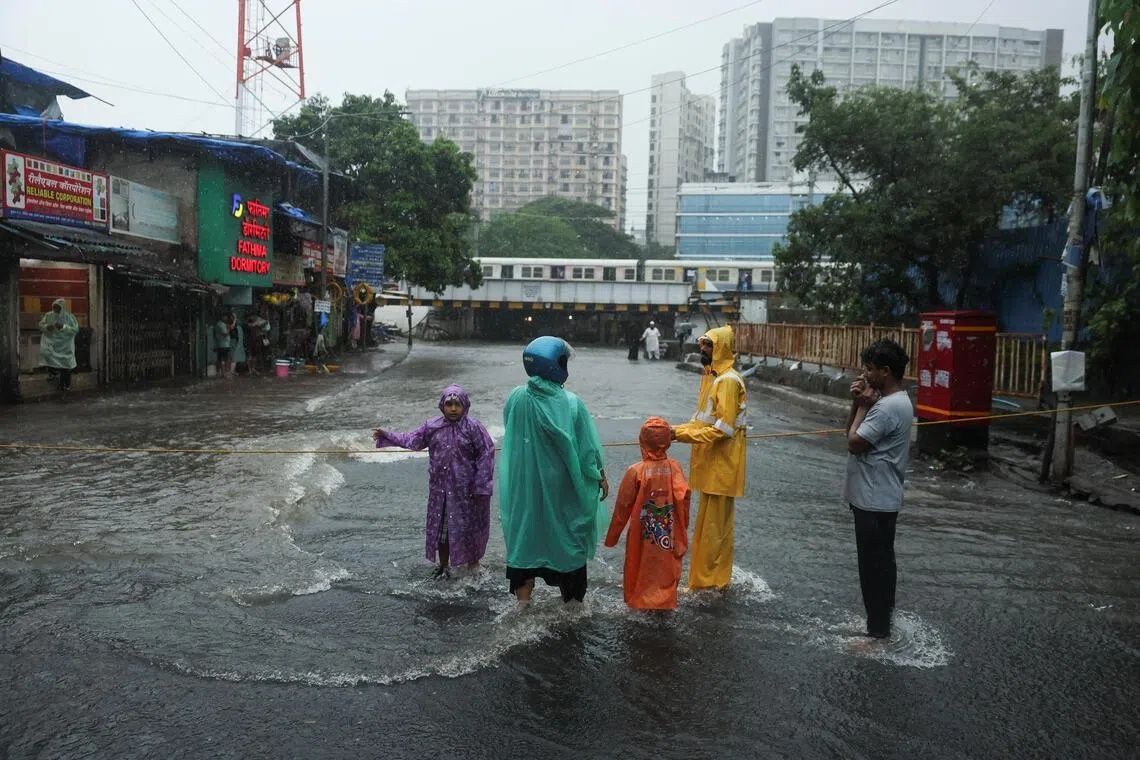
Mumbai is grappling with the dual crisis of extreme weather and institutional failure as monsoon rains intensify across India's financial capital. The India Meteorological Department's issuance of an orange alert on July 3 reflects mounting concern about the city's vulnerability to seasonal flooding, particularly given recent fatalities linked directly to lapses in municipal infrastructure maintenance. These deaths underscore a pattern of negligence that has animated intense political scrutiny and raised hard questions about whether existing safeguards are adequate to protect residents during the dangerous monsoon months.
The first tragedy occurred on June 30 in Chembur, where a massive tree uprooted by powerful wind gusts toppled onto a school bus transporting students from Universal High School and Tilak Nagar School. The incident turned a routine commute into a nightmare for rescue personnel who deployed cutting equipment to extract trapped children from the wreckage. Among the injured was eleven-year-old Vihan Shrivastav, who despite emergency medical intervention at Zen Hospital failed to survive his injuries. The loss of a child has particularly galvanised public sentiment and political response, with the boy's status as an only child adding poignancy to his parents' tragedy and intensifying calls for systemic change.
Maharashtra minister Ashish Shelar acknowledged the incident's tragic nature while attempting to project government responsiveness, stating that both the state administration and the Brihanmumbai Municipal Corporation bore responsibility for supporting the bereaved family. His promise of action against culpable officers, however, proved insufficient for several legislators who argued that genuine accountability must extend beyond junior staff. MLA Rohit Pawar, speaking after meeting the victim's family, articulated this sentiment bluntly, contending that punishing only lower-ranking officials masks systemic dysfunction and fails to incentivise proper oversight at senior levels. He further questioned whether the mandatory pre-monsoon safety inspections—supposedly covering roads, drainage systems, and other civic infrastructure—were being conducted with adequate rigour or merely performed as bureaucratic formalities.
The second fatality unfolded under even more disturbing circumstances. On July 2, a sixty-year-old man identified as Aslam Isak Shaikh met his end after stumbling into an open manhole in Sakinaka during heavy downpour. The drainage cover had been removed for maintenance work, yet no adequate barricading was installed to prevent pedestrian access to the hazard. Shaikh, who was reportedly distracted by a mobile phone conversation at the time, was swept away by the force of fast-flowing rainwater channelling through the exposed opening. Recovery of his body required approximately three hours of search operations, underlining both the danger posed by the infrastructure failure and the resource intensity demanded by such rescues.
This incident provoked particularly sharp criticism from MLA Vijay Wadettiwar, who called for criminal proceedings against responsible officials. He highlighted the elementary nature of the required precaution—either keeping the manhole properly sealed or erecting clear warning barriers—and questioned why such basic safety measures had been omitted during active rainfall. His demand for a formal first information report reflects growing frustration among elected representatives that administrative mistakes resulting in death should trigger criminal investigation rather than mere disciplinary action. The distinction matters considerably in India's legal framework, as it signals whether authorities view such lapses as negligent errors or culpable disregard for public safety.
MLA Speaker Rahul Narwekar attempted to inject some procedural momentum by confirming that the matter had been raised in the legislative assembly and requesting a detailed investigative report, though his characterisation of the incident as "very unfortunate" suggested more sympathy for systemic challenges than anger at individual culpability. In contrast, Mumbai Mayor Ritu Tawde took a more decisive stance, directly labelling the manhole incident an "administrative mistake" and announcing compensation of ten lakh rupees (approximately US$10,455) to the victim's family. While the financial gesture acknowledges harm and may provide some material relief, it does not address the underlying question of how maintenance operations proceed without adequate safety protocols during monsoon season.
The monsoon's broader impact on the city extended far beyond these specific tragedies. Submerged roadways across multiple neighbourhoods brought traffic to a standstill, with the morning commute deteriorating into extended congestion as waterlogged streets rendered normal transit impossible. The Sion-Panvel Highway experienced particular chaos when a truck overturned near the Kharghar Toll Plaza, blocking multiple lanes and forcing emergency personnel to deploy heavy equipment for vehicle removal. Parallel flooding at Dadra East and Sion Gandhi Market trapped thousands of commuters, transforming ordinary markets and intersections into bottlenecks where movement measured in minutes rather than hours.
The cascading nature of these disruptions reveals how heavily integrated Mumbai's functionality depends on reliable infrastructure maintenance. When drains back up, roads flood, trees remain unsecured, and critical maintenance work proceeds without proper safeguarding, the entire urban system becomes vulnerable. For Malaysian observers and Southeast Asian readers, Mumbai's predicament offers instructive parallels to monsoon challenges faced across the region, where rapid urbanisation frequently outpaces maintenance capacity and political pressure to cut corners often undermines safety protocols.
Authorities responding to the crisis urged residents to curtail non-essential travel as forecast models indicated continued heavy rainfall throughout the subsequent twenty-four-hour period. Civic teams mobilised to clear flooded thoroughfares and remove accumulated debris from fallen trees, though such reactive measures cannot substitute for the preventive maintenance that might have averted tragedy. The fundamental challenge confronting Mumbai—and by extension, other densely populated South Asian cities—involves shifting from responsive crisis management to proactive infrastructure stewardship. This requires sustained political will to fund adequate pre-monsoon inspections, maintain proper safety barriers around active maintenance sites, and create accountability mechanisms that penalise senior officials whose oversight failures cascade into loss of life.

