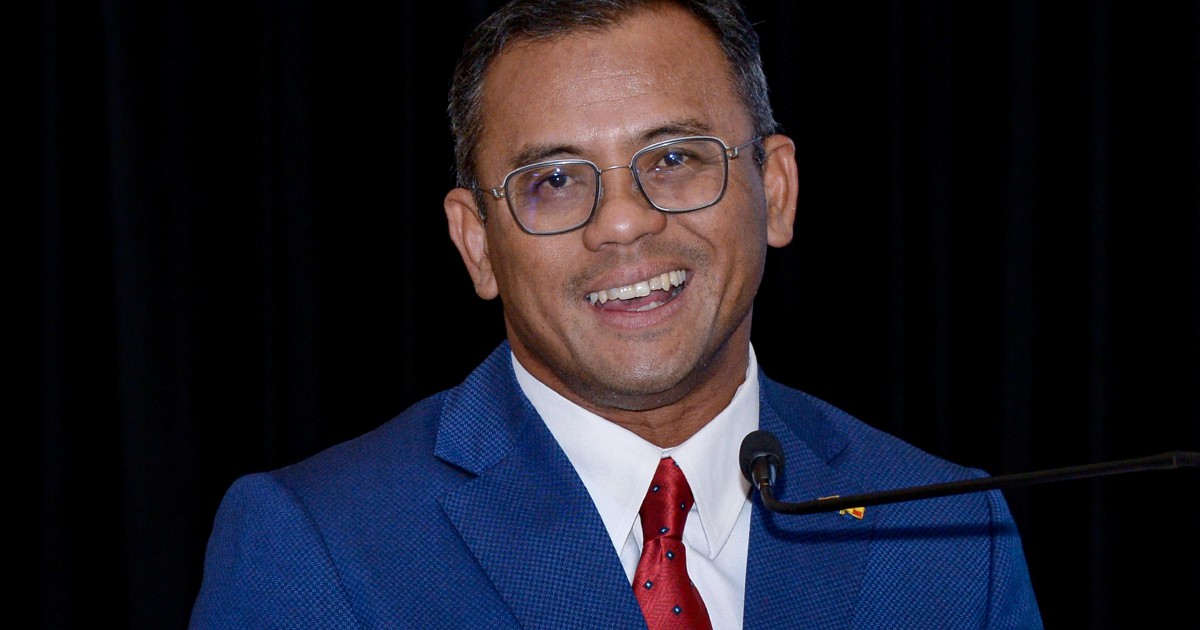
A call has been made in parliament for the establishment of a coordinated multi-agency task force to examine past irregularities at Lembaga Tabung Haji, raising the possibility that governance failures at the pilgrimage savings institution may have intersected with Malaysia's largest financial scandal. The proposal, heard in the Dewan Rakyat, suggests that investigating only the immediate crisis without exploring broader connections could leave critical gaps in understanding how the hajj fund became financially compromised.
Tabung Haji has faced escalating scrutiny over its financial position, with accumulated losses and failed investments requiring government intervention. The institution, which manages the savings of Muslim Malaysians preparing for the hajj pilgrimage, operates under unique fiduciary obligations given its religious and social significance. When such organisations experience major governance failures, legislators argue that determining the full scope of responsibility becomes essential to rebuilding public trust and ensuring accountability across all culpable parties.
The linkage to 1MDB would represent a significant expansion of the scandal's reach if substantiated. The 1MDB affair, which involved massive siphoning of funds from a sovereign wealth fund, exposed how interconnected Malaysia's financial institutions had become and how governance lapses at one entity could enable or facilitate corruption elsewhere. If senior figures or networks involved in 1MDB exploitation also influenced Tabung Haji's decision-making, that pattern would illuminate a broader ecosystem of financial mismanagement during the period in question.
Tabung Haji's role as custodian of deposits from millions of Malaysian Muslim pilgrims places it in a position of extraordinary public trust. The organisation collects savings from working Malaysians, sometimes across decades, holding these funds until individuals qualify to perform hajj. When such institutions experience losses through poor investment decisions or mismanagement, entire families' savings can evaporate. This makes investigations into governance failures not merely technical accounting matters but issues affecting the financial security and religious obligations of ordinary Malaysians.
The multi-agency approach reflects recognition that financial misconduct often spans jurisdictions and regulatory domains. Banks, investment firms, government agencies, and law enforcement may all hold pieces of evidence regarding how Tabung Haji became compromised. Establishing a formal task force with representatives from the Malaysian Anti-Corruption Commission, Bank Negara Malaysia, the Securities Commission, the Attorney General's Chambers, and other relevant bodies could enable information-sharing and coordinated investigation that individual agencies pursuing parallel inquiries cannot achieve.
Historical context matters considerably here. Tabung Haji's problems did not emerge suddenly but accumulated over several years during which governance structures were either inadequate or circumvented. Understanding when particular irregularities began, who authorised problematic transactions, and whether external actors exploited the institution's vulnerabilities requires detailed forensic examination of decision-making records, investment mandates, and board proceedings spanning many years.
The 1MDB connection, if established, would suggest that corrupt networks sought to exploit Tabung Haji as a vehicle for illicit activities or that individuals involved in 1MDB placed assets through the hajj fund. Such investigations frequently reveal how scandal networks moved funds across multiple institutions to obscure their origins and defeat detection. For Malaysian authorities, tracing these patterns becomes crucial to ensuring that lessons learned from 1MDB actually translate into systemic improvements.
Public confidence in Tabung Haji, already severely damaged by revelations of losses, depends on demonstrating that investigations are genuinely comprehensive and unafraid to follow evidence wherever it leads. If investigations focus narrowly on recent management while ignoring earlier periods or possible connections to other scandals, public perception will inevitably be that accountability remains selective and incomplete. This perception, whether justified or not, undermines the legitimacy of both the investigation and any remedial measures subsequently implemented.
The governance framework at Tabung Haji also requires scrutiny as part of any investigation. Institutional safeguards, investment policies, board oversight structures, and internal audit capabilities either functioned inadequately or were overridden during the period when losses accumulated. Understanding why individuals in positions of oversight failed to detect irregularities—whether through incapacity, negligence, or complicity—becomes essential to preventing recurrence not just at Tabung Haji but across Malaysia's broader institutional landscape.
For Malaysian pilgrims and their families, effective investigation and accountability matters deeply. Many have lost portions of their hajj savings, forcing postponement of deeply held religious aspirations. Comprehensive investigation serves both a justice function and a practical one: only through understanding the full scope of failures can authorities implement changes ensuring similar tragedies do not recur at Tabung Haji or other public institutions managing citizen savings.
The parliamentary call reflects growing recognition that Malaysia's recent corruption scandals are not isolated incidents but evidence of systemic vulnerabilities that enabled opportunistic actors to exploit multiple institutions. Tabung Haji's experience fits into a troubling pattern suggesting that without thorough investigation into inter-institutional connections, authorities risk addressing symptoms while ignoring underlying structural problems that permitted such extensive financial misconduct across the Malaysian institutional ecosystem.

