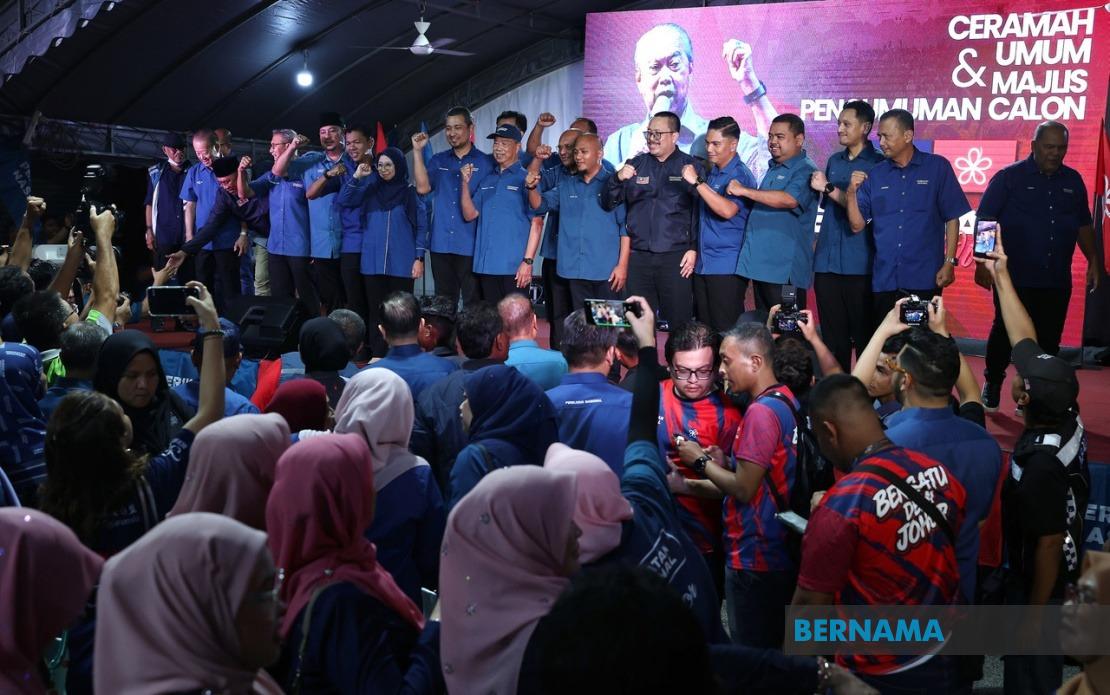
Tan Sri Muhyiddin Yassin, president of Parti Pribumi Bersatu Malaysia, has announced the party's full slate of 16 candidates contesting the 16th Johor State Election, marking a significant moment in the political coalition's campaign strategy for the peninsular state. The announcement came during a candidates presentation and public ceramah held at the Pagoh Parliamentary Service Centre in Taman Pagoh Jaya, Muar, where party leadership outlined its vision for capturing seats in the upcoming electoral contest.
The timing of Bersatu's candidate announcement reflects the tight schedule established by the Election Commission, which designated June 27 as nomination day for all contesting parties and organisations. This compressed timeframe between candidate unveiling and formal nomination underscores the urgency with which political parties must mobilise their ground machinery and prepare their representatives for the campaign period. The Election Commission has scheduled polling day for July 11, providing campaigners with roughly two weeks to conduct their outreach efforts across the state.
Bersatu's decision to field candidates across all 16 state assembly seats demonstrates the party's commitment to contesting the Johor election comprehensively, rather than adopting a selective or coalition-focused strategy. This approach suggests confidence in its organisational capabilities and candidate quality, particularly given Bersatu's position within the broader political landscape. The party, which has experienced significant electoral fluctuations in recent years, appears determined to maximise its presence in one of Malaysia's most politically significant states, where state government control carries substantial implications for federal coalition dynamics.
The Johor State Assembly's dissolution on June 1 set in motion the electoral process that culminated in today's candidate announcement. The dissolution marked the formal end of the previous legislative session and triggered the constitutional machinery for fresh elections. For Bersatu, this development presented both opportunity and challenge: the party could mobilise its supporters with renewed vigour, but simultaneously faced the necessity of demonstrating electoral appeal to voters in a state where incumbent advantages and established political networks remain formidable.
Among the candidates announced was Mohd Idzharruddin Mohd Nasirruddin, who will represent the party in the N8 Bukit Pasir constituency. This selection reflects Bersatu's candidate vetting process, which attempts to balance local prominence, party loyalty, and perceived electability. The choice of contestants across different constituencies reveals party strategists' calculations about where resources should be concentrated and which demographic constituencies might be receptive to Bersatu's messaging.
For Malaysian political observers and regional analysts, Bersatu's performance in the Johor election carries implications extending well beyond state-level politics. Johor's electoral outcomes often foreshadow trends in federal elections and provide crucial signals about the stability of coalition arrangements at the national level. As a key component of the broader Perikatan Nasional framework and a participant in federal governing coalitions, Bersatu's electoral fortunes directly influence the balance of power in Parliament and the viability of competing political alliances.
The party's 16-candidate strategy must be understood within the context of recent electoral history in Johor. Previous state elections have witnessed intense competition between established political blocs, with demographic shifts in urban constituencies alongside persistent support in rural areas creating a complex battleground. Bersatu's candidate selections therefore reflect attempts to appeal to both traditional party supporters and swing voters who may be dissatisfied with incumbent governance or seeking policy alternatives.
The announcement event itself served dual purposes: formally introducing the 16 candidates to party members and supporters while simultaneously signalling to the electorate that Bersatu possessed the organisational coherence and leadership direction to contest effectively. Such public ceremonies carry symbolic weight in Malaysian political culture, where the visible endorsement of leadership figures can influence voter perceptions of candidate viability and party momentum.
Looking toward the July 11 polling date, Bersatu faces the formidable task of translating candidate announcements into actual electoral support. The two-week campaign period will be crucial for candidate visibility, policy articulation, and ground mobilisation. Success in Johor could significantly enhance the party's bargaining position in federal coalitions, while disappointing results might necessitate strategic reassessment of the party's electoral approach and coalition preferences.
The broader competitive landscape in Johor involves multiple political organisations fielding their own candidates across the 16 seats. This fragmentation creates both opportunities for Bersatu—voters might be distributed across numerous candidates—and challenges, as the party must distinguish itself from competitors in crowded constituencies. The election will ultimately serve as a referendum on voter satisfaction with available options and the relative attractiveness of different political platforms addressing state-level concerns around economic development, education, healthcare, and local governance.

