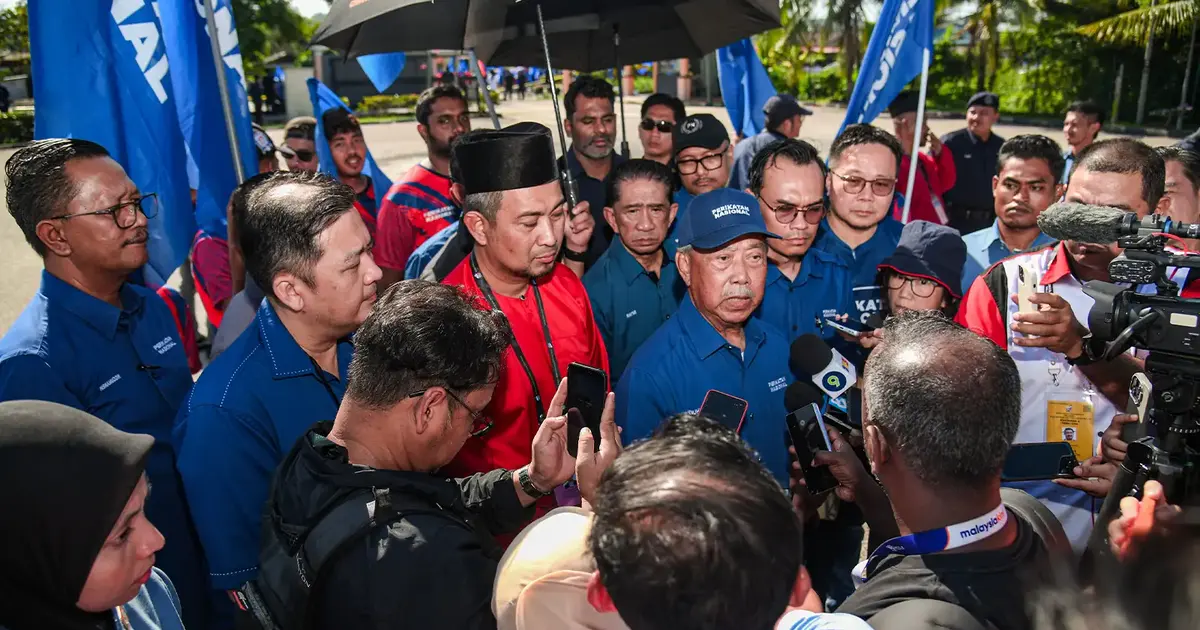
Perikatan Nasional's prospects for leading state governments have received a significant boost, with Bersatu president Muhyiddin Yassin expressing strong conviction that the coalition possesses sufficient political strength to form administrations in upcoming state elections. The statement reflects strategic positioning within Malaysia's complex multi-party landscape, where coalition configurations continue to evolve and reshape state-level politics across the country.
Muhyiddin's confidence extends beyond Perikatan Nasional's existing membership, which comprises Bersatu, PAS, and other component parties. The Bersatu leader has identified potential collaborative arrangements with political entities positioned outside the formal coalition structure, suggesting a broader alignment of interests that could provide additional parliamentary support when needed. This approach underscores the fluid nature of contemporary Malaysian politics, where formal and informal arrangements often coexist to achieve governing majorities.
Muda, the youth-focused political party led by Syed Saddiq Syed Abdul Rahman, emerges as a particularly significant potential ally in this expanded political architecture. The party has gradually expanded its influence and parliamentary representation since its formation, positioning itself as a pragmatic player willing to work across traditional coalition boundaries. By identifying Muda as a potential partner, Muhyiddin signals an understanding that state-level governance may require flexible coalitional arrangements that transcend rigid party alignment.
The timing of such expressions of confidence typically corresponds with preparation for state elections or significant shifts in state political configurations. Perikatan Nasional has demonstrated variable performance across different state administrations, maintaining strongholds in several states while facing challenges in others. Muhyiddin's statement can be interpreted as an assertion that the coalition retains competitive capacity regardless of previous electoral outcomes and political setbacks.
For Malaysian readers monitoring state-level developments, this positioning carries practical implications regarding governance continuity and policy direction. State governments directly influence crucial matters affecting daily life, including education provision, local infrastructure investment, and municipal administration. The composition of ruling coalitions at state level thus determines policy priorities and resource allocation affecting millions of residents.
The broader regional context illustrates how Perikatan Nasional's state-level ambitions fit into national political competition between major coalition blocs. While Pakatan Harapan maintains federal government status, control of individual states provides opposition coalitions with administrative platforms, resource bases, and opportunities to demonstrate governance competence. State administrations therefore function as testing grounds for political movements seeking to demonstrate viability at higher governmental levels.
Muhyiddin's reference to external allies highlights recognition that monolithic coalition structures rarely succeed in Malaysian electoral politics. The country's ethnically diverse population and geographically fragmented political geography reward flexibility and targeted alliance-building. Parties increasingly recognize that rigid adherence to formal coalition structures can prove electorally disadvantageous when pragmatic cooperation with ideologically proximate entities might yield better results.
Muda's potential role in supporting Perikatan Nasional reflects broader shifts in Malaysian political participation among younger voters and urban constituencies. The party has cultivated an image as reform-oriented and less beholden to entrenched political structures, qualities that appeal to demographic segments dissatisfied with traditional party offerings. Including Muda within Perikatan Nasional's political orbit potentially expands the coalition's reach among these voter populations.
The confidence expressed by Muhyiddin also suggests internal stability within Perikatan Nasional's component parties, particularly regarding Bersatu's leadership position. Factional disputes and leadership challenges have periodically destabilized Malaysian coalitions, rendering grand assertions about electoral prospects premature. Muhyiddin's unqualified expression of optimism implies assessments that internal divisions remain manageable and that component party cooperation remains functional.
State elections across Malaysia typically occur on staggered schedules, creating regular opportunities for coalition repositioning and political realignment. Perikatan Nasional's emphasis on external partnership possibilities acknowledges that maintaining state-level majorities increasingly depends on constructing coalitions transcending traditional party structures. This pragmatism reflects maturation within Malaysian political competition, where parties prioritize substantive political outcomes over ideological purity.
Regional observers watching Malaysian political developments should note that state-level governance patterns frequently predict subsequent national political configurations. Parties performing effectively in state administrations build track records facilitating higher-level political advancement. Conversely, state governments plagued by mismanagement or corruption undermine national credibility. Muhyiddin's assertions about Perikatan Nasional's state government potential implicitly claim that the coalition possesses governance capacity worthy of national consideration.
The coalition's positioning occurs amid ongoing discussions about Malaysia's political future following cycles of governmental transitions and constitutional developments. State elections provide regular barometers of public sentiment regarding government performance and opposition viability. Perikatan Nasional's confidence in forming state governments represents calculated assertions about continued political relevance and competitive capacity in ongoing Malaysian political competition.

