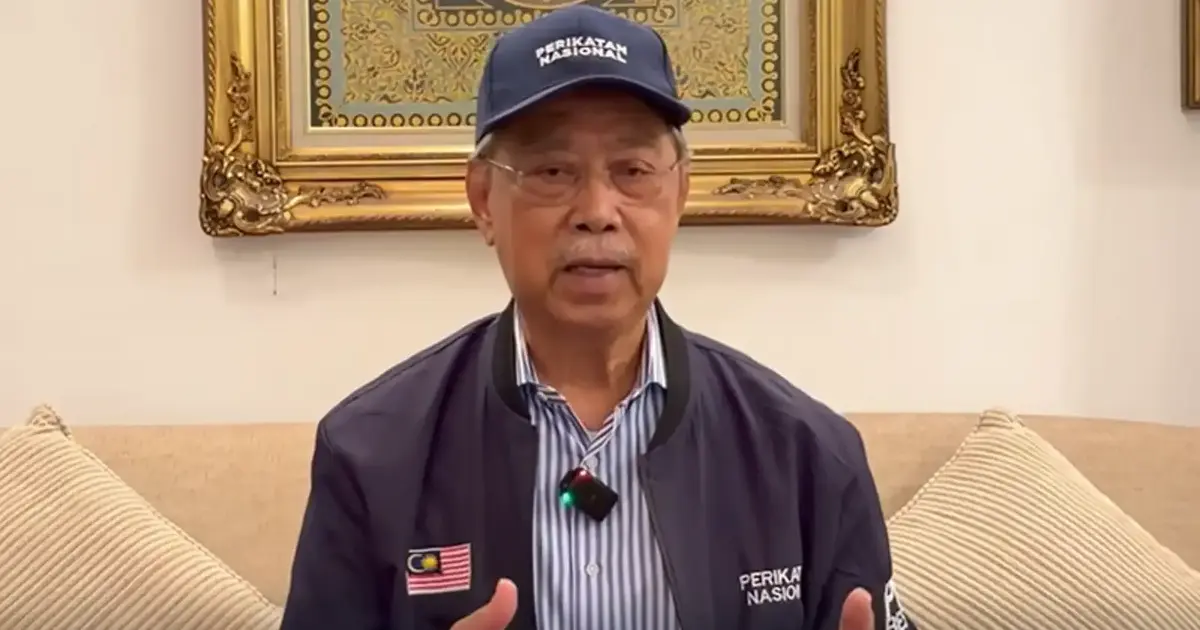
Bersatu president Muhyiddin Yassin has mounted a direct appeal to Johor voters, positioning himself as a local son whose political journey has been rooted in the state's interests and aspirations. Speaking to supporters across the southern state, Muhyiddin sought to anchor Perikatan Nasional's campaign message in his decades of service within Johor's political landscape, presenting his party's renewed bid for power as a continuation of his lifelong commitment to the people rather than a departure from established relationships.
The appeal comes as Perikatan Nasional, a coalition of several political entities, seeks to rebuild electoral momentum in Johor after setbacks in recent electoral contests. By framing his candidacy and his party's platform through the lens of personal history and regional identity, Muhyiddin aims to reconnect with voters who may harbour doubts about Perikatan's direction or reliability. His emphasis on being a "son of Johor" serves as a rhetorical anchor, suggesting that voting for Bersatu and Perikatan represents continuity with proven governance and a return to political leadership grounded in local concerns.
Muhyiddin's tenure as Johor menteri besar spanned a significant period in the state's development, during which he oversaw various infrastructure projects and policy initiatives. This administrative background allows him to reference concrete achievements and demonstrate familiarity with the state's specific challenges—from economic diversification to urban planning and social services. For voters evaluating Perikatan's credibility, this track record within their own state carries more weight than national-level promises alone, as it offers tangible evidence of his ability to translate political power into material improvements.
The messaging strategy also reflects broader calculations about electoral vulnerability in Johor, a state that has historically served as a kingmaker in Malaysian politics due to its size and voting numbers. Control of Johor's state assembly and parliamentary seats significantly influences the composition of the federal government, making the state a persistent battleground between competing coalitions. By personally investing political capital in a sustained Johor-focused campaign, Muhyiddin signals that Perikatan views the state as central to its national ambitions rather than peripheral.
Perikatan Nasional's coalition structure encompasses Bersatu, PAS, and other partners, each bringing different constituency bases and ideological emphases. Muhyiddin's localized appeal operates somewhat independently of these broader coalition dynamics, allowing him to build support based on personal credibility and regional sentiment rather than relying solely on the institutional machinery of allied parties. This approach may prove particularly effective in mobilizing independent-leaning voters or those frustrated with larger coalition partners who appear distant from local governance.
The framing of political struggle "for the people" represents a deliberate effort to shift discourse away from factional disputes, leadership competitions, or policy disagreements that might alienate swing voters. Instead, Muhyiddin presents his political career as a unified narrative of service, suggesting that past controversies or setbacks were incidental to his core mission of advancing Johor's welfare. This narrative construction is especially significant given Malaysia's polarized political environment, where many voters view politics through lenses of ethnic representation, religious governance, or urban-rural divides.
Johor's economic significance—encompassing port operations, petrochemical industries, agribusiness, and a growing technology sector—means that state-level policy choices have implications for broader economic policy directions. Voters concerned about economic management, job creation, or sectoral development may find Muhyiddin's claims of proven administrative experience compelling, particularly if competing coalitions lack equivalent local credentials or appear to privilege other states' interests. The appeal thus encompasses both symbolic appeals to regional pride and substantive governance questions about who best manages Johor's resources and priorities.
The timing of such an appeal reflects Malaysia's evolving electoral calendar and the strategic importance of maintaining coalition unity and momentum ahead of anticipated electoral contests. By consolidating Perikatan's position in Johor, Muhyiddin strengthens the coalition's bargaining position within broader political negotiations and demonstrates to coalition partners that Bersatu retains independent voter mobilization capacity. This reinforces his stature within Perikatan and justifies his continued leadership role within a coalition that has faced internal tensions and external criticism.
For Malaysian observers and regional analysts monitoring Malaysian politics, Muhyiddin's strategy illuminates enduring patterns in Southeast Asian electoral competition, where personal networks, regional identity, and individual leader credibility often outweigh party ideology or organizational strength. As Malaysia navigates post-pandemic economic recovery and grapples with questions about governance standards and institutional reform, the appeal of an established figure with regional roots reflects voter preferences for proven competence grounded in local knowledge rather than national-level rhetoric or ideological positioning alone.

