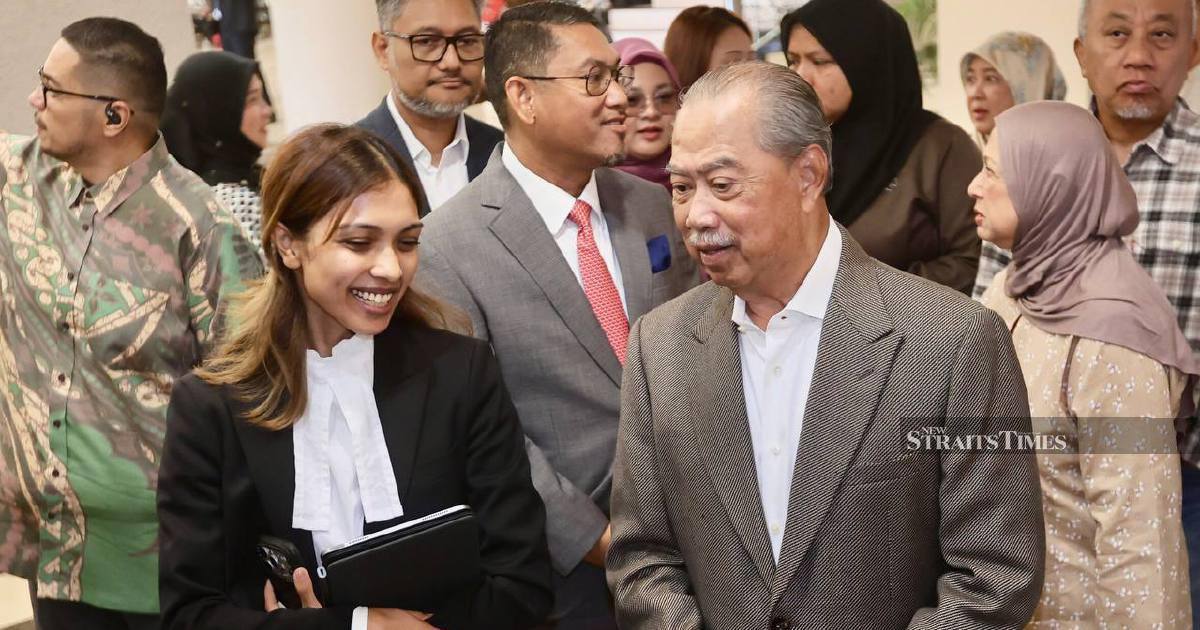
The trial of former Prime Minister Tan Sri Muhyiddin Yassin took a significant turn today as a witness provided testimony that contradicts allegations requiring him to have directly solicited funds. Appearing before the High Court in Kuala Lumpur, the witness stated categorically that Muhyiddin made no requests for contributions aimed at benefiting either his personal interests or the Perikatan Nasional coalition partner Bersatu, a development that could prove consequential for the defence's case.
The Jana Wibawa donation matter has drawn considerable public attention given Muhyiddin's prominent position as Malaysia's eighth prime minister and his continued influence within the political landscape. The former leader, who served as premier from 2020 to 2021 before his administration fell due to political defections, has faced several legal challenges since stepping down from the nation's highest office. This particular trial represents one of several legal proceedings that have occupied Muhyiddin's attention in recent years, underscoring the intense judicial scrutiny that has followed his tenure.
Witness testimony in high-profile corruption and financial impropriety cases often proves decisive in determining guilt or innocence, particularly when the evidence hinges on whether direct solicitation occurred. The assertion that no such request took place carries substantial implications for establishing the prosecution's case, should prosecutors need to demonstrate that Muhyiddin actively sought funds. In Malaysian legal proceedings involving political figures and fundraising allegations, the specific nature of any communication between the parties involved frequently becomes the focal point of judicial examination.
The timing of this testimony gains further importance given the broader political environment in Malaysia, where questions regarding party funding, donations, and their potential influence on governance have become increasingly prominent public concerns. Multiple prominent political figures across different coalitions have faced scrutiny relating to fund-raising practices, reflecting a growing national conversation about transparency and accountability in political finance. Bersatu, the smaller coalition partner within Perikatan Nasional, has itself become subject to various inquiries and public discussion regarding its funding mechanisms and donor relationships.
Muhyiddin's defence team has apparently utilised this testimony strategically to establish a narrative wherein the former premier maintained clear boundaries in his interactions with donors and fund-raisers. If the court ultimately accepts the witness's account as credible and reliable, it could substantially weaken prosecution arguments that rest upon demonstrating Muhyiddin's direct involvement in soliciting money. The credibility assessment of individual witnesses frequently determines the trajectory of complex financial crime trials, particularly when supporting documentation may be contested or subject to varying interpretations.
The Jana Wibawa legal matter emerged amid Malaysia's broader reckoning with issues of political accountability and institutional integrity. Public discourse surrounding the trial reflects deeper concerns about how political parties finance their operations, who provides funding, and whether such arrangements might influence policy decisions or government conduct. For voters and observers monitoring political corruption cases, the outcomes of high-profile trials involving national leaders carry implications extending far beyond the individual defendants involved.
Bersatu's organisational standing within Malaysian politics has fluctuated considerably since its formation, and questions regarding its financial health and donor base remain topics of considerable speculation and public interest. The party's merger discussions, coalition arrangements, and public statements about its financial position have all become subjects for political commentary and analysis. The Jana Wibawa trial therefore potentially affects not only Muhyiddin's personal and political reputation but also broader perceptions regarding Bersatu's internal practices and governance standards.
As the trial continues, the High Court will need to weigh multiple pieces of evidence and testimony to reach conclusions about what actually transpired regarding any donation matters connected to Jana Wibawa. The witness testimony provided today represents merely one component of a larger evidentiary record that will ultimately inform judicial decision-making. Courts must carefully evaluate witness credibility, potential motivations, corroborating documentation, and the consistency of accounts provided by different parties to reach findings of fact.
The proceedings also highlight the ongoing challenge facing Malaysia's legal system in handling complex financial crime allegations involving political figures while maintaining procedural fairness and public confidence. Transparent court processes, thorough examination of evidence, and reasoned judicial decisions contribute to perceptions that the justice system operates impartially regardless of a defendant's previous political status or influence. For Malaysia's democratic institutions, ensuring that political accountability mechanisms function effectively and equitably remains crucial to long-term institutional health and public trust.
Muhyiddin's legal team will likely continue presenting defence witnesses and documentary evidence throughout the trial's progression, while prosecutors will have opportunities to cross-examine witnesses and present their own evidence supporting allegations of impropriety. The adversarial process, though lengthy and sometimes contentious, represents the mechanism through which complex factual disputes involving political figures ultimately achieve resolution within the Malaysian legal framework.

