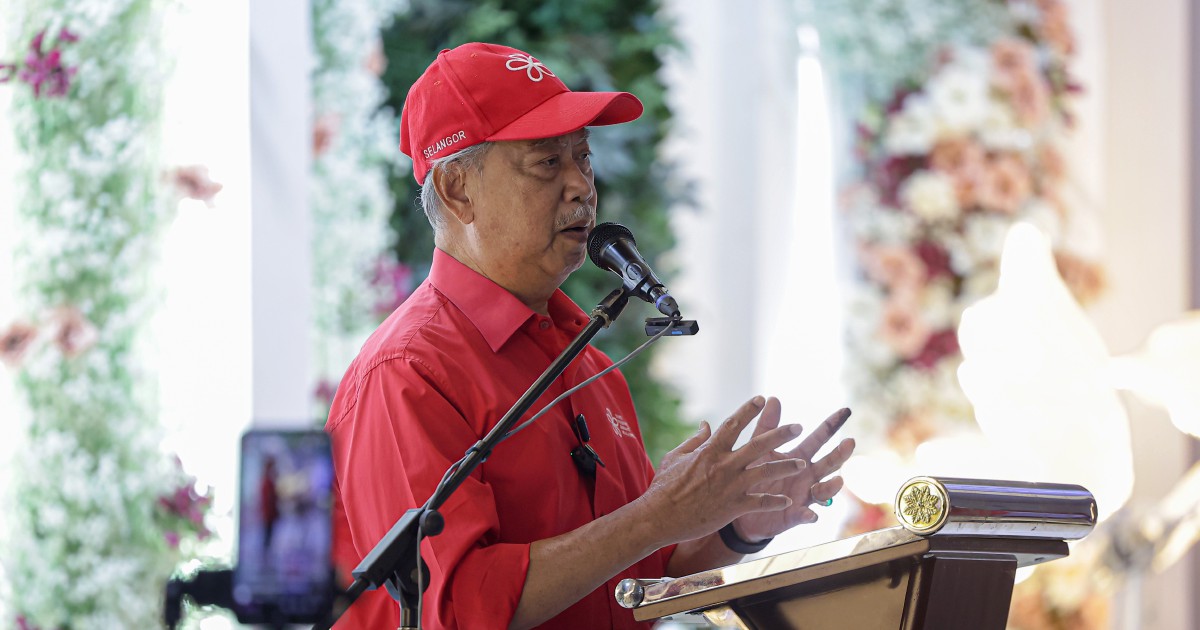
Bersatu president Tan Sri Muhyiddin Yassin has sharply rebutted accusations from Umno vice-president Datuk Seri Mohamed Khaled Nordin that his party is acting as a spoiler in the Negri Sembilan state election. The barb, delivered from Khaled, reflects rising tensions within the ruling coalition as multiple parties position themselves for the contest, raising questions about unity within Barisan Nasional's broader political machinery.
Muhyiddin's response underscores a growing friction between coalition partners as the Negri Sembilan campaign intensifies. The Bersatu chief's counterattack suggests that the party views its electoral participation not as opportunism but as a legitimate exercise of democratic rights. This disagreement signals deeper divisions within the government alliance, with individual parties increasingly willing to challenge one another publicly rather than maintaining traditional party discipline or consensus.
The exchange reflects a broader pattern of intra-coalition disputes that have become more visible in recent months. Umno, as the dominant component of Barisan Nasional, has historically expected deference from smaller coalition partners, yet Bersatu under Muhyiddin's leadership has demonstrated willingness to assert its independence. This assertiveness has created friction that extends beyond parliamentary cooperation into state-level politics, where coalition harmony becomes critical for electoral success.
Negri Sembilan represents particularly sensitive electoral terrain for Barisan Nasional. The state has been competitive in recent elections, and any split in the non-opposition vote could jeopardise the coalition's stronghold. Khaled's criticism appears designed to pressure Bersatu into either withdrawing candidates or limiting its campaign intensity, yet such public shaming tactics risk deepening resentment rather than achieving compliance.
Muhyiddin's defence of Bersatu's participation highlights the party's conviction that it holds legitimate standing within the coalition framework. Rather than meekly accepting criticism, the Bersatu president has chosen confrontation, suggesting the party prioritises its own political survival and growth over maintaining coalition harmony. This strategy carries risks, as it could further destabilise the broader alliance during a critical electoral period.
The timing of this dispute merits attention. Public disagreements among coalition partners during campaigns can depress voter enthusiasm and create openings for opposition parties to exploit voter dissatisfaction. Both Umno and Bersatu should recognise that their quarrel provides opportunities for Pakatan Harapan or other opposition coalitions to gain ground in Negri Sembilan, undermining broader Barisan Nasional objectives.
Historically, coalition politics in Malaysia depends on informal agreements about territorial allocation and candidate distribution. Bersatu's determination to contest multiple seats in Negri Sembilan appears to violate such understandings, provoking Khaled's reaction. Yet the absence of transparent rules governing coalition seat allocation leaves space for exactly these kinds of disputes to fester and escalate into public confrontations.
For Malaysian voters, these internal coalition arguments raise important questions about governance coherence. If the ruling coalition cannot manage internal disagreements constructively during peacetime elections, how effectively can it govern once in office? The spectacle of senior leaders trading accusations undermines public confidence in institutional stability and suggests that narrow factional interests may outweigh national considerations.
The dispute also illuminates Bersatu's strategic calculus. As a relative newcomer to formal coalition politics, the party may view electoral contests as opportunities to build a stronger independent power base. Withdrawing candidates or accepting subordinate status in seat distributions could reinforce perceptions of Bersatu as a junior partner with limited influence. Conversely, aggressive participation demonstrates party capability and justifies greater influence in future coalition negotiations.
For Negri Sembilan specifically, the intra-coalition friction complicates the political landscape. Voters must navigate not only traditional left-right political divisions but also personality clashes and strategic rivalries within the ruling coalition. This complexity could benefit opposition parties capable of presenting unified, coherent platforms despite coalition fragmentation on the government side.
Looking ahead, resolution of the Muhyiddin-Khaled dispute will require either direct negotiation between the two leaders or mediation from higher coalition authorities. Without clear resolution, similar disagreements will likely resurface in other state contests, suggesting deeper structural problems within the alliance that extend beyond immediate Negri Sembilan circumstances.
The episode reflects Malaysia's evolving coalition politics, where traditional hierarchies face challenge from parties demanding greater recognition and autonomy. How Barisan Nasional manages these tensions will shape not only Negri Sembilan's electoral outcome but also the coalition's long-term cohesion and viability as a governing force.

