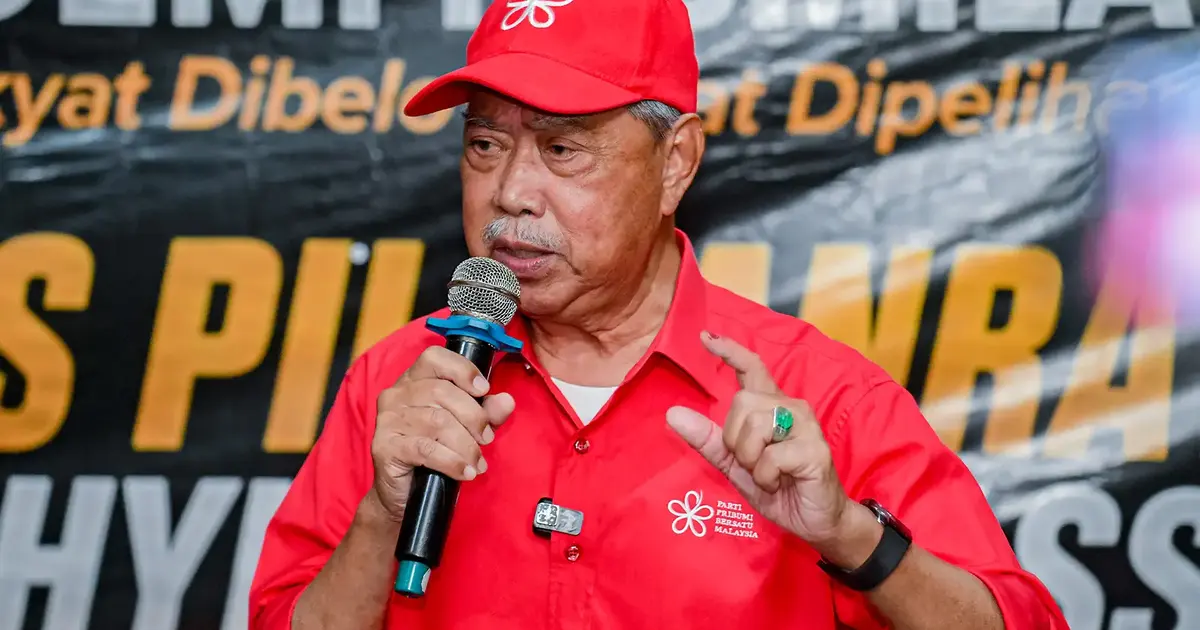
Bersatu president Muhyiddin Yassin has rejected allegations that his party is overstepping boundaries in electoral matters, responding sharply to criticism levelled by fellow political figure Khaled. The rebuke underscores mounting tensions within Malaysia's fractious political landscape as various coalitions jostle for position ahead of electoral contests.
Muhyiddin's statement represents a defence of what he characterises as the legitimate exercise of democratic participation. His position rests on a straightforward principle: every registered political party possesses the inherent right to contest elections with the objective of securing victory. This framing casts the accusation of 'meddling' as fundamentally misguided, conflating normal campaign activity with improper interference.
The exchange reflects deeper currents within Malaysia's coalition politics, where alliances frequently shift and splinter along factional lines. Bersatu, which emerged from a split within the United Malays National Organisation, has positioned itself as a kingmaker capable of tilting electoral outcomes. This leverage has made the party both valuable to potential coalition partners and a source of friction as it asserts its interests in candidate selection and policy direction.
Khaled's criticism, though details remain limited, appears to target what some perceive as Bersatu's assertive posturing in electoral negotiations. In Malaysia's complex coalition environment, the boundary between legitimate political advocacy and overreach remains contested. Smaller parties often accuse larger ones of dominating candidate allocation and campaign strategies, creating grievances that periodically surface in public disputes.
Muhyiddin's response emphasises the democratic legitimacy of electoral competition itself. By framing party participation as a fundamental right rather than a discretionary privilege, he redefines the terms of debate. This rhetorical manoeuvre shifts focus from specific allegations about Bersatu's conduct towards broader principles of democratic participation that few can comfortably challenge without appearing anti-democratic.
For Malaysian political observers, the dispute illustrates how coalition politics creates inherent tensions. Parties must cooperate to achieve electoral viability, yet each maintains distinct interests in seat allocation, leadership roles, and policy priorities. When these interests collide, accusations of 'meddling' or overreach frequently emerge. The Bersatu-Khaled dispute exemplifies this recurring pattern.
The timing of this confrontation carries significance within Malaysia's electoral calendar. As various coalitions prepare for forthcoming contests, internal squabbles over resource distribution and strategic direction become increasingly visible. These public disagreements, while sometimes framed as principled disputes, frequently mask negotiations over practical matters like which coalition candidates will contest which seats and under what party banner.
Bersatu's evolution deserves context for understanding this conflict. Since its formation, the party has navigated complex relationships with UMNO, PKR, and other partners. These relationships have proven volatile, oscillating between cooperation and confrontation. Muhyiddin's willingness to publicly defend his party's electoral role suggests confidence that Bersatu possesses sufficient political capital to withstand criticism from coalition partners.
The substance of 'meddling' accusations often proves elastic in Malaysian political discourse. What one party characterises as improper interference, another describes as legitimate coalition coordination. Without access to specific grievances underlying Khaled's criticism, it remains difficult to assess whether the dispute concerns procedural matters in candidate selection, resource allocation, campaign autonomy, or broader strategic disagreements.
For regional observers and Malaysian voters, these internal coalition disputes carry practical implications. They may signal instability within governing arrangements or opposition blocs, potentially influencing electoral outcomes. When coalition partners publicly criticise one another, it raises questions about cohesion and raises uncertainty among voters about governance arrangements should those coalitions win power.
Muhyiddin's firm response suggests Bersatu will not acquiesce to pressure that it believes undermines its legitimate political interests. This hardline stance may deepen tensions within their coalition or reinforce Bersatu's positioning as an independent force refusing subordination to larger partners. Either outcome affects the broader political balance across Malaysia.
The dispute also reflects generational and ideological tensions within Malaysian politics. Different parties maintain varying conceptions of how coalition relationships should function, what constraints should bind member parties, and how electoral resources should be distributed. These philosophical differences, layered atop personality clashes and competitive anxieties, produce the friction evident in this public exchange.
Moving forward, whether this disagreement escalates into serious coalition fracturing or remains manageable through behind-the-scenes negotiation will depend on factors beyond this particular dispute. Broader considerations including electoral calculations, broader political alignments, and leadership decisions at the highest levels will ultimately determine whether Bersatu-Khaled tensions threaten existing arrangements or dissipate with time.

