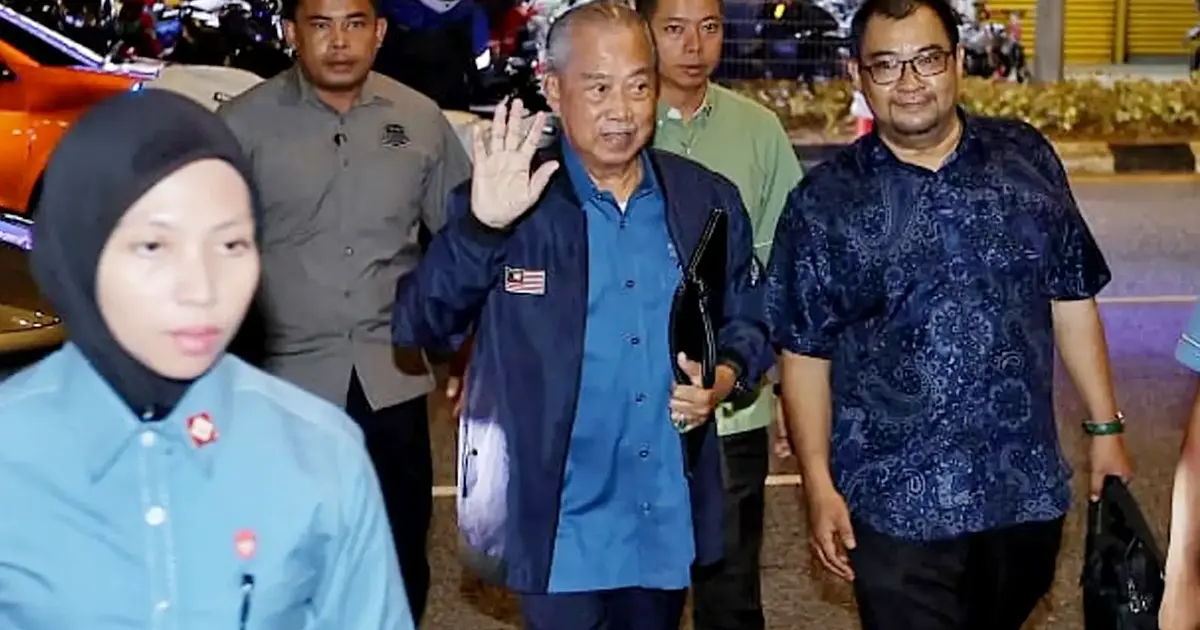
Tan Sri Muhyiddin Yassin has convened an emergency assembly of Perikatan Nasional leadership to navigate the coalition through its most significant structural crisis since its formation. The hastily arranged meeting brings together senior figures from the three-party alliance at a moment of acute tension following PAS's surprise announcement to sever formal ties with Bersatu, destabilising the political arrangement that has served as the primary opposition vehicle in recent parliamentary sessions.
The timing of the conclave underscores the severity of the situation confronting PN. For months, the coalition has positioned itself as a cohesive counterweight to the ruling Pakatan Harapan administration, with particular emphasis on presenting a unified front during parliamentary votes and policy debates. PAS's abrupt departure threatens to undermine this carefully constructed narrative, exposing fractures that observers have long suspected beneath the surface of the partnership. The decision by the Islamic party to withdraw signals deeper disagreements over political direction and coalition governance that have apparently grown untenable.
Bersatu's position within the alliance has become untenable following the PAS rupture. The party, formed by Muhyiddin himself and serving as the ideological nucleus of PN, now faces questions about its electoral viability and coalition utility. Without PAS's substantial parliamentary representation and traditional grassroots machinery, particularly in rural constituencies across the peninsula, Bersatu's leverage within the opposition architecture diminishes considerably. The party must grapple with whether its reduced footprint renders it a liability rather than an asset to the remaining alliance members.
The mechanics of tonight's discussion will likely centre on salvaging whatever institutional coherence PN can maintain in the immediate aftermath of PAS's departure. Muhyiddin must navigate competing pressures from different factions within both Bersatu and its remaining coalition partners, who will harbour divergent views about how aggressively to court PAS members or whether to pursue alternative political alignments. The meeting represents a critical juncture where the coalition's future trajectory will be charted, with potential implications extending well beyond the three parties directly involved.
For Malaysian political observers, this development represents the latest chapter in the perpetual instability that has characterised opposition politics since the 2022 general election. Unlike ruling coalitions, which benefit from administrative resources and patronage machinery to enforce discipline, opposition blocs operate primarily on ideological compatibility and mutual electoral interest. When these foundations erode, as appears to be happening with PN, the consequences cascade rapidly. PAS's departure suggests these compatibilities have finally given way to irreconcilable differences over fundamental questions of political strategy and leadership direction.
The regional implications warrant consideration as well. A weakened and fractionalised opposition in Malaysia creates a political environment where the governing coalition faces diminished scrutiny and accountability pressure. This dynamic affects not merely domestic governance but potentially influences bilateral relations and regional standing, particularly among Southeast Asian democracies watching how Malaysian institutions manage periods of political turbulence. A stable, constructive opposition serves broader institutional interests beyond party politics.
Bersatu's circumstances warrant particular sympathy from analysts. The party entered its current predicament largely through forces beyond its control—the pandemic-era collapse of the original Pakatan Harapan administration, subsequent realignments, and eventual coalition formation with PAS and other parties. Now it faces the possibility that the very alliance constructed to enhance its political standing may have instead trapped it in an untenable position. The party's capacity to survive PAS's departure as an independent political force remains unresolved and depends substantially on decisions made during tonight's deliberations.
The broader opposition landscape in Malaysia has long suffered from chronic fragmentation and leadership disputes that prevent the emergence of a genuinely dominant alternative government. Perikatan Nasional, whatever its shortcomings, represented a partial consolidation effort. PAS's withdrawal effectively fragments that consolidation and resurrects the prospect of competing opposition voices splitting the anti-government vote, an outcome that historically favours the incumbent administration. This dynamic has plagued Malaysian opposition politics for decades and appears poised to reassert itself with renewed force.
Muhyiddin's personal stakes in tonight's discussions extend beyond coalition management into questions of his own political future and legacy. His decision to form Bersatu and subsequently construct PN reflected strategic calculations about his own pathway to power. The unravelling of these arrangements, particularly through the actions of coalition partners, carries implications for his standing within his own party and the broader opposition ecosystem. His performance during this crisis will substantially shape perceptions of his leadership capacity among both supporters and rivals.
The coming hours and days will reveal whether Muhyiddin can engineer a resolution that preserves PN's core functionality or whether tonight's meeting marks the beginning of a more fundamental realignment. Options range from attempting to convince PAS members to reverse course, to restructuring PN without PAS, to pursuing entirely new coalitional arrangements. Each path carries distinct risks and rewards, and the consensus emerging from tonight's gathering will likely determine which direction the opposition takes. For Malaysian politics broadly, the outcome matters considerably beyond partisan considerations.