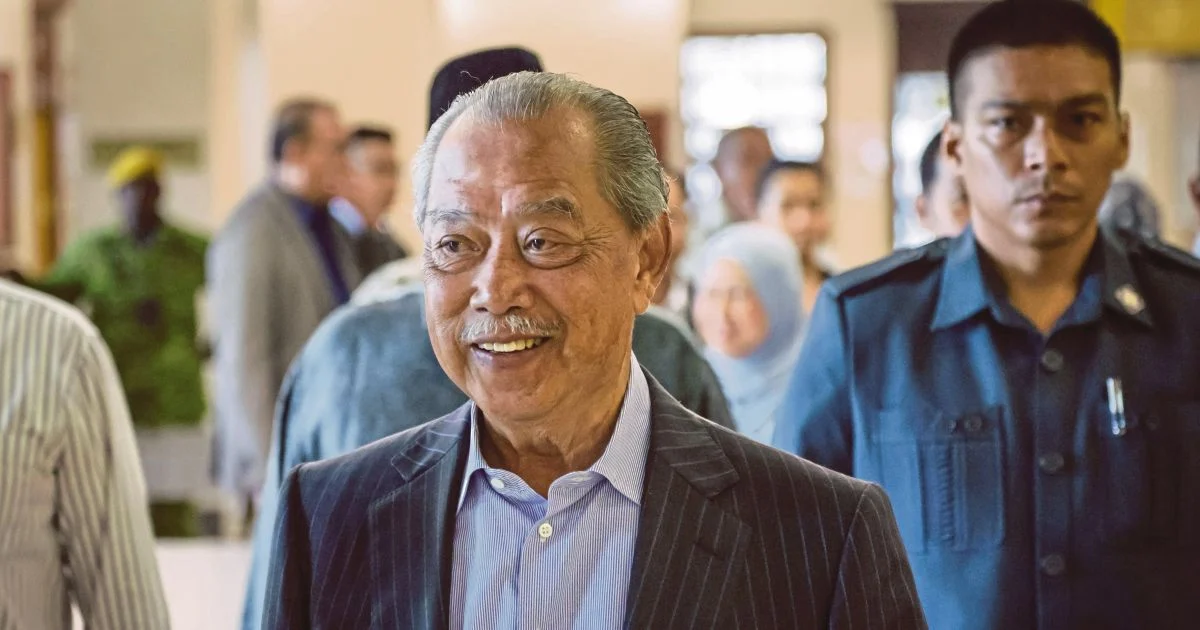
Bersatu president Tan Sri Muhyiddin Yassin has signalled optimism about Perikatan Nasional's prospects of capturing the Johor state government, a position he maintained during a recent visit to Pagoh despite the opposition coalition fielding candidates in only 33 of the state's 56 assembly seats. His confidence reflects a calculated political strategy that extends beyond traditional interpretations of electoral contests, suggesting the coalition sees pathways to power through coalition-building negotiations rather than relying solely on securing the largest number of direct wins at the ballot box.
The decision to contest fewer than two-thirds of available seats represents a significant strategic adjustment for PN in Johor, a state where the coalition has experienced mixed electoral fortunes in recent years. By limiting its direct participation, PN appears to be banking on either gains concentrated in winnable constituencies or the possibility of post-election negotiations with other elected representatives who may be persuaded to support its bid for the state premiership. This approach mirrors political dynamics observed elsewhere in Malaysia, where controlling sufficient seats through various combinations has proven decisive in state government formation.
Muhyiddin's confidence gains additional weight when examined alongside the broader fragmentation of Johor's political landscape. The state has historically been dominated by Barisan Nasional, particularly its component UMNO party, yet recent election cycles have demonstrated that voter sentiment remains fluid and subject to shifting allegiances. The introduction of multiple political forces competing for influence has created a more complex electoral environment where coalitions must carefully calculate where they can win decisively versus where other political entities might deliver better results.
The PN strategy in Johor also reflects calculations about incumbent government performance and public sentiment. Unlike previous election cycles, voters in Johor have shown greater willingness to consider alternatives to established ruling coalitions, suggesting that the momentum factor could work in PN's favour regardless of the raw number of candidates it fields. Muhyiddin's public statements appear designed to project an image of a coalition capable of governing despite not contesting every seat, a messaging approach intended to unify supporters and attract potential post-election coalition partners.
Geographically and demographically, Johor's 56 seats encompass diverse constituencies with varying political leanings. Rural areas, urban centres, and industrial zones each present distinct electoral dynamics that require tailored campaign strategies. By concentrating resources in constituencies where PN has identified stronger support bases, the coalition can maximize its electoral efficiency and focus campaign messaging on regions where the party structure and ground organization remain robust. This selective approach, while appearing cautious, demonstrates sophisticated political calculation about where votes can most effectively be converted.
The opposition coalition's positioning must also be understood within the context of Malaysia's evolving political climate. Recent months have witnessed shifting alignments at the federal level, with various political parties reassessing their strategic partnerships and potential configurations for future governance. These developments at the national level inevitably influence how state-level coalitions position themselves, as political leaders consider how today's electoral outcomes might influence tomorrow's opportunities for higher office or influence.
For Malaysian voters and observers, Muhyiddin's confidence statement raises important questions about transparency in political strategy and the mechanics of coalition governance. When political leaders suggest viability despite contesting limited seats, they implicitly acknowledge that winning government depends on factors beyond winning elections—specifically the willingness of elected representatives to switch allegiances or support specific candidates for chief minister positions. This reality, while technically permissible under Malaysia's constitutional framework, highlights ongoing debates about democratic legitimacy and voter expectations.
Johor's significance to Malaysian politics extends beyond its state-level importance. As one of Malaysia's largest and most economically significant states, the direction of Johor's government influences broader national political dynamics. A PN-led state government would represent a substantive shift in the political map, potentially strengthening the coalition's positioning for future federal negotiations or national elections. Conversely, a continuation of Barisan Nasional rule would maintain the existing pattern where the ruling federal coalition maintains most state governments.
The coalition's selective seat strategy also reflects pragmatic recognition of Bersatu's organizational capacity and financial resources. Rather than overextending limited party machinery across all 56 constituencies, PN leadership has apparently determined that concentrating efforts in winnable areas maximizes the return on organizational and campaign investments. This reflects lessons learned from previous electoral cycles where parties stretched resources too thin across non-competitive seats.
Muhyiddin's public confidence serves multiple audiences simultaneously. To PN supporters, it projects strength and viability, encouraging continued party loyalty and campaign participation. To potential coalition partners, it signals that PN offers a serious alternative to incumbent authorities. To Johor voters considering switching their support, it suggests backing a coalition that has genuine prospects of forming government. This calculated messaging represents a fundamental aspect of modern political campaigning in Malaysia.
The eventual outcome in Johor will provide important data points for understanding contemporary Malaysian electoral dynamics. Whether PN's strategy succeeds or fails will inform how opposition and challenger coalitions approach future state elections, particularly regarding optimal seat contestation levels and coalition arithmetic. The Johor election therefore serves as a significant testing ground for political strategies that extend well beyond the state's boundaries and will likely influence electoral calculations across Malaysia.

