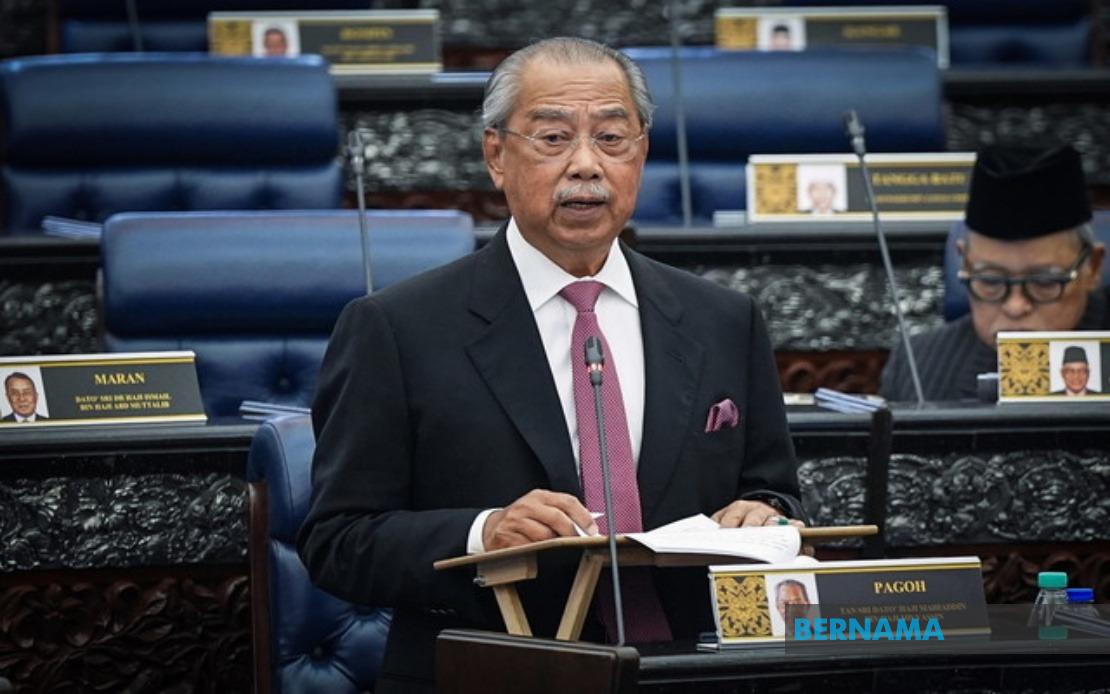
Tan Sri Muhyiddin Yassin, the Pagoh Member of Parliament and former Prime Minister, has made a forceful call for the government to launch an urgent and thorough forensic audit of Lembaga Tabung Haji's management and fund allocation, with completion targeted within twelve months. Speaking during parliamentary proceedings on the institution's Royal Commission of Inquiry findings, Muhyiddin stressed that such an investigation would be essential for establishing accountability following the revelation of significant governance failures within the Islamic pilgrimage fund administrator.
The RCI report, which became public on July 29, has painted a troubling picture of TH's operations spanning the six-year period from 2014 to 2020. According to the inquiry's conclusions, the institution sustained estimated cumulative losses ranging between RM10 billion and RM12.6 billion during this timeframe—a figure that underscores the scale of financial deterioration at the organisation responsible for managing savings of millions of Malaysian pilgrims. Muhyiddin characterised these findings as matters demanding immediate, uncompromising government action rather than delayed or half-hearted responses.
The former prime minister articulated a clear rationale for why an independent forensic examination represents the necessary next step. Such an investigation would enable authorities to trace the movement and allocation of funds throughout TH's systems, identify instances where fraud may have occurred, pinpoint examples of power abuse by officials or management, and expose areas where negligence contributed to losses. Beyond mere fact-finding, Muhyiddin emphasised that anyone culpable for causing financial harm to TH—regardless of whether their actions constituted deliberate wrongdoing, misuse of authority, or failure of proper oversight—must face justice through appropriate legal mechanisms.
Parliament's special sitting on this matter has drawn contributions from opposition and government-aligned lawmakers alike, indicating that concerns about TH transcend traditional partisan divisions. Syed Saddiq Syed Abdul Rahman, representing MUDA in the Muar constituency, proposed establishing a Multi-Agency Task Force specifically designed to investigate fourteen problematic investments that the RCI identified as particularly problematic. His proposal reflects a recognition that isolated investigations conducted by single agencies risk missing the interconnected nature of TH's difficulties and may fail to capture the full scope of decision-making failures that precipitated losses.
Syed Saddiq's proposed task force would integrate enforcement capacity from multiple quarters, including the Malaysian Anti-Corruption Commission, the Royal Police Force, and the Inland Revenue Board. This coordinated approach addresses a fundamental challenge in investigating complex institutional failures: determining where responsibility ultimately lies and ensuring that investigation proceeds with sufficient technical expertise and legal authority to examine financial irregularities comprehensively. The MUDA MP further suggested that forensic audits should specifically examine each of the fourteen problematic investments identified by the RCI, arguing that understanding precisely how decisions were made and where value dissipated would be critical for preventing future repetition.
Syed Saddiq expanded the scope of his concerns beyond TH itself, proposing that similar intensive investigation should extend to Felcra Unified Management Services (Felda), Federal Land Development Authority, the Federal Government Land Development Authority (FGV), and Eagle High Plantations. This broader perspective suggests that governance and accountability issues may not be confined to TH but potentially represent systemic difficulties affecting multiple state-linked entities responsible for managing public assets and citizen savings. Such interconnections warrant coordinated examination to identify whether common factors—such as inadequate board oversight, weak internal controls, or absence of proper governance frameworks—contributed across institutions.
Datuk Seri Hasni Mohammad, the BN-aligned representative for Simpang Renggam, added his voice to demands for transparency and accountability, but with particular emphasis on ongoing monitoring rather than one-time investigation. Hasni urged the MACC, police, and other enforcement agencies to furnish regular progress reports on all investigations emerging from RCI recommendations, with clearly established reporting schedules and defined timeframes. This proposal recognises that forensic investigations and enforcement actions often extend across months or years, and that public confidence requires visible progress rather than investigations disappearing into bureaucratic processes.
Hashni also advocated for establishing a framework of continuous parliamentary oversight that transcends the traditional government-opposition dynamic, instead creating a permanent institutional mechanism for monitoring implementation of RCI recommendations. His proposal for bipartisan, institution-based parliamentary scrutiny reflects growing recognition that accountability for public institutions requires mechanisms extending beyond electoral cycles or changes in political control. Regular reporting to the Dewan Rakyat would ensure that implementation of reforms remains subject to legislative review and public awareness.
The RCI report itself contains twenty-five recommendations intended to address the deficiencies identified in TH's governance and operational practices. As of July 30, when the report was finalised, TH had already implemented approximately seventy-five per cent of these recommendations, suggesting that some institutional self-correction has begun. However, the scale of historical losses and the apparent depth of governance failures suggest that implementing recommendations alone may be insufficient without parallel investigation and accountability mechanisms to address how such problems arose and who bears responsibility.
For Malaysia's broader institutional landscape, the TH situation carries significant implications. The fund administers retirement savings for millions of pilgrims, making its stability and trustworthiness central to public confidence in state-linked institutions. The revelation of such substantial losses, combined with governance weaknesses, raises questions about oversight mechanisms applicable to similar bodies managing public resources or citizen savings. The parliamentary response, spanning government and opposition contributions, suggests potential consensus that stronger accountability frameworks are necessary for such institutions, even if political agreement on specific reforms remains to be negotiated.
The forensic audit process, should it proceed as advocated, would likely examine investment decision-making processes, approval authorities, due diligence procedures, and monitoring practices that allowed problematic investments to proceed without detection. Understanding precisely how decisions were made, who authorised them, and what information was available to decision-makers at critical junctures will be essential for preventing recurrence and establishing accountability. The one-year timeframe proposed by Muhyiddin suggests recognition that such investigations require thorough execution but also cannot extend indefinitely without risking public patience and institutional credibility.
The parliamentary sitting provides a formal mechanism for elevating these concerns and embedding them within official proceedings, but practical implementation will depend on government willingness to deploy necessary investigative resources, enforcement agency cooperation, and political protection of investigators from interference. The involvement of multiple agencies and oversight from parliament itself may provide some structural protection against such risks, though international experience with investigating major institutional failures suggests that such protections remain imperfect.

