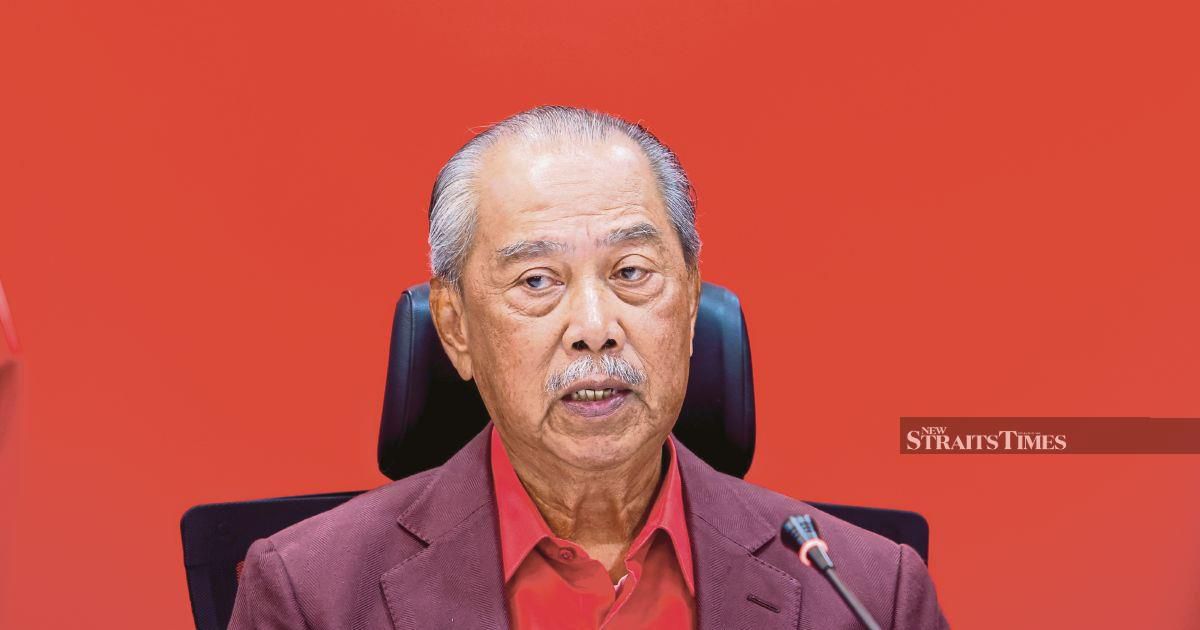
Bersatu president Tan Sri Muhyiddin Yassin has levelled fresh allegations against Umno, claiming the party is executing a coordinated strategy to destabilise the unity government that currently governs Malaysia through a coalition with Pakatan Harapan. The accusation marks an escalation in tensions within Malaysia's ruling structure, as Muhyiddin suggests the two major Malay-Muslim parties are pursuing irreconcilable political objectives that threaten the stability of the current administration.
Muhyiddin's assertion centres on the contention that Umno is replicating the exact methods that precipitated the downfall of the Perikatan Nasional government in which his party played a central role. This historical parallel carries significant weight in Malaysian political discourse, as the collapse of the PN administration in 2021 remains a defining moment in the nation's recent political trajectory. The former prime minister appears to be drawing a direct line between Umno's past conduct and its present actions, suggesting a pattern of behaviour aimed at fracturing coalitions when the party's interests are not adequately served.
The implications of such allegations are considerable for Malaysia's political landscape and governance effectiveness. A functioning unity government requires consistent cooperation among diverse political actors with competing ideological positions and electoral interests. When major coalition partners begin publicly accusing one another of plotting internal collapse, the fundamental trust necessary for cabinet coordination and parliamentary discipline erodes. For Malaysian citizens and international observers, these claims raise questions about the sustainability of the current administration and whether short-term political manoeuvring might supersede long-term national development priorities.
The relationship between Bersatu and Umno represents one of the most volatile dynamics within the ruling coalition. Both parties appeal to similar voter demographics and compete for influence within Malay-Muslim political circles. This structural competition creates inherent tensions that occasionally erupt into public disputes, particularly when one party perceives that its influence within government is diminishing relative to the other. The unity government's success has largely depended on each component party accepting a defined allocation of ministerial posts and policy influence, but these arrangements can prove fragile when political fortunes shift.
Umno's strategic calculus appears to centre on maximising its leverage within government while simultaneously building credibility with voters who have grown sceptical of its political direction over recent years. The party suffered electoral losses in 2022 that shocked its leadership and forced a recalibration of its political positioning. By maintaining pressure on the government from within, Umno may be attempting to demonstrate dynamism to its base while simultaneously negotiating improved terms within the coalition structure. This dual-track approach, however, creates precisely the instability that Muhyiddin identifies in his public statements.
The stakes for Pakatan Harapan are equally high in this coalition dynamic. The opposition alliance requires continued cooperation from both Bersatu and Umno to maintain its parliamentary majority and govern effectively. Should tensions between these partners escalate beyond the point of managed disagreement, the entire structure could collapse, potentially forcing new elections or leading to alternative coalition arrangements that exclude some current partners. For Pakatan Harapan, this represents an ongoing vulnerability that complicates longer-term planning and policy implementation.
Muhyiddin's decision to publicly articulate these concerns signals that Bersatu leadership perceives genuine threats to its position within government. Rather than managing such disputes through quiet diplomatic channels, the resort to public accusations suggests that private negotiations have either failed or are proceeding unfavourably for his party. This escalation strategy carries risks, as public allegations can harden positions and make subsequent compromise more difficult. However, it also allows Muhyiddin to appeal directly to his party's base and maintain the appearance of vigorous political leadership.
The Malaysian electorate increasingly views coalition politics with scepticism, having witnessed multiple government collapses and realignments in recent years. Public disputes between coalition partners, particularly accusations of sabotage and conspiracy, reinforce voter perceptions that politicians prioritise factional interests over national governance. This erosion of public confidence in political institutions creates a permissive environment for electoral volatility and reduces the likelihood that any single coalition can command stable parliamentary support over extended periods.
Regional observers monitor these Malaysian political developments closely, as the country's stability influences the broader Southeast Asian political environment. Malaysia's status as a significant economic actor and regional diplomatic voice means that domestic political turbulence can have spillover effects. Foreign investors monitor coalition stability as an indicator of policy consistency, and any suggestion of governance instability can affect business confidence and capital flows. The unity government's relative success in maintaining stability over recent years has provided some reassurance to international stakeholders, but these fresh allegations suggest that reassurance may be misplaced.
Moving forward, the trajectory of these coalition tensions will depend on whether Bersatu and Umno can negotiate a recalibration of their relationship or whether disputes continue escalating. Muhyiddin's public statements set the stage for either serious negotiations aimed at reducing friction or further deterioration in intra-coalition relations. The outcome will significantly influence Malaysia's political stability and the government's capacity to implement its policy agenda effectively. For now, the unity government continues to function, but these underlying tensions suggest that its longevity remains uncertain.

