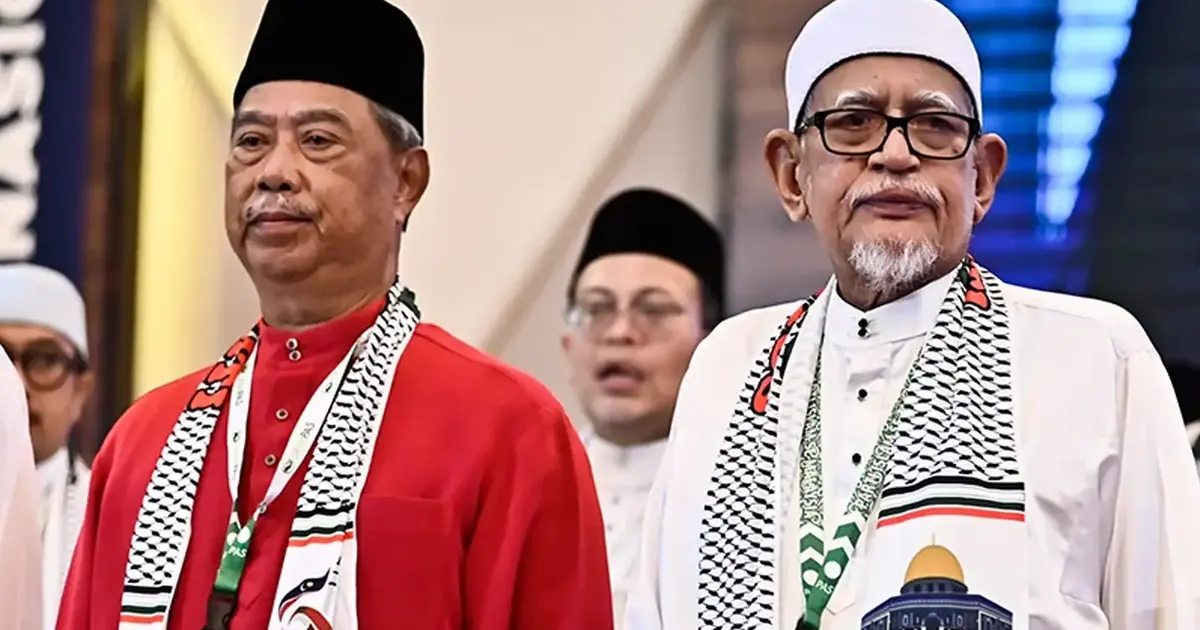
Bersatu president Muhyiddin Yassin has launched a scathing attack on PAS, accusing the Islamic party of pursuing independent talks with Barisan Nasional without consulting coalition partners or seeking approval from Perikatan Nasional leadership. The criticism marks an escalation of tensions within the opposition alliance that has governed Malaysia since the 2022 general election, exposing fundamental disagreements about the bloc's direction and decision-making processes.
Muhyiddin's grievance centres on what he characterises as unilateral decision-making by PAS, which he argues undermines the foundational principles of collective governance that should govern an alliance. His remarks suggest that PAS leadership moved forward with negotiations touching on political arrangements and potentially cabinet positions without the prior knowledge or consent of fellow coalition members, a breach of protocol that Bersatu views as incompatible with maintaining unity.
The dispute reflects deeper structural vulnerabilities within Perikatan Nasional, which has struggled to balance the competing interests of its constituent parties since assuming power. Bersatu, which controls the Prime Minister's office through Muhyiddin's leadership, has increasingly found itself at odds with PAS over resource allocation, decision-making authority, and strategic direction. PAS, commanding significant electoral support particularly in Peninsular Malaysia's heartland, has leverage that rivals Bersatu's institutional advantages.
The timing of these accusations carries particular significance given Malaysia's complex political landscape. Perikatan Nasional's governance has already faced criticism from both the international community and domestic stakeholders regarding policy implementation and institutional independence. Internal divisions of this magnitude risk further weakening the coalition's effectiveness and public perception, potentially emboldening opposition figures and destabilising the government's parliamentary majority.
PAS's engagement with Barisan Nasional raises questions about long-term coalition stability and whether component parties are positioning themselves for post-election realignment. Historically, Malaysian coalition politics has been characterised by fluid alliances and strategic repositioning, particularly when parties sense shifts in public sentiment or electoral advantage. Whether PAS intends these discussions as genuine exploration of alternative arrangements or as leverage to extract concessions from Perikatan Nasional remains unclear, but the implications extend beyond internal coalition management.
For Bersatu, the challenge is particularly acute given its dependence on PAS for state-level governance and parliamentary support. The party, which emerged from Mahathir Mohamad's 2020 departure from UMNO, has never commanded the grassroots organisation or electoral machinery of established parties like PAS or Umno. This structural disadvantage means Bersatu cannot afford extended intra-coalition conflict that might prompt PAS to genuinely defect or demand extensive concessions.
The relationship between Perikatan Nasional and Barisan Nasional has always been complicated. Both blocs claim to represent Malay-Muslim interests and Islamic governance, yet they compete for votes and influence across overlapping constituencies. Barisan Nasional, dominated by UMNO and Umno's traditional allies, views Perikatan Nasional as an upstart challenge to its historical political dominance. Any flirtation by PAS with Barisan Nasional negotiations suggests the Islamic party might be hedging its bets or seeking better terms within a potential restructured arrangement.
For Malaysian politics more broadly, this internecine conflict within the ruling coalition carries implications for policy implementation and legislative effectiveness. A government preoccupied with internal alliance management inevitably dedicates reduced capacity to substantive governance issues including economic policy, infrastructure development, and social welfare initiatives. The public's patience for coalition squabbles diminishes if visible improvements in living standards, employment, and service delivery prove elusive.
The dispute also highlights the continued weakness of institutional constraints on coalition behaviour in Malaysian politics. Unlike parliamentary systems with formal coalition agreements and binding mechanisms for dispute resolution, Malaysian alliances often rely on personal relationships, informal understandings, and the threat of electoral consequences. When these informal mechanisms break down, as appears to be happening within Perikatan Nasional, few institutional safeguards exist to restore order or prevent escalating dysfunction.
Muhyiddin's public criticism of PAS represents a deliberate choice to air grievances through media channels rather than resolving disputes through internal coalition mechanisms. This approach signals either breakdown of internal communication channels or a calculated decision to mobilise public opinion and reinforce Bersatu's political positioning ahead of potential negotiations or electoral calculations. Either interpretation suggests Perikatan Nasional faces genuine stability challenges that extend beyond routine coalition friction.
As regional observers and international actors monitor Malaysia's political evolution, the durability and effectiveness of the current government arrangement will influence perceptions of institutional stability and governance capacity. Coalition instability in Southeast Asia's third-largest economy carries potential spillover effects on investor confidence, policy predictability, and the region's political landscape. The coming weeks will likely determine whether Muhyiddin's criticism prompts genuine internal reform or accelerates the coalition's fragmentation.

