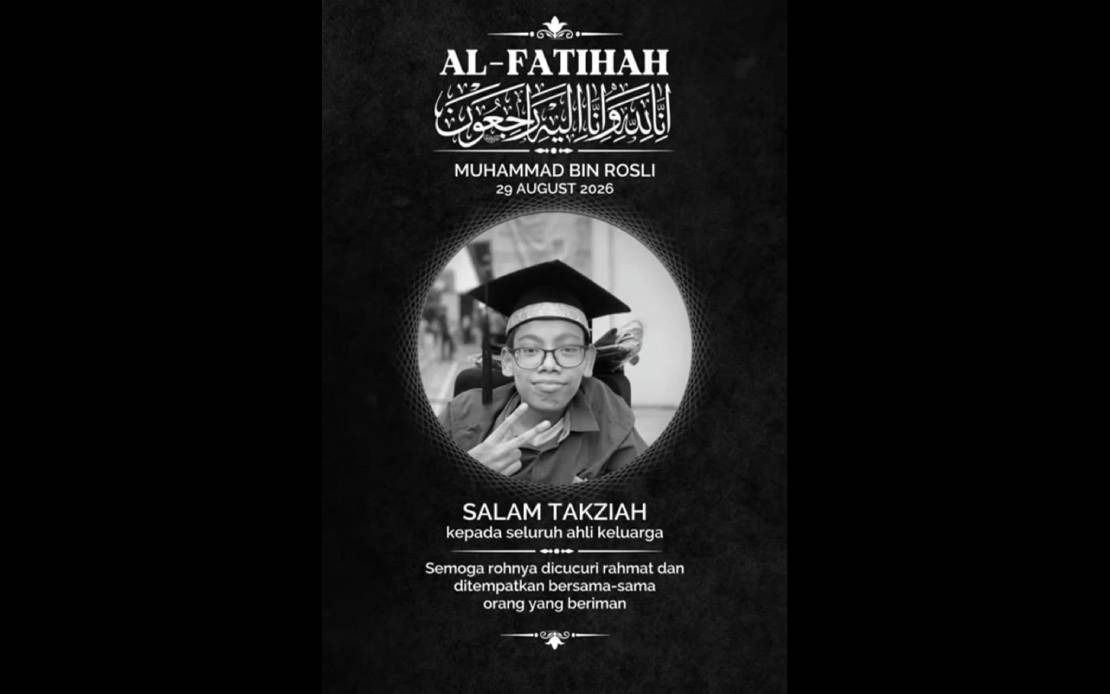
Muhammad Rosli, the Malaysian conjoined twin who became a symbol of medical achievement after a historic separation procedure in Saudi Arabia more than two decades ago, died this morning at Chancellor Tuanku Muhriz Hospital in Cheras. He was 22 years old. His passing was announced by his surviving twin brother Ahmad through a social media post, describing how Muhammad had "returned to his Creator" at 10:45 am Malaysian time. The announcement triggered an outpouring of reflection on one of Malaysia's most closely followed medical cases, a story that had captured public imagination and demonstrated the possibilities of modern surgical intervention.
Muhammad had been receiving treatment for bladder cancer at the King Fahd National Guard Hospital in Riyadh since July, undergoing an intensive regimen that included five surgical procedures and five rounds of chemotherapy. Though he had initially been declared cancer-free following his treatments, his condition deteriorated sharply in recent days. According to Ahmad's statement yesterday, Muhammad's blood acid levels had risen to dangerous levels, rendering him semi-conscious and signalling the beginning of his final decline. The rapid deterioration came as a shock to family members who had hoped the aggressive medical intervention would extend his life considerably.
The twins' story began in earnest in 2001, when they underwent a liver-splitting procedure at the University Malaya Medical Centre in a procedure that doctors believed was necessary to prepare them for eventual separation. The following year, in September 2002, the brothers underwent the definitive separation surgery—a complex and extraordinarily delicate operation that lasted 22 hours and 45 minutes at the King Fahd National Guard Hospital. The surgery represented a watershed moment in Malaysian medical history and regional surgical expertise, drawing international medical attention and establishing the hospital's reputation for undertaking procedures of extraordinary complexity.
The separation itself was no routine operation, as conjoined twins sharing organs required precise surgical planning and execution to ensure both brothers could survive independently. The shared liver necessitated careful division, with each twin receiving a viable portion sufficient to sustain independent biological function. International surgical teams collaborated to execute the procedure, which involved not only separating shared organs but also reconstructing abdominal walls and ensuring proper vascularisation for both individuals. The success of the operation demonstrated Malaysian and Saudi Arabian capacity to execute world-class surgical interventions on cases that many other medical centres would have deemed too risky or complex to attempt.
Following the separation, both brothers pursued relatively normal lives, though their medical journey continued to require specialised monitoring and occasional interventions. Muhammad's diagnosis with bladder cancer represented a new and unexpected challenge, one that tested not only his physical resilience but also the capabilities of modern oncology. The decision to pursue aggressive treatment reflected the family's determination to exhaust all available medical options, and the journey to Riyadh placed him in one of the Middle East's leading medical facilities.
The twins' case had profound significance for Malaysian medicine and public understanding of surgical possibilities. Their story appeared regularly in media coverage and became a reference point for discussions about medical advancement in Malaysia, inspiring confidence in local medical expertise and drawing attention to the capabilities of hospitals and surgeons within the country. The 2002 separation became a point of national pride, representing Malaysian doctors and institutions contributing to global medical knowledge and demonstrating technical expertise at the highest international level.
Muhammad's burial took place the same day at the USJ 22 Muslim Cemetery in Subang Jaya, with funeral rites completed by evening. Ahmad's public announcement emphasised gratitude for prayers and support extended to the family throughout Muhammad's illness, appealing to people's spiritual sympathies while acknowledging the community's investment in their well-being. The tone of the announcement reflected both Islamic values and the deep personal connection that had formed between the family and Malaysian society over two decades.
The loss carries particular poignancy given that the twins had already defied medical expectations by surviving the separation surgery itself and living independently for two decades afterward. Many conjoined twins face significant health challenges following separation, yet Muhammad and Ahmad had managed to reach adulthood, attend school, and participate in normal social life. The cancer diagnosis and subsequent rapid decline suggest that ongoing medical vulnerabilities may have contributed to his condition, a sobering reminder that successful separation does not necessarily eliminate all future health complications or guarantee extended life expectancy.
For Malaysian healthcare professionals and the broader medical community, Muhammad's passing represents the bittersweet conclusion to a case that had defined much of their collective identity and capability. While the separation procedure had been unquestionably successful in technical terms, the ultimate outcome underscores the limitations of even the most advanced medical intervention. The case remains instructive in understanding the long-term outcomes for conjoined twins post-separation and contributes valuable data to international medical literature on such procedures.
The brothers' story also resonates across Southeast Asia, where Malaysia's medical tourism and surgical expertise have positioned the country as a destination for complex medical procedures. The successful separation of Muhammad and Ahmad helped establish that reputation, and their case continues to be referenced in discussions of regional medical capability and innovation. As the medical community and public reflect on Muhammad's passing, the focus inevitably returns to the extraordinary achievement of 2002 and the question of how two young lives diverged so dramatically in their final chapter.

