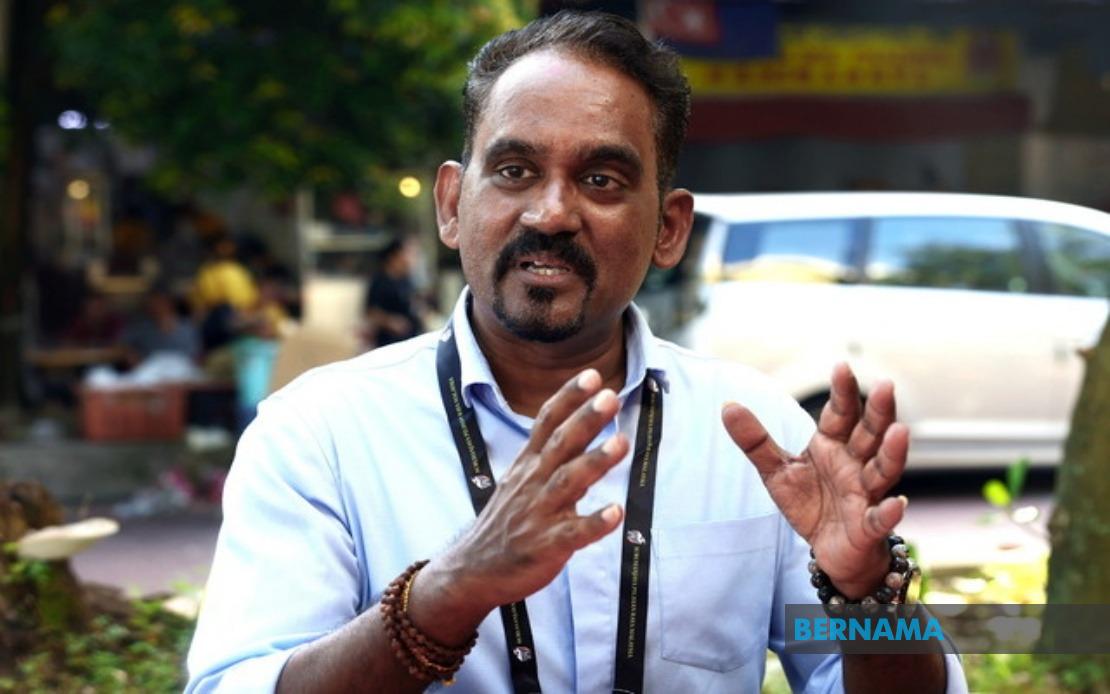
The Malaysian United Democratic Alliance (MUDA) is banking on a significant breakthrough in the Kulai area as the 16th Johor state election approaches, with candidate M. Premanand expressing bullish expectations for the Bukit Batu state seat. The 53-year-old first-time candidate believes the constituency represents a golden opportunity for the younger reform-oriented party to expand its foothold beyond the singular success it achieved in the previous state election, when it secured the Puteri Wangsa seat.
Premanand's optimism stems from what he characterises as an emerging voter appetite for MUDA's platform of governance built on transparency and integrity. He argues that the electorate has demonstrated growing recognition of these principles as essential qualities for any political representative, particularly in an era when public trust in government institutions faces mounting pressure. The candidate attributes much of the party's credibility to the consistent advocacy of party founder Syed Saddiq Syed Abdul Rahman, whom he credits with maintaining focus on grassroots concerns despite navigating numerous political obstacles and institutional headwinds that have tested the young politician's resolve over recent years.
Speaking to media in Kulai, Premanand articulated an ambitious vision that extends beyond a single constituency victory. He suggested that MUDA's expanding appeal in Johor could potentially translate into capturing multiple seats across the state, contingent on sustained voter confidence in the party's ideological commitments. This confidence appears calibrated to local sentiments rather than based on polling data or specific electoral projections, reflecting instead his reading of community sentiment during ground-level campaigning.
Premanand brings credentials that he believes resonate with Bukit Batu voters beyond party affiliation. As a longtime Kulai resident, he enjoys existing networks and community recognition that often prove instrumental in constituency-level contests. His professional background as an organisational development consultant and trainer adds another dimension to his candidacy, as he has worked across multiple economic sectors nationwide and can position himself as someone capable of translating private-sector expertise into public-sector problem-solving.
The candidate's development priorities for Bukit Batu reveal a focus on economic fundamentals that concern many Malaysian households. Central to his platform is addressing the chronic gap between the jobs available to young people and the qualifications they possess, a mismatch that constrains earnings potential and leaves many workers unable to command competitive wages relative to their education levels. Premanand frames this not merely as an individual hardship but as a systemic constraint affecting Johor's competitive position and quality of life standards across the state.
The wages issue carries particular resonance in the Johor context, where the geographical proximity to Singapore has historically created a brain drain dynamic, with Malaysian professionals crossing the causeway to access better remuneration packages. Premanand's explicit commitment to making local employment sufficiently remunerative to retain talent within Johor represents a direct challenge to this pattern and speaks to an emerging regional consciousness about stemming economic outflow. His stated ambition transforms the Bukit Batu constituency into a pilot case for demonstrating that Johor can compete on wages and employment quality without requiring workers to leave Malaysia.
Infrastructural vulnerabilities also feature prominently in Premanand's campaign messaging, particularly the recurring challenge of flooding that affects portions of the constituency. He has identified strengthening flood mitigation infrastructure as an immediate policy priority, acknowledging that climate-related disasters impose substantial costs on residents and undermine property values and long-term investment confidence in affected areas. This suggests MUDA's positioning as responsive to hyperlocal governance challenges rather than limiting its agenda to state-level abstraction.
The Bukit Batu contest will unfold as a five-way race, significantly complicating the electoral mathematics for all participants. Beyond Premanand's MUDA entry, the seat features Barisan Nasional's R. Kumaran, Pakatan Harapan's Arthur Chiong Sen Sern, Parti Bersama Malaysia's G. Tamili, and independent candidate Datuk Kamaruzaman Ali. The fragmentation of the field creates opportunities for candidates to advance with substantially less than majority support, potentially benefiting whichever contestant manages to consolidate votes most effectively among specific demographic or community segments.
MUDA's electoral positioning in Johor remains nascent relative to the established coalitions of Barisan Nasional and Pakatan Harapan, yet the party has demonstrated appeal among younger, urban-oriented voters and those sceptical of traditional political establishments. The party's founder Syed Saddiq has cultivated a personal brand emphasizing generational renewal and meritocratic governance, and these themes appear threaded through Premanand's campaign rhetoric, suggesting a coordinated messaging strategy across MUDA's state-level candidates.
For Malaysian political observers, the Bukit Batu contest serves as a barometer of whether MUDA can sustain electoral momentum beyond its initial breakthrough, or whether the Puteri Wangsa victory represented a largely isolated outcome. The constituency's composition—including both urban and semi-rural areas within Kulai—provides a reasonably representative microcosm of broader Johor demographics. Success would validate MUDA's claim to emerging viability as a third force in Malaysian politics; a disappointing result would suggest the party's appeal remains confined to specific urban pockets.
The 16th Johor state election is scheduled for July 11, with early voting commencing on July 7. The timing places the contest well into the post-pandemic period, when voter expectations regarding government delivery and economic management may have shifted compared to previous electoral cycles. Premanand's emphasis on employment and wage issues reflects sensitivity to cost-of-living pressures that have intensified across Malaysia in recent years, suggesting MUDA's messaging calibration is attuned to contemporary household concerns rather than abstract political principles alone.

