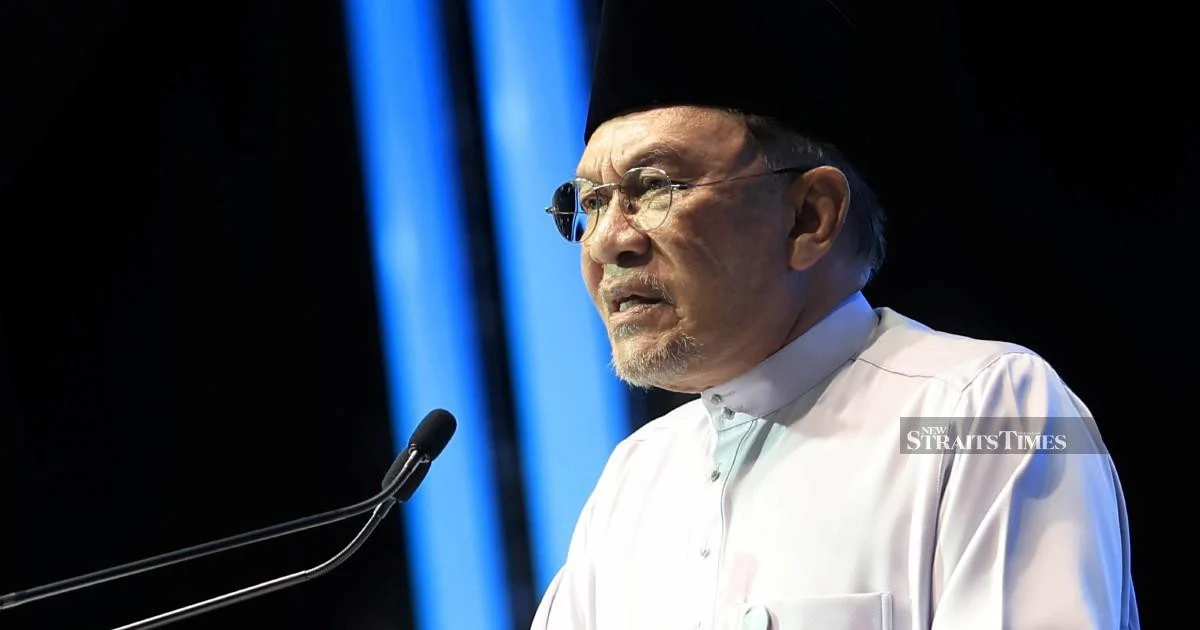
The Muar district office has formally rejected allegations that it prevented Prime Minister Datuk Seri Anwar Ibrahim from utilising government facilities for a scheduled community engagement activity. The denial comes as speculation surrounding access restrictions at the Penghulu Mukim Sungai Balang Complex continues to circulate in political circles ahead of the Johor state elections.
The controversial incident reportedly occurred last month, when questions arose about whether administrative obstacles or procedural complications had prevented the Prime Minister's planned visit to the rural complex in the Muar constituency. Such access disputes involving government property carry heightened sensitivity during election periods, as they can be interpreted as reflecting underlying political tensions or administrative bias.
Muar district, located in the southwestern region of Johor, remains a politically significant constituency with a diverse demographic composition. The area has witnessed intense electoral competition in recent years, with both ruling coalition and opposition parties investing considerable resources in grassroots mobilisation efforts. Community engagement programmes by senior government figures, particularly the Prime Minister, typically generate substantial local interest and media coverage.
The Penghulu Mukim Sungai Balang Complex serves as an important public facility within the district, hosting various government functions and community activities. Allegations of restricted access to such venues can raise questions about administrative impartiality, particularly when they involve high-profile political figures during election seasons. The district office's clarification suggests an attempt to address concerns about institutional neutrality.
Access to government buildings and facilities during electoral campaigns remains a contentious issue in Malaysian politics. Opposition parties and civil society organisations have periodically raised concerns about whether incumbent administrations may leverage control over government infrastructure to advantage ruling coalition candidates. Conversely, government officials have argued that standard procedures and security protocols should apply uniformly regardless of the political affiliation of visitors.
The timing of this dispute, occurring within the context of Johor's electoral cycle, adds political significance to what might otherwise be considered a routine administrative matter. Voters in Muar and surrounding areas are likely to form opinions based on how such incidents are characterised and explained by competing political narratives. The district office's public denial indicates awareness of the potentially damaging political implications of appearing to restrict the Prime Minister's access to government facilities.
Election-period disputes involving government resources frequently become focal points for broader political discourse about governance standards and institutional integrity. In Malaysia's federal system, where state and federal governments may be controlled by different coalitions, such tensions can escalate when opposing parties control different administrative levels. However, in Johor, the ruling coalition's dominance at both state and federal levels means this particular dispute likely reflects intra-coalition tensions rather than opposition-coalition disagreements.
The community engagement programme that prompted the original incident represents a standard political activity through which government leaders connect directly with constituents, explain policies, address grievances, and build electoral support. Such programmes are particularly important in rural and semi-rural areas like those surrounding Sungai Balang, where direct communication between senior officials and ordinary citizens carries particular weight.
Administrative procedures governing access to government facilities are established through various statutory authorities and guidelines. These procedures typically require advance notification, security clearance, and confirmation of venue availability. If the Prime Minister's office did encounter administrative obstacles, they may have stemmed from legitimate procedural requirements rather than deliberate obstruction. Conversely, if procedures were applied inconsistently, that could support allegations of political motivation.
The Muar district office's denial addresses only the allegation of deliberate barring from the facility. It does not necessarily address whether procedural complexities or administrative delays occurred, nor does it clarify the ultimate outcome—whether the Prime Minister subsequently accessed the complex or whether the event proceeded elsewhere. Such nuances matter considerably for assessing the accuracy of competing claims.
For Malaysian voters, particularly those in Muar who are evaluating their electoral choices, this incident contributes to broader perceptions about how government institutions function during election periods. Confidence in administrative neutrality and fair access to government resources serves as a foundation for democratic legitimacy. Public disputes about such matters, even when officially denied or resolved, can create lingering doubts about institutional impartiality.
The incident also reflects how election campaigns in modern Malaysia frequently play out across multiple channels simultaneously, including traditional media, social media assertions and counter-assertions, and official statements by concerned parties. Each layer of communication contributes to voter perceptions, often regardless of underlying factual accuracy. The district office's public response represents an attempt to shape this information environment.
Moving forward, such incidents highlight the importance of clear, transparent procedures governing access to government facilities during election periods. Establishing and publicly communicating standardised protocols—applicable regardless of visitor identity or political affiliation—could reduce opportunities for allegations of institutional bias. Whether current procedures achieve such neutrality remains an open question in Malaysian administrative practice.

