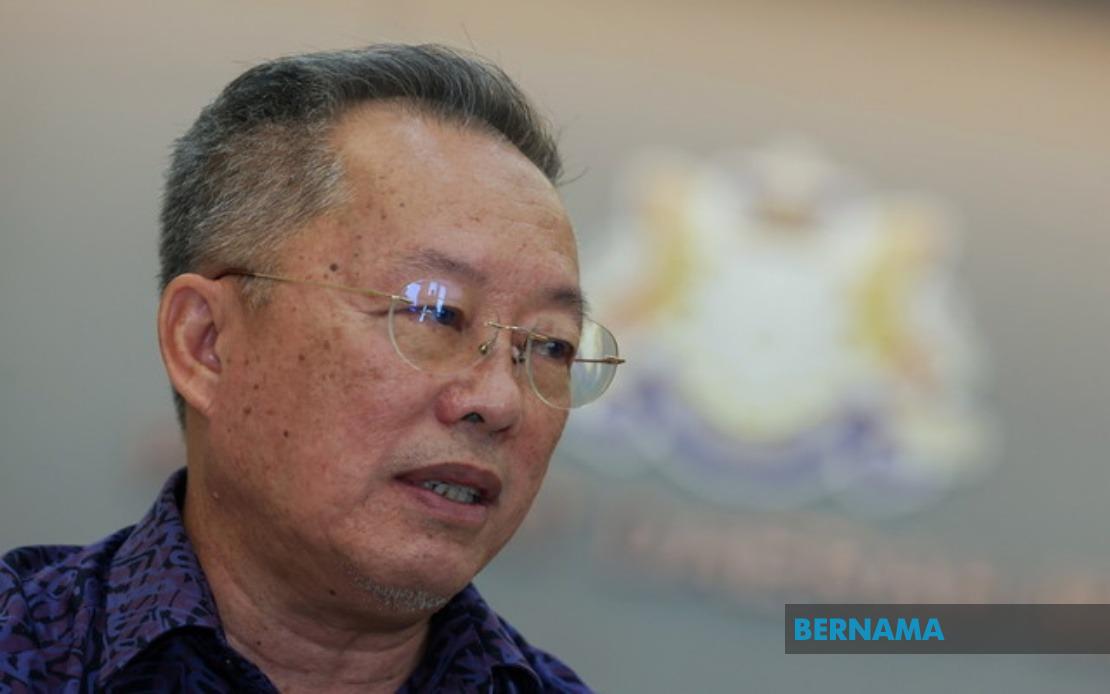
The Muar District Office has moved to clear the air surrounding a community engagement programme involving Prime Minister Datuk Seri Anwar Ibrahim, denying that administrative action amounted to obstruction and instead framing the decision as a standard precaution to maintain political neutrality in the use of government infrastructure. District Officer Zainal Eran provided the clarification on July 2, days before voters headed to the polls for the Johor state election scheduled for July 11, with early voting set for July 7.
The prime minister's event, originally planned for the Sungai Balang Mukim Penghulu Complex on June 15, was relocated following coordination between the Muar District Administration and the Johor State Development Office. The new location chosen was Pantai Leka Food Court Square, where the programme ultimately proceeded with what district officials described as strong participation from federal government leaders, agency representatives, and members of the rural community. This shift in venue became a point of contention, with some observers suggesting the relocation represented an attempt to constrain the gathering.
Zainal's explanation hinged on the principle that government buildings must be insulated from partisan political activities, particularly during election periods when the line between administrative engagement and campaign events becomes blurred. He emphasised that the district administration's decision reflected its commitment to upholding this neutrality principle rather than any desire to prevent the prime minister from meeting constituents. The officer noted that the programme achieved its intended purpose of community engagement at the alternative location, suggesting that no meaningful obstruction had occurred.
The district administration's reasoning incorporated several practical considerations that went beyond simple protocol compliance. Zainal cited the absence of formal advance notice and detailed programme documentation, noting that less than 24 hours' warning made it logistically challenging to arrange necessary support services at the originally intended government building. This tight timeline, combined with incomplete information, meant district officials could not properly assess infrastructure requirements or coordinate with other agencies that might normally facilitate such events. These procedural gaps, he suggested, justified the request for relocation to a venue where preparation and arrangement could be handled more effectively.
A morning-of-event inspection provided what district officials viewed as validation of their decision. The inspection revealed that the area surrounding the new venue at Pantai Leka Food Court Square had already been decorated with political party flags, despite the fact that the official campaign period for the Johor state election had not yet commenced. This observation raised questions about the nature and purpose of the gathering, leading district authorities to conclude that maintaining government facility neutrality was indeed a prudent course of action. The visual displays suggested that what might have been framed as a simple administrative engagement could acquire partisan dimensions.
The timing and context of these events added layers of complexity to the situation. The Johor state election represented a significant political moment, with heightened attention to how government resources and facilities were deployed during the pre-campaign and campaign phases. For a district administration responsible for ensuring that state and federal facilities maintained their non-partisan character, the presence of party banners at the relocated venue reinforced the perception that careful boundary-setting had been necessary. What might appear to external observers as overly cautious bureaucratic procedure could, from the administration's perspective, reflect appropriate sensitivity to maintaining institutional integrity.
Zainal directly addressed the allegation of blockage, characterising it as factually inaccurate and urging all stakeholders to cease politicising the matter. He stressed that the decision to change venues represented a straightforward administrative adjustment rather than an attempt to prevent the prime minister from engaging with the public. The successful execution of the programme at its new location, he argued, provided concrete evidence that no obstruction had been intended or achieved. His appeal for responsible conduct suggested frustration with what district officials viewed as mischaracterisation of routine administrative procedure.
The incident reflects broader tensions in Malaysian governance during election periods, when the boundary between government administrative functions and political campaigning often blurs uncomfortably. Federal and state administrations must navigate the challenge of facilitating legitimate government engagement with citizens while ensuring that government resources and facilities do not become vehicles for partisan advantage. These considerations acquire particular significance in states where different political coalitions control state and federal governments, as was the case in Johor, where such arrangements can create genuine friction over resource deployment and facility usage.
For Malaysian readers, particularly those in Johor, the episode illustrated how election-period sensitivities can affect routine government operations. What might normally be a straightforward arrangement for a prime ministerial visit became complicated by electoral context and procedural timing. The incident also underscored the importance of advance planning and formal notification when organising high-profile government events, as last-minute arrangements can trigger administrative resistance even when obstruction is not the underlying intent. The Muar District Office's public clarification, while aimed at defending its decision, also reflected the political atmosphere surrounding the election.
The relocation of the prime minister's programme, ultimately without apparent impact on its success, demonstrated that flexibility in venue selection need not undermine the purpose of community engagement. However, it also highlighted how administrative caution during election periods can generate controversy and require subsequent public explanation. District officials found themselves compelled to defend what they presented as routine procedure, suggesting that even apparently routine administrative decisions could acquire political dimensions during sensitive electoral moments.
Looking forward, the experience offers lessons for both government administrators and political leaders regarding advance planning for high-profile engagement programmes during election periods. Clear advance notification, detailed programme information, and formal applications through appropriate channels can streamline administrative coordination and reduce the likelihood of complications. For district administrations, the episode underscored the importance of transparent communication about the rationale behind decisions affecting government facility usage, particularly when those decisions affect prominent political figures.
The Johor state election on July 11 would ultimately determine whether voters rewarded or penalised the political coalition affected by these administrative complications. Regardless of electoral outcomes, the Muar District Office's clarification attempted to establish that administrative protocol, rather than political calculation, had driven the decision to relocate the prime minister's event. Whether observers accepted this explanation likely depended on their existing political perspectives and trust in government institutions.

