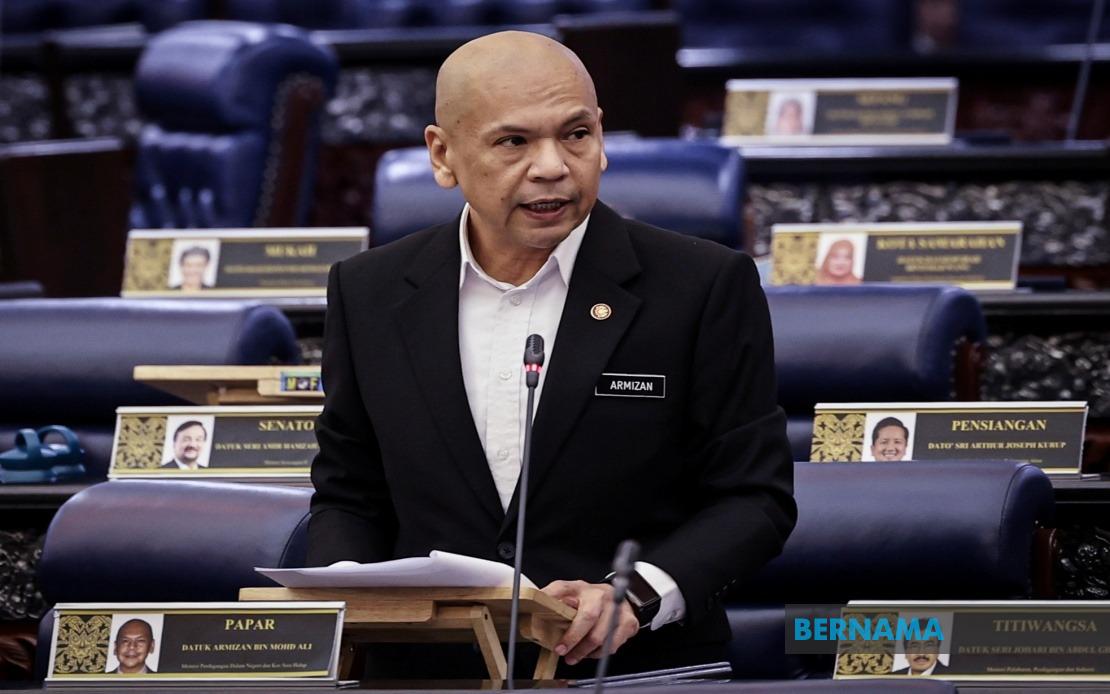
Malaysia's lawmakers have amplified calls for a thorough, transparent and independent investigation into the Royal Commission of Inquiry report on Lembaga Tabung Haji (TH), with ministers warning that public confusion threatens to undermine confidence in the institution's recovery. The intervention came during a special parliamentary sitting on August 11 to examine the commission's findings, which exposed governance weaknesses and operational failings that occurred between 2014 and 2020.
The debate underscores mounting frustration among elected representatives over the proliferation of competing narratives surrounding TH's mismanagement. Datuk Armizan Mohd Ali, the Minister of Domestic Trade and Cost of Living and Papar Member of Parliament, highlighted a troubling pattern where stakeholders increasingly resort to accusations of slander rather than engaging with substantive evidence. He observed that this cycle of mutual recrimination has obscured accountability, leaving ordinary Malaysians and TH depositors uncertain about the actual perpetrators of wrongdoing and those genuinely harmed by institutional failures.
Armizan stressed that any investigative action undertaken by relevant enforcement agencies must satisfy three critical conditions. First, proceedings must remain transparent so that public scrutiny can validate the integrity of the process. Second, investigations must operate with complete independence, insulated from political pressure or institutional bias. Third, the entire operation must adhere to rigorous professional standards, ensuring that conclusions rest solely upon careful factual assessment and proper legal interpretation rather than assumption or inference. This three-pronged approach, he argued, would restore public trust in TH's accountability mechanisms.
Beyond immediate investigative action, Armizan emphasised the equal importance of systematically reviewing and implementing TH's 25 improvement recommendations. The commission reported that approximately 75 percent of these recommendations had already been incorporated by July 30, yet the remaining quarter requires careful attention to complete the institution's recovery trajectory. Full implementation of recommended governance enhancements, he suggested, would strengthen TH's operational direction and institutional controls, addressing the structural vulnerabilities that enabled earlier misconduct.
The question of ministerial portfolio responsibility for TH emerged as a secondary but significant concern during parliamentary deliberations. Datuk Seri Nancy Shukri, the Minister of Women, Family and Community Development, articulated support for maintaining pilgrim affairs administration under the Minister in the Prime Minister's Department (Religious Affairs), whilst preserving financial and investment oversight within the Finance Ministry. This arrangement, she contended, reflects sound administrative design based on functional specialisation and expertise rather than arbitrary division. By assigning distinct portfolios according to professional competency and duty nature, the structure eliminates redundant oversight and ensures each function receives appropriate technical supervision.
A contentious dimension of the RCI findings concerned the prevalence of political appointees on TH's board of directors. Rather than categorically opposing such appointments, Nancy introduced a nuanced perspective that redirects scrutiny from political affiliation toward individual capability. Her position recognises that political backgrounds need not disqualify candidates if they possess genuine qualifications, pertinent experience, recognised expertise, and demonstrable capacity to execute their responsibilities competently. She cautioned, however, against allowing political labels or factional positions to substitute for rigorous fit-and-proper assessments.
The minister advocated implementing explicit criteria for board appointments, establishing standardised selection methodologies, and defining requisite specialist competencies. These procedural safeguards would ensure that merit and suitability for specific responsibilities constitute the paramount consideration in recruitment decisions. By institutionalising these requirements, Nancy argued, appointments would reflect objective evaluation rather than political convenience, thereby enhancing institutional legitimacy regardless of candidates' party connections.
The RCI report, publicly released on July 29 following government approval, represents a watershed moment in Malaysia's approach to institutional transparency and accountability. By deciding to disclose findings rather than restrict the document to official channels, the administration acknowledged that TH depositors and ordinary Malaysians possess legitimate entitlement to understand how a crucial social institution experienced such significant governance failures. The revelation of specific weaknesses identified between 2014 and 2020 provides crucial baseline evidence upon which both investigative and remedial efforts can proceed.
For Malaysian depositors who entrusted savings to TH expecting prudent stewardship, the RCI findings validated longstanding concerns about internal controls and investment oversight. Many contributors had observed dramatic fluctuations in dividend distributions and fund valuations, yet lacked authoritative documentation to support their suspicions. The commission's formal findings and recommendations now furnish depositors with evidence-based foundations for demanding institutional reform and individual accountability.
The parliamentary focus on investigative transparency and merit-based governance carries implications extending well beyond TH. As Malaysian institutions increasingly confront scrutiny over management practices, investment decisions, and political influence, the standards established for TH investigations will likely influence approaches to analogous controversies elsewhere in government. The principle that enforcement bodies must operate transparently whilst maintaining independence represents an evolving expectation among Malaysian lawmakers and increasingly informed citizens.
The recovery process outlined by multiple ministers acknowledges that TH's return to financial health, whilst significant, represents merely one dimension of the required restoration. Repairing institutional trust requires demonstrable accountability for past failures, systematic implementation of governance improvements, and observable commitment to merit-based decision-making untainted by political calculus. Without these parallel efforts occurring visibly and simultaneously, even TH's financial stabilisation may fail to fully rehabilitate public confidence in the institution's stewardship of pilgrim savings and social welfare responsibilities.

