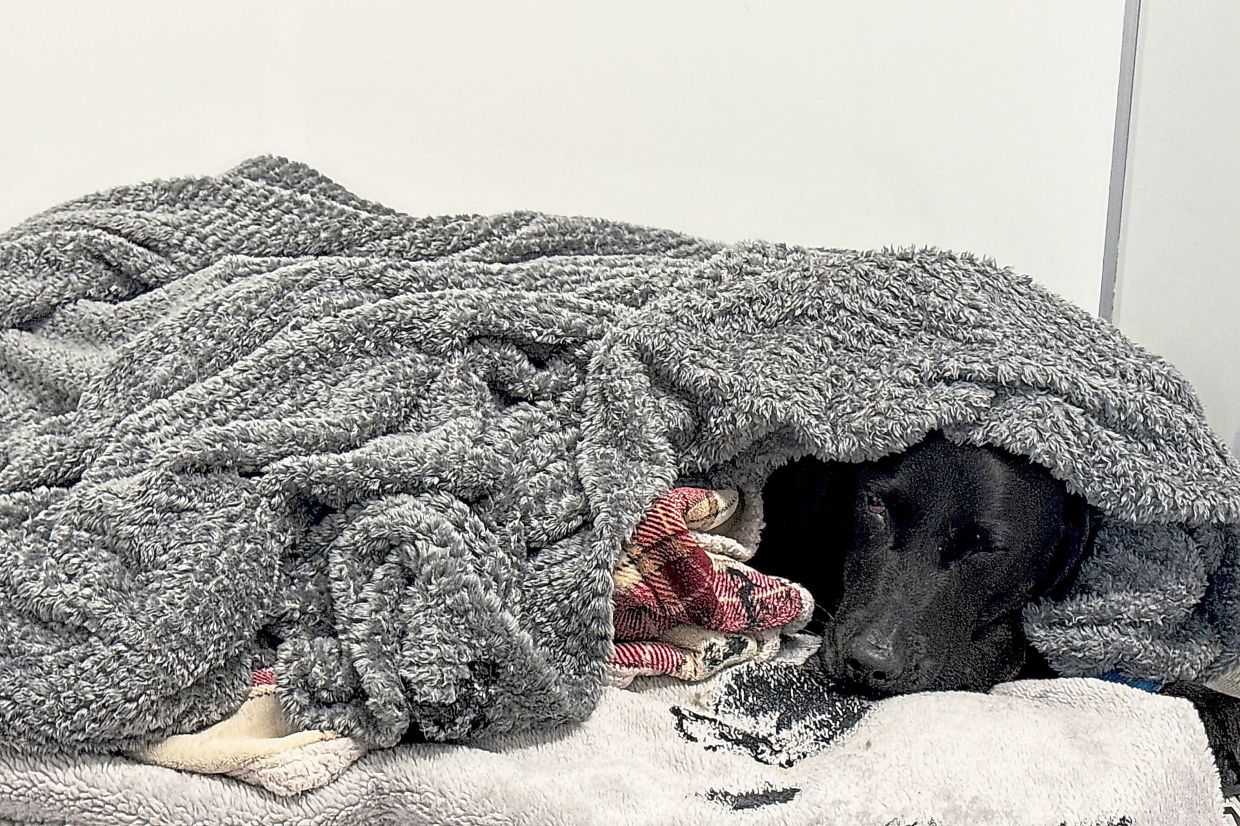
An otherwise routine summer hike on Ben Nevis turned into a harrowing ordeal when Christina Bluhme's five-year-old black Labrador retriever, Tokyo, unexpectedly consumed what appeared to be cannabis along the Scottish mountain trail. The incident, which unfolded during a July 5 climb to the summit of Britain's highest peak, serves as a stark reminder of an emerging public health concern affecting pet owners across the United Kingdom and internationally.
Bluhme, an experienced canine trainer with a quarter-century of professional experience, found herself facing a crisis unlike anything she had encountered in her career. As her family progressed up the 1,345-metre mountain in the Scottish Highlands, Tokyo's condition deteriorated rapidly. The dog began exhibiting telltale signs of intoxication – swaying movements that resembled drunkenness, followed by complete loss of motor function. At more than three hours into their climb and approaching the summit, Bluhme made the difficult but necessary decision to abandon their quest for the peak. The weather had shifted from favourable conditions to heavy rain with temperatures dropping to 5°C, adding another layer of danger to an already precarious situation.
The timing of the incident proved crucial to Tokyo's survival. When Magnus, Bluhme's son, called emergency services from their position high on the mountain, police expressed uncertainty about their capacity to deploy a rescue team. However, fate intervened when volunteers from the Lochaber Mountain Rescue Team, an all-volunteer organisation, happened to be descending from the summit after having assisted in the airlift of an injured hiker by helicopter. Without hesitation, the team secured the 25-kilogramme dog in their stretcher and began their descent down the steep, rain-slicked rocky terrain. Despite the treacherous conditions, the rescue crew moved with extraordinary speed and agility, covering the distance to the trailhead in approximately one hour.
Bluhme's vivid recollection of the rescue highlighted the professionalism and physical capability demonstrated by the volunteers. She described their nearly running pace while negotiating dangerous ground, with herself clinging to the stretcher for security. The experience served as a powerful testament to the dedication of mountain rescue personnel who respond to emergencies regardless of the circumstances or the nature of the victim requiring assistance.
Crown Vets in Fort William, a nearby facility, had been alerted by police and prepared for Tokyo's arrival. Initial veterinary assessments suggested a possible spinal injury, but further examination by senior veterinary staff led to a different conclusion. The attending veterinarian recognised that Tokyo's symptoms – including episodes of altered consciousness and neurological dysfunction – were consistent with exposure to a neurotoxin rather than physical trauma. When the veterinary team consulted with a poison control centre, the diagnostic picture became clear: cannabis intoxication.
The treatment protocol administered to Tokyo involved activated charcoal, a standard intervention for certain types of poisoning. The response proved remarkably effective. By the following morning, the dog had made a complete recovery, and any observer would have been hard-pressed to detect that Tokyo had experienced a life-threatening medical emergency just hours earlier. Bluhme herself required considerably more time to process the traumatic events, noting that while her beloved companion had bounced back immediately, she remained emotionally shaken by the ordeal.
The incident illuminates a growing concern within veterinary medicine and animal welfare circles. Cases of cannabis toxicity in pets have been increasing noticeably in Britain, mirroring a broader trend that has become even more pronounced in the United States. The severity of the problem was underscored when cannabis entered the American Society for the Prevention of Cruelty to Animals' top ten list of toxins affecting pets for the first time in 2023. This inclusion reflects both the increasing prevalence of cannabis availability in public spaces and the greater awareness among veterinarians of cannabis-related cases.
The financial implications of Tokyo's emergency treatment were substantial. The veterinary bill reached £1,000, equivalent to approximately RM5,445. For many pet owners, such an expense would represent a significant financial burden, yet Bluhme characterised the cost as entirely worthwhile given that Tokyo's life hung in the balance. Her willingness to pay reflects not only the emotional bond between owner and pet but also the broader reality that emergency animal medical care, particularly in remote locations requiring specialist intervention, commands premium pricing.
The incident raises important questions about how cannabis-contaminated areas along popular hiking trails pose risks that extend beyond human users. For pet owners, particularly those with dogs prone to investigating trails and consuming items encountered along the way, the presence of discarded cannabis or cannabis-containing products represents an unforeseen hazard. Bluhme's experience serves as a cautionary tale that prompted her to consider how hikers and outdoor enthusiasts might better safeguard their animals during recreational activities in areas where cannabis use has become more prevalent and socially normalised.
Veterinary professionals increasingly recommend that pet owners monitor their dogs closely during outdoor activities and remain alert to behavioural changes that might indicate toxin ingestion. The symptoms Tokyo displayed – loss of coordination, altered consciousness, and inability to ambulate – warrant immediate veterinary attention, regardless of the suspected cause. Early intervention, as demonstrated in Tokyo's case, can mean the difference between a successful recovery and a tragic outcome.
Bluhme's harrowing experience on Ben Nevis underscores an intersection between changing social attitudes toward cannabis, public health considerations, and animal welfare. While the incident ended positively thanks to the combination of quick thinking, volunteer rescue efforts, and skilled veterinary care, it also highlights the potential for such emergencies to become more common as cannabis availability increases across Britain and beyond. Pet owners venturing into outdoor spaces must now add cannabis toxicity to their list of environmental hazards to consider when planning adventures with their companions.

