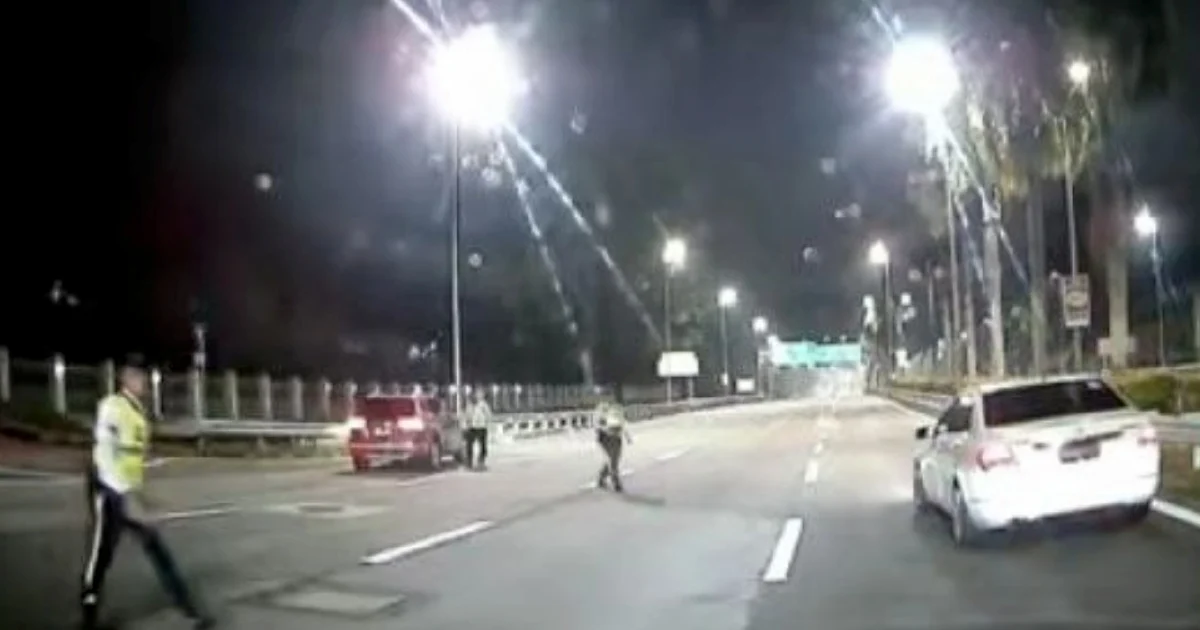
A 20-year-old motorist is now in police custody after his white Mercedes vehicle rammed through an active police roadblock on the Sprint Expressway close to the National Institute of Public Administration (Intan) in Kuala Lumpur. The incident, which drew public attention through social media circulation, prompted authorities to launch an investigation into the circumstances surrounding the breach and subsequent driving behaviour.
The driver's decision to accelerate through the checkpoint rather than comply with police instructions created a serious traffic and safety hazard on one of the Klang Valley's busier expressway corridors. Such roadblocks are typically deployed for routine vehicle checks, enforcement of traffic regulations, or broader public safety operations. The dramatic nature of this particular incident—captured and shared widely online—has intensified public interest in the investigation and underlying motives.
The Sprint Expressway serves as a critical transport link connecting central Kuala Lumpur to areas further afield, experiencing substantial vehicle volumes throughout the day. Unauthorized breaches of police checkpoints pose considerable risks not only to the driver involved but to other road users who may find themselves suddenly navigating an unpredictable situation. The proximity of the roadblock to Intan, a prominent government training institution, underscores the urban setting where this event unfolded.
Police have extended the detention period to allow investigators to examine multiple dimensions of the case. These include establishing why the driver elected to breach the checkpoint, what his intended destination was, and whether any underlying criminal activity motivated his actions. Standard investigative procedures in such circumstances typically encompass vehicle inspection, toxicology screening, licence verification, and examination of the vehicle's mechanical condition to rule out equipment failure as a contributing factor.
The viral nature of this incident on social media platforms has created heightened public scrutiny of both the driver's conduct and police operational procedures. Such visibility often accelerates investigative momentum and ensures accountability at multiple levels. Authorities must balance swift investigation with thoroughness to establish facts and determine appropriate charges that accurately reflect the seriousness of breaching a police checkpoint.
Motorist behaviour at police roadblocks remains a persistent enforcement challenge across Malaysia. Education campaigns, clearer signage, and consistent messaging about cooperation with law enforcement continue to form part of public safety initiatives. This particular case serves as a stark illustration of the consequences when motorists fail to comply with lawful police directions and instead choose confrontational or evasive tactics.
The incident also raises questions about roadblock positioning, visibility, and advance warning systems designed to give drivers adequate opportunity to identify and respond to checkpoints. Authorities regularly review these operational aspects to minimize risk whilst maintaining effective enforcement. The proximity to a busy expressway section adds another layer of operational consideration for agencies planning future checkpoint deployments in similar environments.
For Malaysian motorists, this case reinforces fundamental road safety principles: adhering to traffic control instructions, recognizing police authority at checkpoints, and understanding that compliance during routine stops carries far fewer legal and safety consequences than attempts to evade authorities. Such evasion typically triggers escalated police response, expanded investigation scope, and substantially more serious charges than the original checkpoint visit might have entailed.
The detained driver now faces potential charges related to dangerous driving, obstructing police, rash or negligent conduct endangering lives, and possible vehicle-related offences depending on investigation outcomes. The trajectory from a routine roadblock encounter to arrest and detention illustrates how critical split-second decisions become when individuals are confronted with lawful police authority. As the investigation proceeds, the full circumstances and motivations behind this high-visibility incident will likely emerge through legal proceedings or police statements.

