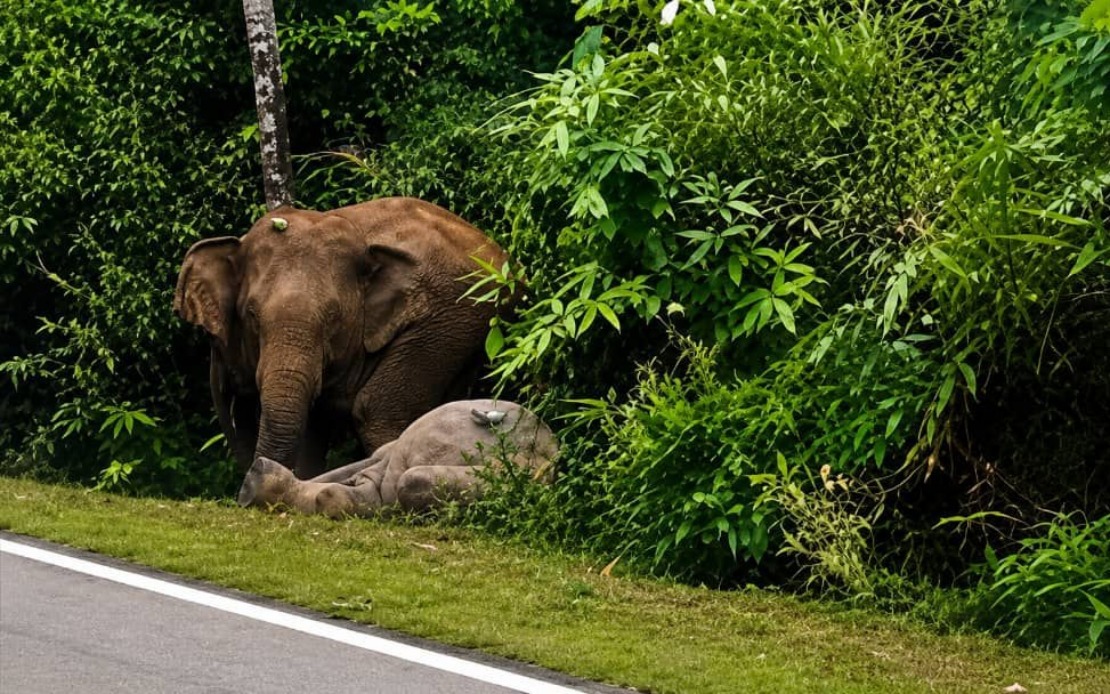
The death of a young elephant along Jalan Felda Nitar in Mersing early on July 1 has reignited painful memories of last year's Gerik tragedy, with the grief-stricken mother refusing to abandon her calf's body for an extended period. The incident, which occurred at 2.28 am when the female calf was struck by a Perodua Bezza, prompted widespread viral circulation of footage showing the adult elephant's desperate attempts to remain close to her offspring. The prolonged vigil lasted approximately seven hours before wildlife authorities could safely guide the mother back into the forest, serving as a stark reminder of the emotional bonds within elephant herds and the mounting pressure on these animals as human infrastructure encroaches upon their natural habitats.
Johor's Department of Wildlife and National Parks received notification around 8.30 am and deployed four personnel to investigate. Upon assessment, officers determined that the deceased calf was a female approximately five years old, measuring roughly 150 centimetres in body length with no tusks, front footprints spanning 11 inches, and rear footprints measuring 14 centimetres. The mother elephant remained at the scene throughout the morning and early afternoon, demonstrating behaviour consistent with maternal attachment and distress. Wildlife officials subsequently identified the pair as members of the Jamaluang-Mersing elephant group, a population that has increasingly ventured closer to human settlements and transportation routes in search of sustenance and passage between fragmented forest reserves.
The collision exacted a human toll as well, though far less tragic. The 31-year-old driver of the Bezza sustained leg injuries when his vehicle struck the calf and careened into a five-metre-deep ravine alongside the road. The Fire and Rescue Department attended to his injuries, though details regarding the severity of his condition and subsequent recovery remain limited. This intersection of animal and human tragedy underscores the dual dimensions of human-elephant conflict: the devastating impact on endangered wildlife populations alongside genuine physical danger posed to Malaysian motorists traversing these increasingly contested zones.
The Mersing incident represents a troubling pattern rather than an isolated accident. The reference point that has anchored public consciousness regarding elephant casualties is the Gerik tragedy of May 11, 2023, which unfolded during Mother's Day observances. That incident involved a baby elephant becoming trapped beneath a container lorry after impact, with footage capturing an adult elephant apparently attempting to shift the heavy vehicle in a heartbreaking bid to rescue her offspring. The disturbing images circulated extensively across social media platforms, galvanizing unprecedented national discourse about human-elephant coexistence and the inadequacy of existing mitigation measures.
The proximity of the two incidents—separated by approximately one year and occurring in different Malaysian states—suggests that Malaysia faces a systemic failure in protecting both its elephant population and the motoring public. Rather than isolated tragedies, these deaths appear symptomatic of deeper structural problems: insufficient wildlife corridors connecting fragmented forest habitats, inadequate road safety infrastructure in elephant crossing zones, and continued developmental pressures on elephant populations already stressed by habitat loss and human encroachment. The repetition of these circumstances indicates that post-Gerik recommendations, whether institutional or policy-based, have not been implemented with sufficient rigour or resources.
The Perhilitan spokesman acknowledged that warning signage indicating elephant crossings had been previously installed along Jalan Felda Nitar, though the effectiveness of such passive measures remains questionable, particularly during pre-dawn hours when visibility is severely compromised and driver alertness is typically diminished. The department committed to conducting patrols throughout the night and subsequent day to monitor the mother elephant's condition and discourage her from returning to the accident site, a practical response that does not, however, address the fundamental vulnerabilities that precipitated the collision. Such protective measures, while necessary, function as emergency responses rather than preventive solutions.
The psychological and social complexity of elephant behaviour demonstrated during this incident warrants greater attention from policymakers and conservation specialists. The mother's seven-hour refusal to depart from her calf's remains reflects sophisticated emotional capacities and the depth of maternal bonding observed throughout elephant populations globally. This behaviour, while devastating to witness, provides crucial insight into elephant cognition and social structures. Malaysian wildlife authorities and conservation agencies might leverage such observations to construct more sophisticated arguments for habitat preservation and corridor establishment, framing protection efforts not merely in terms of biodiversity conservation but in recognition of the sentient, emotionally complex nature of the affected animals.
The implications for Malaysia's tourism and international reputation warrant consideration as well. As global consciousness regarding animal welfare intensifies, the recurring image of elephant fatalities on Malaysian roads generates negative international perception regarding the nation's environmental stewardship and commitment to wildlife protection. Competing narratives have already emerged: some emphasize the dangers posed by elephants to human communities, while others highlight the far greater jeopardy faced by increasingly compressed elephant populations. Managing these competing narratives while implementing genuinely effective protective measures presents a complex diplomatic and public relations challenge alongside the genuine conservation imperative.
Moving forward, Malaysian authorities face a clarion mandate to progress beyond reactive incident management toward comprehensive, evidence-based prevention. This requires substantial investment in wildlife corridor development that facilitates elephant movement between habitat areas without intersecting major transportation routes. Speed restrictions in designated elephant crossing zones, improved lighting and signage standards, and potentially barrier installations may also prove necessary, though such measures demand careful design to avoid further fragmenting already compromised elephant populations. The Mersing incident, mirroring the Gerik tragedy, indicates that incremental adjustments have proven insufficient and that transformative approaches are now imperative.

