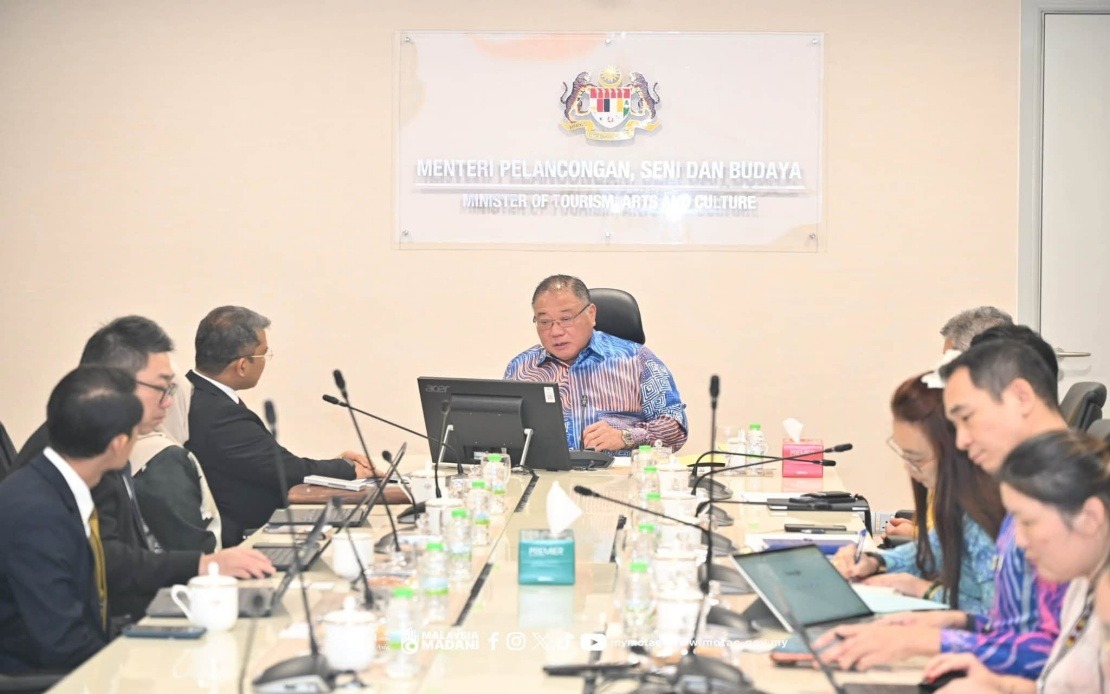
The Malaysian government is moving to strengthen ties between its tourism authorities and aviation sector as part of a coordinated push to attract more international visitors and ensure the Visit Malaysia Year 2026 campaign delivers sustained growth beyond its original timeline. A strategic meeting between Tourism, Arts and Culture Minister Datuk Seri Tiong King Sing and Malaysia Aviation Group chief Captain Nasaruddin A Bakar underscored the deepening alignment between two crucial pillars of Malaysia's travel ecosystem, signalling that attracting global tourists will increasingly depend on seamless coordination between government policy and airline operations.
The partnership reflects a recognition that modern tourism success requires more than promotional campaigns alone. By extending the VM2026 initiative into 2027, Malaysia is signalling long-term commitment to building visitor numbers rather than chasing short-term spikes, and the collaboration with MAG ensures that the aviation infrastructure and route network will evolve to meet rising demand. This approach mirrors strategies adopted by competing Southeast Asian destinations, where national carriers serve as strategic tools for tourism development rather than standalone commercial enterprises operating independently of state priorities.
A centrepiece of the strengthened alliance involves expanding Malaysia Aviation Group's international footprint across strategically important markets. The airline's network expansion into India and China represents a calculated approach to tapping the world's two most populous nations, where growing middle-class populations increasingly seek overseas travel experiences. Europe remains a lucrative long-haul market with higher spending capacity per visitor, making penetration of European routes valuable for Malaysia's tourism revenue targets. The addition of Fukuoka in Japan signals recognition of Northeast Asia's importance, complementing existing coverage of major East and Southeast Asian hubs.
Beyond route expansion, the partnership addresses a persistent challenge facing tropical leisure destinations: seasonal demand fluctuations. Joint marketing and promotional strategies targeting the traditionally slower travel periods represent an attempt to smooth revenue flows and improve airline load factors during off-peak months. This coordination prevents the common scenario where hotels, attractions, and hospitality services operate at partial capacity during low seasons, reducing overall economic returns and creating underemployment in tourism-dependent communities. When airlines and tourism bodies market jointly, they can collectively reduce travel costs and highlight shoulder-season attractions that compete effectively against competing destinations.
The emphasis on enhancing passenger experience reflects evolving global travel expectations. Investments in cabin facilities, in-flight catering quality, and crew training standards are no longer luxury differentiators but competitive necessities in a crowded international airline market. Regional carriers from Thailand, Singapore, and Indonesia have aggressively upgraded service standards in recent years, and Malaysia must maintain comparable offerings to retain market share among discerning travellers, particularly from affluent markets in East Asia and Europe. A single negative experience with flight service can influence travel decisions for years, making operational excellence crucial to converting one-time visitors into repeat tourists.
The domestic tourism ecosystem receives explicit attention within this partnership framework, reflecting an understanding that visitor satisfaction depends on the quality of entire supply chains rather than isolated elements. Local hotels, tour operators, restaurants, and attractions benefit when coordinated marketing creates genuine demand spikes that justify investment in upgrades and additional hiring. Conversely, poorly coordinated tourism initiatives can create false demand expectations, leading local businesses to overextend financially only to face disappointment when visitor arrivals fall short. By ensuring MAG's capacity additions and pricing strategies align with domestic sector capabilities, this partnership aims to prevent such mismatches.
Geopolitically, the partnership also matters for Malaysia's regional positioning. As China continues investing heavily in Southeast Asian infrastructure and tourism initiatives, Malaysia's deliberate cultivation of Chinese visitor markets signals both economic pragmatism and strategic awareness. Similarly, India's emergence as a major source market for regional tourism requires proactive engagement, and having MAG expand capacity on India routes provides Malaysia with competitive advantage over neighbouring destinations that rely on fewer airline connections. The diplomatic and commercial value of aviation partnerships extends beyond tourism, reinforcing broader bilateral relationships and economic cooperation frameworks.
The broader principle underpinning this collaboration suggests a shift in Malaysian tourism strategy toward systematic, ecosystem-level thinking rather than siloed departmental initiatives. MOTAC's traditional role focused on marketing and cultural promotion, while aviation fell under different portfolio responsibilities. Breaking down such institutional silos creates opportunities for integrated planning where route development, pricing strategies, marketing campaigns, and hospitality standards all reinforce each other. This holistic approach requires sustained political will and inter-agency coordination mechanisms that extend beyond singular meetings, demanding institutionalized processes for ongoing collaboration.
For Malaysian businesses in accommodation, food and beverage, entertainment, and ground transportation, this partnership carries direct implications for revenue opportunities. Expanded airline capacity translates to increased passenger volumes, justifying investment in capacity upgrades and service improvements. Conversely, airlines benefit from knowing that destination infrastructure has evolved to accommodate higher visitor numbers without congestion or service degradation that might discourage repeat visits. A virtuous cycle emerges when both aviation and ground-level tourism sectors coordinate investments based on shared growth objectives rather than unilateral decision-making.
The extension of VM2026 into 2027 reflects realistic assessment that tourism recovery and growth require patient capital deployment rather than crash programs. Building brand awareness in competitive markets like Europe and East Asia demands sustained marketing presence over multiple years, and visitor numbers typically accelerate gradually as word-of-mouth recommendations complement paid advertising. The extended timeline allows for measuring campaign effectiveness and adjusting strategies based on data rather than operating blindly through a predetermined end date.
Financial impacts ripple through Malaysia's economy beyond airlines and hotels. Increased tourism spending supports employment in guides, transportation, retail, and skilled trades, while government collects additional tax revenue from hospitality sectors and potentially other economic activity. For states reliant on tourism—Sabah, Sarawak, Penang, and Kedah particularly—stronger visitor numbers directly translate to local economic stimulus and employment growth. The macroeconomic effects of sustained tourism increases extend to Malaysia's current account and foreign exchange dynamics, contributing to external stability during periods of global economic uncertainty.
Moving forward, success of this partnership depends on execution quality at numerous levels. MAG must deliver on route expansion timelines and maintain service reliability to justify premium positioning in competitive markets. MOTAC must sustain marketing investment and messaging consistency across multiple markets simultaneously. Local service providers must meet upgraded quality standards that international visitors increasingly expect. Government policy must remain supportive through visa facilitation, infrastructure investment, and regulatory stability. When all these elements align, Malaysia can credibly compete with leading Asian tourist destinations and capture expanding demand from emerging source markets.

