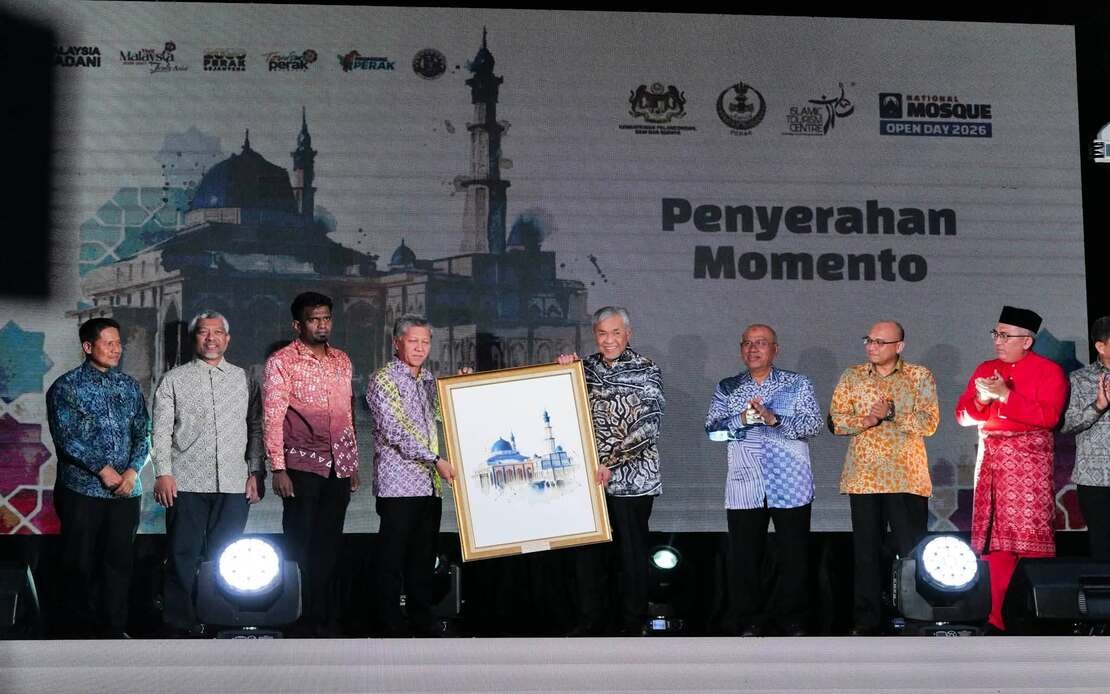
Deputy Prime Minister Datuk Seri Dr Ahmad Zahid Hamidi has proposed a significant shift in how Malaysia positions its religious institutions on the global tourism stage, arguing that mosques should become integral components of the country's tourism offerings without compromising their spiritual and community functions. Speaking at the National Mosque Open Day 2026 in Bagan Datuk, Ahmad Zahid outlined a vision where these sacred spaces serve dual purposes as both functioning religious institutions and cultural heritage attractions that introduce international visitors to Malaysia's Islamic civilisation, history, and values.
The deputy prime minister's comments reflect a growing recognition among Malaysian policymakers that religious tourism can be a powerful vehicle for promoting the country's unique identity while simultaneously advancing economic goals through the tourism sector. By transforming mosques into accessible tourism destinations, Ahmad Zahid suggested that Malaysia can offer travellers an authentic window into Islamic practices and Malaysian culture that extends far beyond conventional sightseeing. He emphasised that when visitors leave Malaysia, they should carry not merely photographic memories of architectural beauty, but meaningful experiences of the warmth, hospitality, and Islamic principles that characterise Malaysian society.
The National Mosque Open Day initiative, which Ahmad Zahid highlighted as a model for expanding mosque accessibility, exemplifies how religious institutions can welcome people of diverse backgrounds, faiths, and ages into their spaces in carefully structured, respectful environments. These programmes create platforms for genuine cross-cultural engagement, allowing non-Muslim visitors and citizens to develop deeper understandings of Islamic practices while fostering mutual respect and appreciation for mosques as fundamental components of Malaysia's cultural and national identity. Such initiatives address a persistent challenge in multicultural Malaysia: bridging perceptual gaps about Islam and demonstrating through personal interaction the faith's emphasis on compassion, wisdom, and benevolence.
Ahmad Zahid's call for widespread adoption of similar programmes across the country's 6,851 mosques represents an ambitious scaling-up of religious tourism integration. He argued that the time has arrived for mosque institutions nationwide to organise comparable open-day events and public engagement activities, positioning these spaces as venues where diverse populations can interact harmoniously and develop greater cultural competency. This approach aligns with contemporary trends in global religious tourism, where authentic spiritual experiences and cultural exchange are increasingly valued by international travellers seeking meaningful engagement rather than superficial tourism consumption.
The Islamic Tourism Centre, operating under the Ministry of Tourism, Arts and Culture, is driving institutional efforts to operationalise this vision through its Tourism Mosque designation programme. Currently, the centre has designated 98 mosques across Malaysia as official tourism mosques, with Director-General Mohammad Faisal Abu Suaib Khan expressing aspirations to substantially expand this network. The centre is actively identifying mosques that possess distinctive architectural features, historical significance, or educational components such as Islamic knowledge galleries, recognising that differentiation and unique value propositions are essential for sustainable religious tourism development.
The designation of Masjid Tuminah Hamidi in Bagan Datuk as Malaysia's 98th Tourism Mosque exemplifies the selection criteria being applied. Completed in 2023 as a waqf honouring Ahmad Zahid's parents, the mosque was chosen specifically for its contemporary architectural design and integrated gallery facility that functions as an Islamic knowledge centre. This combination of modern design sensibilities with educational programming demonstrates how mosques can appeal to contemporary tourists while maintaining religious authenticity and scholarly depth.
Coordinating this expansion requires substantial institutional infrastructure, which explains why the Islamic Tourism Centre is collaborating closely with the Department of Islamic Development Malaysia and state-level Islamic religious authorities. These partnerships ensure that mosque participation in tourism activities adheres to Islamic principles and local religious governance while maintaining consistency with national tourism promotion strategies. The coordination framework being developed establishes guidelines that protect the sanctity and primary functions of mosques while creating structured opportunities for respectful visitor engagement.
The Muslim-Friendly Tourism and Hospitality Assurance and Recognition programme and the Muslim-Friendly Tourist Guides initiative represent complementary efforts designed to create broader ecosystems supporting religious tourism. Rather than implementing a "Muslim-only" approach that would exclude non-Muslim visitors, these programmes embrace the concept of "Muslim-friendly, not Muslim-only," recognising that inclusive environments actually strengthen appreciation for Islamic values and Malaysian culture. By training hospitality professionals and tourist guides in culturally sensitive practices, Malaysia is building institutional capacity to deliver quality experiences that satisfy both religious requirements and tourism industry standards.
The practical implications of this strategic direction extend significantly beyond cultural diplomacy. Religious tourism represents a substantial and growing segment of global travel markets, with Muslim-majority countries and those with significant Islamic heritage increasingly recognised as premium destinations for both Muslim and non-Muslim travellers. By systematically developing mosque-based tourism products, Malaysia positions itself competitively within this expanding market segment while simultaneously leveraging its multicultural society as a distinctive tourism asset. This approach differentiates Malaysia from competing destinations and appeals to travellers seeking authentic cultural immersion and spiritual enrichment.
For Malaysian communities, mosque-centred tourism initiatives offer opportunities to serve as cultural ambassadors within their own country, facilitating meaningful dialogue and mutual understanding across religious and cultural boundaries. The success of these programmes depends on sustained community buy-in and confidence that mosque operations will remain faithful to primary religious functions and community welfare. Local mosque committees and religious leaders must maintain control over access, timing, and programming to ensure that tourism activities enhance rather than compromise the spiritual environment and community cohesion.
The economic potential warrants serious consideration, particularly for developing tourism infrastructure in regions like Perak where the Bagan Datuk event took place. Religious tourism can distribute tourism revenues beyond conventional coastal and urban destinations, supporting local economies and incentivising heritage preservation in secondary cities and towns. However, this economic dimension must be balanced against preservation of authentic community spaces and prevention of commodification that might alienate local Muslim populations.
The success of Ahmad Zahid's vision will ultimately depend on careful implementation that respects religious requirements while delivering genuine tourist experiences, coordination among multiple government agencies and local stakeholders, and sustained investment in training and infrastructure development. If executed thoughtfully, this integration of mosques into Malaysia's tourism ecosystem could position the country as a global leader in religious tourism while reinforcing its multicultural identity and promoting cross-cultural understanding during a period when such bridges are increasingly valuable.

