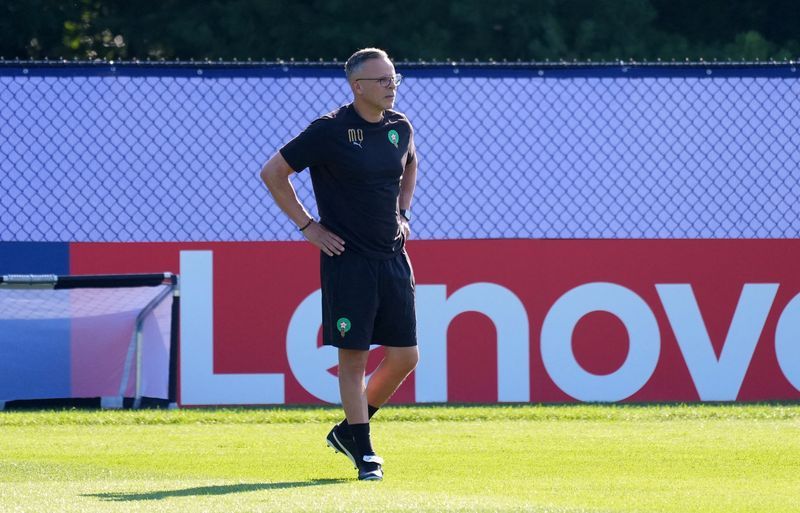
Morocco's pursuit of World Cup glory will not be sidetracked by congratulations for their achievements so far, coach Mohamed Ouahbi insisted on Wednesday, as the North African side prepared for a high-stakes quarter-final encounter with France in Foxborough, Massachusetts. Speaking to journalists ahead of Thursday's match, Ouahbi made clear that his team views the competition through the lens of ultimate ambition rather than historical accomplishment, rejecting the notion that reaching this stage represents a triumph in itself.
The upcoming clash represents a rematch of the 2022 World Cup semi-final in Qatar, when France halted Morocco's remarkable campaign with a victory that devastated supporters across the Arab world. However, the dynamics have shifted considerably since that painful encounter. Morocco no longer arrives as the tournament's underdog or surprise package, but as a genuinely competitive force intent on claiming the sport's most prestigious title. The psychological terrain has altered markedly, placing added pressure on Ouahbi's side to convert opportunity into results.
Ouahbi's comments reflected a deliberate strategy to maintain emotional discipline and competitive hunger within the squad. "We will take stock at the end of the tournament," he explained, signalling that his team would reserve judgment on their performance until the competition concluded. This measured approach aims to prevent complacency, a threat that looms particularly large when teams exceed expectations and generate euphoria in their home nations. By insisting that genuine success means only one thing—winning the World Cup—Ouahbi attempted to keep his players focused on the immediate task rather than basking in reflected glory.
The coach's philosophy revealed deeper conviction about what distinguishes champions from merely successful teams. "The bonus is to win the World Cup," he stated emphatically, inverting the common refrain that reaching knockout stages represents a bonus for smaller footballing nations. This mindset had propelled Morocco through earlier rounds, and Ouahbi believed maintaining that psychological intensity represented the key to progressing further. He explicitly rejected sentiment that might creep in from admirers suggesting the team had already achieved something remarkable simply by eliminating Netherlands and Canada in their previous matches.
France entered the quarter-final as bookmakers' favourites, their credentials as defending champions and 2022 finalists remaining formidable despite initial performances that lacked the sparkle expected. Kylian Mbappé, the Paris Saint-Germain forward and France's captain, had emerged as the tournament's most prolific scorer after the group stage, finding the net seven times and trailing only Argentina's Lionel Messi's eight-goal tally. His penalty against Paraguay in the round of 16 secured France's progression, though the manner of that victory—narrow and uninspiring—suggested vulnerabilities that an ambitious opponent might exploit.
Beyond Mbappé, France possessed an attacking arsenal of exceptional depth and quality. Ousmane Dembélé's explosive pace, the creative thrust of Michael Olise, and the emerging talent of Bradley Barcola combined to form what analysts considered one of the tournament's most dangerous forward lines. Yet Morocco had demonstrated resilience and tactical sophistication in neutralizing superior opponents, and Ouahbi appeared confident his defensive organization could withstand the onslaught that France would inevitably launch.
Morocco's pathway to the quarter-finals showcased progression and growing assurance. The team navigated their group stage comfortably, then eliminated Netherlands—a traditional European power—before knocking out Canada in successive knockout ties. These performances established Morocco as genuine title contenders rather than beneficiaries of fortunate draws, lending credibility to Ouahbi's refusal to accept praise as sufficient motivation. Each victory had been earned through collective discipline and tactical execution, not luck.
Ouahbi acknowledged France's credentials while refusing to concede psychological advantage to the favourites. "France are favourites but we will do everything possible to win tomorrow and qualify for the semi-finals," he declared, framing the contest as one requiring maximum effort but remaining winnable through commitment and focus. His language avoided deflation or defensiveness, instead positioning Morocco as active agents in determining the outcome rather than supplicants hoping to frustrate a superior opponent.
The coach returned repeatedly to the theme of intensity and complete engagement as the differentiating factors. "We have to play at 2,000% and not think what we have done up to now is not bad," he emphasized, employing hyperbolic language to convey the psychological state required for success against elite opposition. This exhortation captured Ouahbi's conviction that Morocco's advancement depended not on tactical sophistication alone, but on channelling collective will and determination into performance that matched France's quality.
For Malaysian and Southeast Asian observers, Morocco's trajectory represented an instructive lesson in how smaller footballing nations could compete authentically for World Cup glory. The refusal to accept limiting narratives about realistic ambitions, combined with tactical discipline and collective belief, offered a template relevant to regional sides aspiring to breakthrough performances on football's grandest stage. Ouahbi's insistence that satisfaction came only through winning, rather than overperforming relative to expectations, articulated a mindset increasingly necessary for teams from emerging footballing regions.

