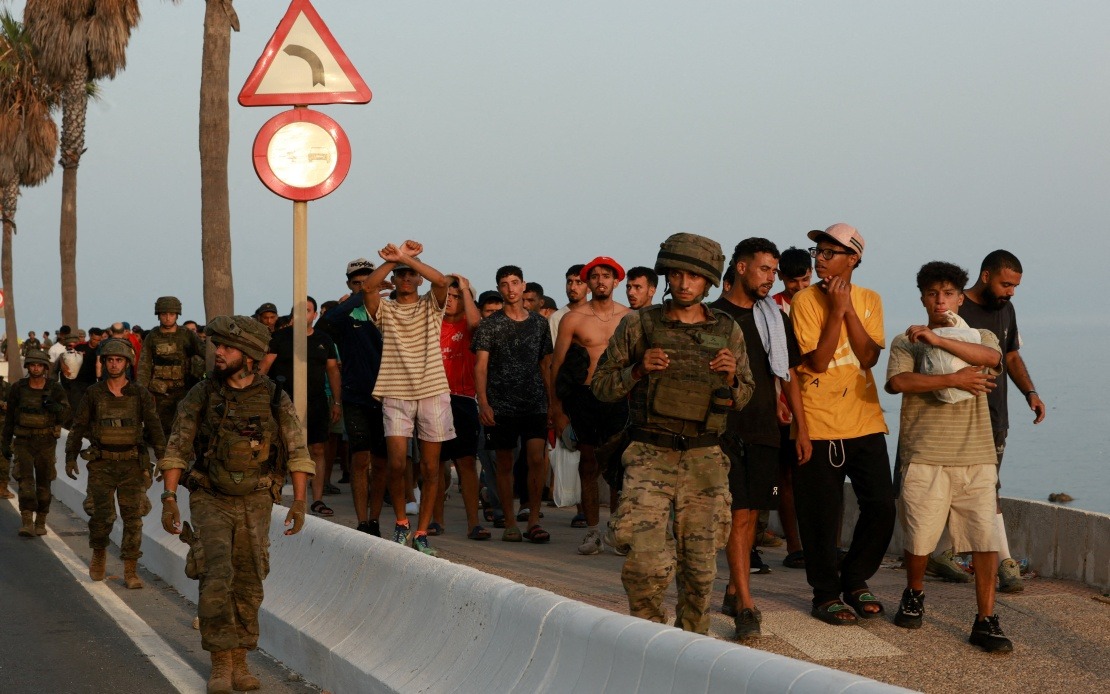
Morocco's government has pointed to social media misinformation and human trafficking networks as the primary catalysts behind the unprecedented migrant influx into Ceuta, the Spanish Mediterranean enclave, according to statements from the country's Interior Ministry. Officials argue that false narratives circulating online combined with organised smuggling operations created a perfect storm that pushed migrants towards the border, leading to one of the most dramatic population movements the region has witnessed in recent years.
The ministry specifically highlighted how migrants misinterpreted a Spanish court ruling, believing it would grant them passage into Europe without facing immediate deportation. This legal misconception, amplified across social platforms, appears to have emboldened vulnerable populations to attempt the dangerous crossing. The confusion around judicial decisions underscores how legal complexities can be weaponised by traffickers and distorted online, creating false expectations among desperate migrants seeking better lives.
Diverging figures emerged from Moroccan and Spanish sources regarding the scale of the movement. Moroccan authorities estimated approximately 40,000 individuals successfully crossed into Ceuta, with an additional 1,135 attempting to reach the nearby enclave of Melilla. Spanish officials, however, provided significantly higher estimates ranging from 50,000 to 60,000 arrivals. This discrepancy in tallies reflects the chaotic nature of the border situation and the difficulty in verifying exact numbers when such large crowds move rapidly across a small territory.
Ceuta, home to roughly 85,000 permanent residents, suddenly faced an influx that represented a staggering percentage increase in its population within a matter of days. The scale of this movement had profound implications for the territory's infrastructure, security apparatus, and social services. Such rapid demographic shifts strain housing, healthcare, sanitation, and security systems, and Spain scrambled to mount an adequate response to manage the humanitarian and logistical dimensions of the crisis.
The humanitarian toll of the crossing attempt proved devastating. Morocco's government reported 11 deaths, while Spanish authorities documented a far grimmer picture, citing at least 72 fatalities among those attempting to reach Ceuta. The disparity between these figures suggests either incomplete reporting on the Moroccan side or differing methodologies in counting victims. Maritime disasters along this route are not uncommon, as migrants often attempt the crossing in overcrowded, unseaworthy vessels operated by smugglers prioritising profit over passenger safety.
Both nations acknowledged the ongoing need to cooperate in identifying the deceased and establishing their nationalities and identities. This verification process remains complex given that many migrants originate from West and Central Africa, and some lack official documentation. Moroccan authorities indicated they would continue coordinating with Spain through official channels to resolve outstanding questions about additional deaths and to provide families with closure where possible.
The episode illuminates the broader challenge facing North Africa and Southern Europe regarding irregular migration. Morocco, positioned as the primary gateway to Europe from sub-Saharan Africa, finds itself caught between international migration pressures and its obligations to maintain order at its borders. The country's emphasis on misinformation and trafficking reflects an attempt to shift responsibility away from governance failures while acknowledging genuine security threats posed by criminal smuggling networks.
Human trafficking remains a lucrative criminal enterprise across the Mediterranean. Organised groups deliberately exploit migrants' desperation, providing dangerous passage in exchange for substantial fees, often exceeding what individual families can afford. These networks thrive on information asymmetry and false promises, creating conditions where desperate migrants become commodities. The role of social media in amplifying these networks' reach and effectiveness represents a modern dimension to an age-old problem of human exploitation.
The Ceuta crisis carries particular significance for Southeast Asian observers, as the region confronts similar irregular migration challenges along its maritime borders. Malaysian authorities, operating across crucial chokepoints like the Strait of Melaka and facing migration pressures from Myanmar, Bangladesh, and other regional sources, can draw lessons from how European nations manage mass-casualty episodes and coordinate cross-border responses. The interplay between national sovereignty, humanitarian obligations, and security concerns mirrors dilemmas facing ASEAN nations grappling with Rohingya movements and other displacement crises.
The emphasis on combating misinformation online represents a policy frontier for countries attempting to control irregular migration. Moroccan officials recognised that accurate information about migration routes, legal procedures, and realistic prospects could deter dangerous journeys. This insight suggests that counter-misinformation campaigns, if coupled with legitimate economic opportunities and effective border management, might reduce pressure on dangerous crossing routes while preserving pathways for legitimate migration and asylum seekers.
Longer-term solutions require addressing root causes pushing migrants northward, including poverty, conflict, and lack of opportunity in their home countries. While Morocco rightly identified immediate triggers in trafficker manipulation and online falsehoods, sustainable approaches must involve development investment, regional cooperation, and creating safe, legal migration channels that reduce desperation. Until fundamental conditions improve across sub-Saharan Africa, migration pressure on Mediterranean and other borders will likely persist.

