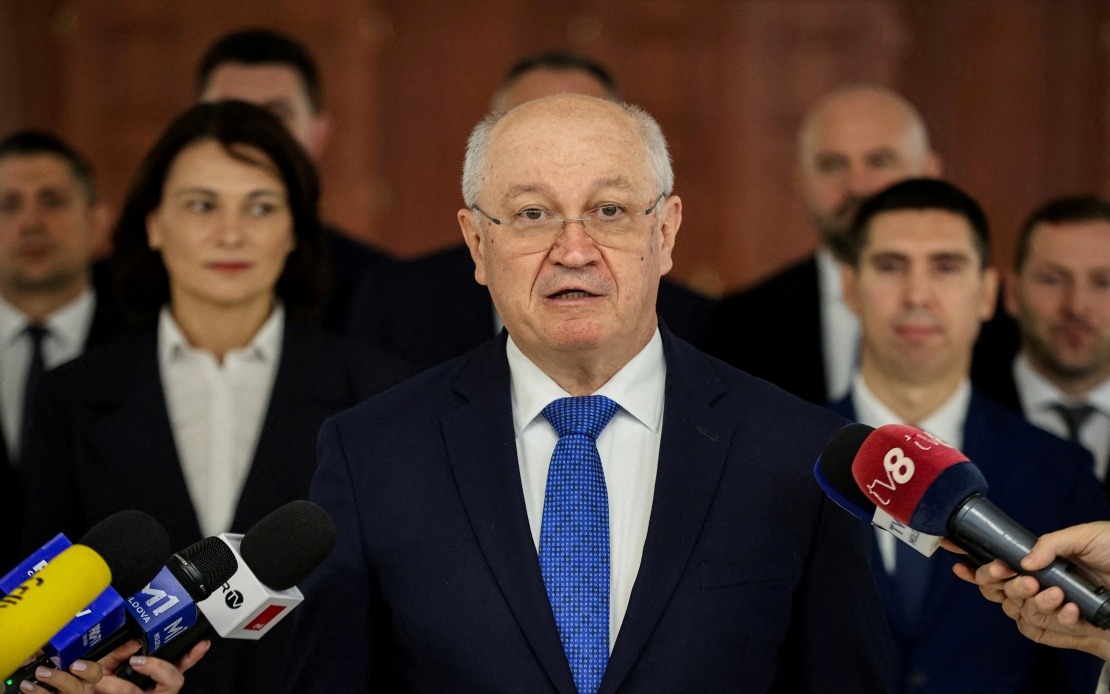
Alexandru Munteanu announced his resignation as Moldova's Prime Minister on Friday, ending his tenure that began in November 2025 after less than a year in the position. The departure comes without extensive public justification, with the leader citing a fundamental misalignment between his core convictions and the demands of his role, signalling potential internal tensions within the Eastern European nation's government.
Munteanu's decision to step aside marks a significant development for Moldova, a country navigating complex geopolitical pressures and internal political transitions. His relatively brief tenure suggests that whatever circumstances prompted the resignation emerged relatively swiftly during his time in office. The lack of detailed explanation from Munteanu himself has left substantial room for interpretation regarding the underlying causes, whether they stem from policy disagreements, coalition disputes, or broader governance challenges.
The Prime Minister conveyed his decision through a social media announcement, a contemporary political practice that reflects how modern leaders often communicate directly with citizens and the public sphere. In his statement, Munteanu framed his departure not as a failure of competence but as a matter of personal integrity, suggesting he reached a point where continuing would have compromised his fundamental values. This positioning distinguishes his resignation from those driven by scandal, incompetence allegations, or electoral defeat.
Moldova has experienced considerable political instability in recent years, with the country situated in a precarious position between Western integration efforts and Russian influence. The sudden departure of a prime minister during this period carries implications for the stability of the government and the continuity of policy implementation. Neighbouring countries and regional observers will closely monitor how Moldova's political system responds to the leadership vacuum and whether a successor can maintain momentum on key reforms or diplomatic initiatives.
For Southeast Asian observers, Moldova's political transitions offer lessons in how smaller nations manage leadership changes amid competing external pressures. Like several ASEAN members, Moldova must balance internal governance challenges with external strategic considerations. The manner in which this succession unfolds will test the resilience of the country's democratic institutions and political maturity.
The absence of detailed reasoning behind Munteanu's resignation creates uncertainty regarding the government's current direction and policy continuity. Stakeholders across Moldova—from business leaders to civil society organisations—will be seeking clarity on whether the resignation signals shifts in key policy areas or simply reflects individual circumstances. This ambiguity can create a temporary governance gap that affects decision-making on pressing matters.
President Maia Sandu's administration will now need to navigate the process of finding a suitable successor or establishing interim leadership arrangements. The choice of who replaces Munteanu carries significant weight, as the new leader will inherit both the unfinished agenda and any underlying tensions that contributed to the previous PM's departure. This transition period presents both risks and opportunities for recalibration of policy priorities.
Munteanu's invocation of personal principles and convictions as grounds for resignation reflects a particular political philosophy emphasising individual ethical standards over purely pragmatic governance. While such principled stands can elevate political discourse, they also underline potential structural or ideological conflicts within Moldova's governing coalition. Understanding these tensions requires monitoring subsequent statements from coalition partners and opposition figures.
The timing of the resignation, occurring roughly eight months into the tenure, suggests that Munteanu likely encountered specific circumstances that crystallised his discomfort with his position. Whether related to budget priorities, foreign policy decisions, administrative autonomy, or coalition pressures, these circumstances will gradually become clearer through parliamentary discussions and media investigation. The coming weeks should reveal whether this was a solitary principled protest or symptomatic of broader government dysfunction.
For regional stability in Eastern Europe and Moldova's integration aspirations, swift resolution of the leadership transition remains important. Prolonged political uncertainty could complicate reforms necessary for European Union alignment and military cooperation with regional partners. How effectively Moldova's political system manages this transition will influence both domestic confidence and international assessment of the country's institutional strength.

