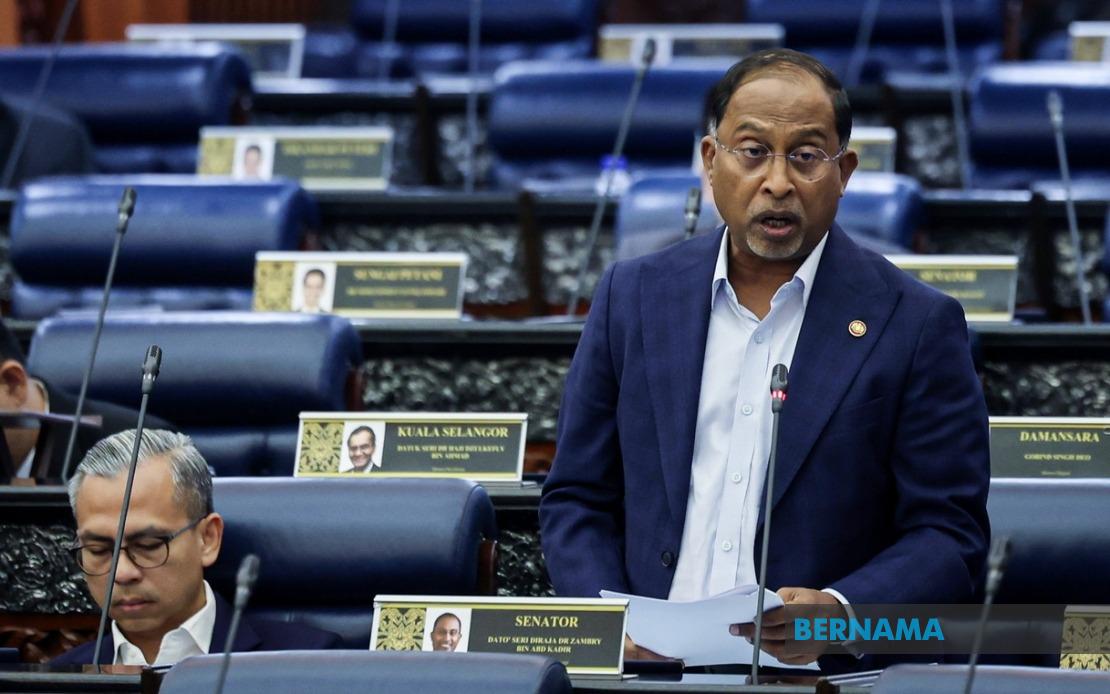
The Ministry of Higher Education (MOHE) has signalled its receptiveness to expanding the academic portfolio of public higher education institutions throughout Sabah, aiming to provide local students with greater diversity of study pathways without necessitating migration to the peninsula. Minister Datuk Seri Dr Zambry Abdul Kadir made the announcement during parliamentary Question Time, responding to concerns raised about limiting the number of Sabah-based students who must relocate for tertiary education.
Applications for new programmes will undergo rigorous evaluation against a comprehensive set of benchmarks. MOHE's assessment framework prioritises institutional capacity and existing areas of research strength, alignment with Sabah's particular economic development trajectory, demonstrable industry demand within the region, realistic delivery capabilities given available resources, evidence of genuine student interest, and measurable post-graduation employment prospects. The ministry emphasises that this methodical approach serves a dual purpose: preventing wasteful duplication of offerings across different institutions while guaranteeing that whatever programmes are introduced meet genuine market needs and maintain academic standards.
As of June 30, Sabah's higher education sector comprises 16 public institutions distributed across the tertiary ecosystem. Four full-fledged public universities operate within the state, complemented by three polytechnics offering vocational and technical pathways and nine community colleges providing foundational and skills-based qualifications. This infrastructure already represents substantial public investment, yet apparent gaps remain in programme diversity when measured against student demand and regional economic requirements.
Universiti Malaysia Sabah, the state's flagship research institution, has oriented its programme development strategy around competitive advantages rooted in the state's distinctive natural assets and research capabilities. The university is expanding offerings in marine science and aquaculture, drawing on Sabah's extensive coastal resources and fisheries sector. Tropical biotechnology programmes leverage the state's biodiverse rainforests and agricultural potential. Medical sciences and heritage-focused offerings respond to healthcare workforce shortages and cultural preservation priorities. Emerging programmes in ecotourism and business studies address the region's growing tourism economy and entrepreneurial ambitions. This specialisation approach reflects a strategic pivot away from generic generic offerings toward programmes that exploit UMS's geographical and institutional advantages.
Universiti Teknologi MARA's Sabah branch operates within a narrower programme scope, concentrating on tourism and hospitality management, business administration, administrative sciences, and science and technology disciplines. These offerings overlap with certain peninsula-based alternatives, illustrating the challenge MOHE faces in balancing programme diversity with resource efficiency and avoiding institutional redundancy across the national system.
Government commitment to infrastructure expansion demonstrates seriousness about capacity building. MOHE is currently implementing 21 development projects across Sabah valued at RM1.05 billion in aggregate investment. The 13th Malaysia Plan allocates RM160.6 million specifically for higher education development in Sabah during its First Rolling Plan period extending to 2026. This substantial capital deployment signals recognition that meaningful improvements to access and quality require substantial long-term financial commitment beyond administrative restructuring.
Minister Zambry explicitly rejected arbitrary placement quotas as policy instruments, arguing that setting fixed targets such as requiring eighty percent of programme offerings to be geographically available in Sabah would be operationally counterproductive and economically unsustainable. However, he identified law and related fields as areas where Sabah and Sarawak together possess legitimate regional demand that justifies developing localised capacity rather than channelling all students toward peninsula-based institutions. This niche-focused approach represents pragmatic middle ground between comprehensive self-sufficiency and continued dependence.
The minister's response also acknowledged the broader ecosystem supporting higher education development beyond curriculum alone. Government funding flows to universities through MOHE and the parallel Ministry of Science, Technology and Innovation to catalyse research activities that can generate both academic knowledge and commercial applications. The Research, Development, Innovation, Commercialisation and Economy Programme (RDICE) specifically targets research initiatives demonstrating commercialisation potential, creating pathways whereby university research translates into economic value and regional industrial development.
For Malaysian policymakers and regional observers, this initiative reflects recognition that geography and economic disparity create structural disadvantages for Sabah students seeking quality higher education. The peninsula-centric concentration of established universities and research centres historically funnelled talented Sabahan students away from home, contributing to brain drain concerns. Expanded localised offerings could retain talent while building institutional capacity that strengthens regional competitiveness. However, implementation success depends on rigorous programme development and adequate ongoing resource allocation, not merely formal approvals.
The framework's emphasis on industry alignment and graduate employability reflects current global higher education thinking emphasising practical relevance over purely theoretical pursuit. For Sabah specifically, this approach could channel university outputs toward sectors where genuine labour market gaps exist, potentially yielding better return on educational investment than historically occurred when programmes were designed primarily around available academic expertise without reference to regional economic needs.
Challenges remain substantial. Attracting and retaining qualified academics in regional institutions requires competitive compensation and research support structures that can be expensive for smaller institutions. Building genuine research capacity takes years rather than months. Student demand for certain programmes may reflect peninsula-based perceptions of prestige rather than authentic local needs. Nonetheless, MOHE's openness to applications signals meaningful policy shift toward addressing regional disparities in educational opportunity, provided follow-through implementation matches stated intentions.

