A rising figure in UMNO's youth movement has died in a devastating accident on a Pahang highway, taking with him three family members in what authorities are investigating as a tragic act of nature. Mohd Radzi Rahimi, 40, was killed along with his wife Nuriani Mohammad Jafri, 36, his five-year-old son Muhammad Rizz Hazim, and his brother-in-law Mohammad Nizam Mohammad Jafri, 35, when the four-wheel-drive vehicle they occupied was struck by a large fallen tree on the old Kuala Lumpur-Bentong road near Janda Baik in the early afternoon of 3 August. The incident occurred at approximately 1 pm as the group travelled back to Maran after participating in a motorcycle programme organised by the local UMNO Youth chapter in Pulau Pangkor, Perak. A fifth victim, Mohd Radzi's other son Muhammad Rizz Haziq, sustained critical head injuries and remains hospitalised at Sultan Haji Ahmad Shah Hospital (HoSHAS) in Temerloh, fighting for recovery.
Mohd Radzi's political journey spanned two decades of consistent engagement within UMNO's grassroots structures, according to his father Rahimi Abd Samad, 63, who spoke to reporters while managing the overwhelming grief of losing a son and two grandchildren. The younger Radzi had invested approximately a decade in building the Maran UMNO Youth division before ascending to lead its youth wing and subsequently securing appointment as Treasurer of the broader Pahang UMNO Youth organisation. This trajectory placed him among the emerging voices within the party's youth faction, a position that carried considerable influence over thousands of younger party members across the state.
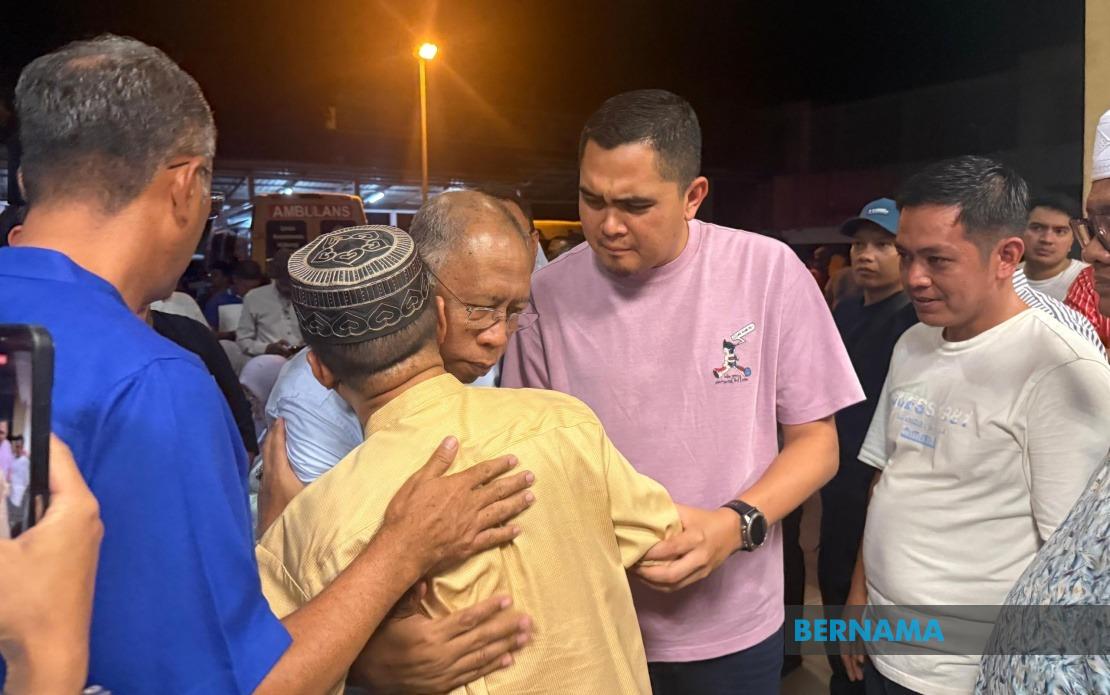
Rahimi painted a picture of a man deeply embedded in party networks and widely respected across UMNO circles. The final confirmation of this standing came when UMNO Youth chief Datuk Dr Muhammad Akmal Saleh made a point of visiting the hospital to pay respects to the fallen leader, a gesture that underscored the regard in which Mohd Radzi was held at the highest echelons of the party's youth structure. Beyond the top leadership, multiple senior party figures descended on HoSHAS to express condolences, including UMNO Supreme Council member Datuk Seri Shahaniza Shamsuddin, who serves as the Maran UMNO division chief, and Kuantan UMNO division chief Datuk Seri Ab. Hamid Nazahar. The steady stream of visitors reflected both personal bonds and institutional recognition of loss within the party.
Father and son had parted ways just days before the tragedy, with their final meeting occurring on Thursday when Mohd Radzi was preparing for the journey to Pulau Pangkor. Rahimi recalled that his son had mentioned joining a motorcycle convoy to the island with friends, a detail that appeared routine and unremarkable at the time. The spontaneity of such activities, common among UMNO Youth members engaged in recreational and team-building exercises, gave no indication of the circumstances that would unfold. What appeared to be a normal weekend activity—combining leisure with party fellowship—became the setting for one of Temerloh's most harrowing incidents in recent memory.
The medical examinations concluded by late evening, with post-mortem proceedings finishing at 9 pm on the day of the incident. The remains were subsequently prepared according to Islamic funeral practices, with rituals scheduled to take place at Masjid Kampung Paya Luas in Temerloh before transportation to Maran's Masjid As-Syakirin, where funeral prayers would be held prior to interment at Taman Sri Chendung Muslim cemetery. These proceedings represented the final journey of a man whose political trajectory had kept him constantly mobile within his state's political landscape.
The accident itself raises broader questions about road safety along secondary highways in Pahang, where the old Kuala Lumpur-Bentong route serves as a significant connector between population centres but is less regulated than expressway alternatives. Monsoon conditions and the prevalence of mature trees alongside such roads create environmental hazards that authorities periodically address through maintenance programmes, yet incidents continue to occur. For UMNO in Pahang and the broader party structure nationally, the loss represents an unexpected gap in its youth leadership pipeline at a time when succession planning and generational renewal remain ongoing concerns.
Mohd Radzi's death also highlights the personal costs borne by political activists whose public commitments sometimes extend to family participation in party activities. The motorcycle programme that claimed his life was fundamentally a grassroots engagement initiative, the type of activity that constitutes the foundation of party unity and member retention. That such an ordinary event could have such extraordinary consequences serves as a stark reminder of life's unpredictability, even amid routine party operations.
The broader implications for Pahang UMNO involve the recalibration of its youth leadership structure and the addressing of institutional vacancies created by Mohd Radzi's departure. His role as Treasurer represented not merely an administrative function but also a trusted position within party finances and planning mechanisms. Successors will need to be identified and confirmed, a process that typically involves consultation among division chiefs and state-level leadership. This unplanned transition occurs within a context where Malaysian politics continues to evolve, with UMNO working to strengthen its organisational capacities across all age demographics following challenges of recent years.

