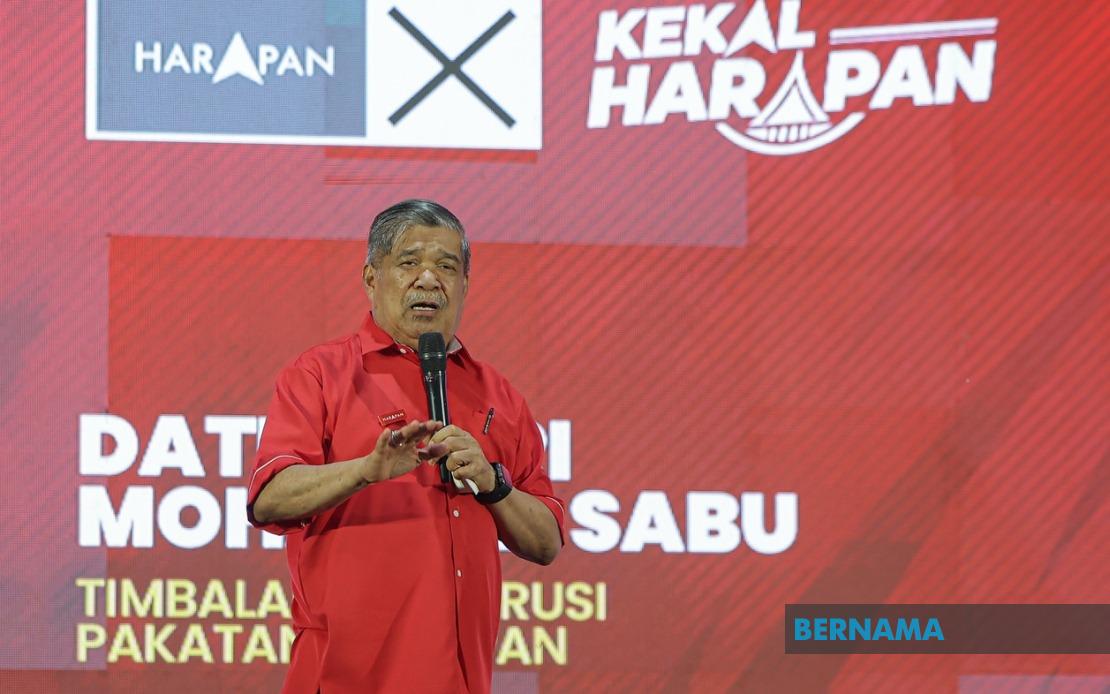
In a hardline address to supporters in Seremban, Amanah president Datuk Seri Mohamad Sabu has launched a scathing critique of what he terms 'marriage-divorce' politics, calling on Negeri Sembilan voters to reject parties that routinely abandon their political partners in pursuit of power. The remarks reflect growing frustration within the reformist coalition over the fluidity of Malaysia's political landscape, where coalition-building has increasingly become transactional rather than principle-driven.
Mohamad Sabu characterised the phenomenon as the systematic practice of abandoning and forging political alliances based purely on electoral calculation rather than shared ideological vision. He argued that this pattern of behaviour destabilises the nation's political system and corrupts the democratic process by prioritising access to government over consistency of platform. The Amanah leader framed the issue not merely as a technical matter of parliamentary arithmetic but as a fundamental question about the moral foundation of Malaysian politics.
The warning carries particular weight given Malaysia's history of coalition volatility. The country has witnessed numerous high-profile defections and realignments since the transition from single-party dominance, with political parties frequently shifting alliances to maximise their bargaining power. Mohamad Sabu's intervention suggests that Amanah views the forthcoming elections as a moment to reset voter expectations and demand greater political integrity from contending parties.
In his most pointed comments, Mohamad Sabu invoked a metaphorical critique of one unnamed party's shifting allegiances, describing a pattern wherein a political force first aligned with Barisan Nasional, subsequently moved to Pakatan Rakyat, then returned to UMNO-BN after a brief interlude, jumped to Bersatu, and was subsequently jettisoned before attempting fresh overtures to established coalitions. The chronology underscores how Malaysian politics has become characterised by serial partnership formation and dissolution, a pattern the Amanah president suggested voters should find deeply troubling.
This critique resonates with concerns across the opposition coalition about maintaining credible positioning against potential poaching of members or partners. Amanah, as a relatively smaller component of Pakatan Rakyat, faces vulnerability to such dynamics and has invested significantly in building a reputation for principled opposition. The party's messaging emphasises stability and consistency as counter-narratives to what it portrays as opportunism among competitor parties.
The broader context for Mohamad Sabu's remarks reflects the state-level political turbulence that has characterised Malaysian governance since the 2018 general election. Negeri Sembilan itself has experienced coalition shifts and intra-party tensions that have reshaped its political terrain. By directly addressing voters in the state, the Amanah president appears to be simultaneously defending his coalition's positioning and attempting to reframe the political conversation away from transactional horse-trading toward questions of democratic principle.
From a Malaysian perspective, the warnings about political instability carry real consequences for governance effectiveness. Frequent shifts in parliamentary alliances have made sustained policy implementation increasingly difficult and have contributed to public cynicism about the political class. Mohamad Sabu's argument implicitly appeals to voters' frustration with a system wherein elected representatives appear to prioritise factional advancement over constituent interests.
The significance of these remarks for Southeast Asia extends beyond Malaysia's borders. Across the region, political coalitions have become increasingly fluid, and similar questions about the stability of democratic institutions have emerged. Malaysia's experience serves as a cautionary example of what can occur when electoral systems and party structures fail to embed accountability mechanisms that discourage frequent realignment. The region has watched closely as Malaysian politics has evolved post-1998, and Amanah's intervention suggests concern that the trajectory remains problematic.
Mohamad Sabu's invocation of voter responsibility also reflects a broader strategy within Pakatan Rakyat to mobilise electoral support around anti-corruption and governance reform narratives. By framing the choice facing voters as fundamentally about whether to perpetuate or reject unstable political practices, the Amanah leader attempts to elevate the campaign conversation beyond tactical considerations of seat allocation and ministerial positions.
The challenge facing Mohamad Sabu and his coalition lies in translating such principled rhetoric into concrete electoral outcomes. Malaysian voters have demonstrated increasing sophistication in their political choices, and appeals to democratic integrity can resonate, particularly among urban and younger demographics. However, translating moral arguments into electoral support requires sustained engagement and clear articulation of how alternatives would function differently in practice.
Moving forward, the extent to which Negeri Sembilan voters accept Mohamad Sabu's framing will indicate whether Malaysian electorate priorities are shifting toward rewarding political stability and consistency over short-term factional advantage. His intervention in Seremban represents not merely a campaign moment but rather a test of whether voter opinion has evolved sufficiently to penalise the very coalition-switching practices that have characterised Malaysian politics for decades.

