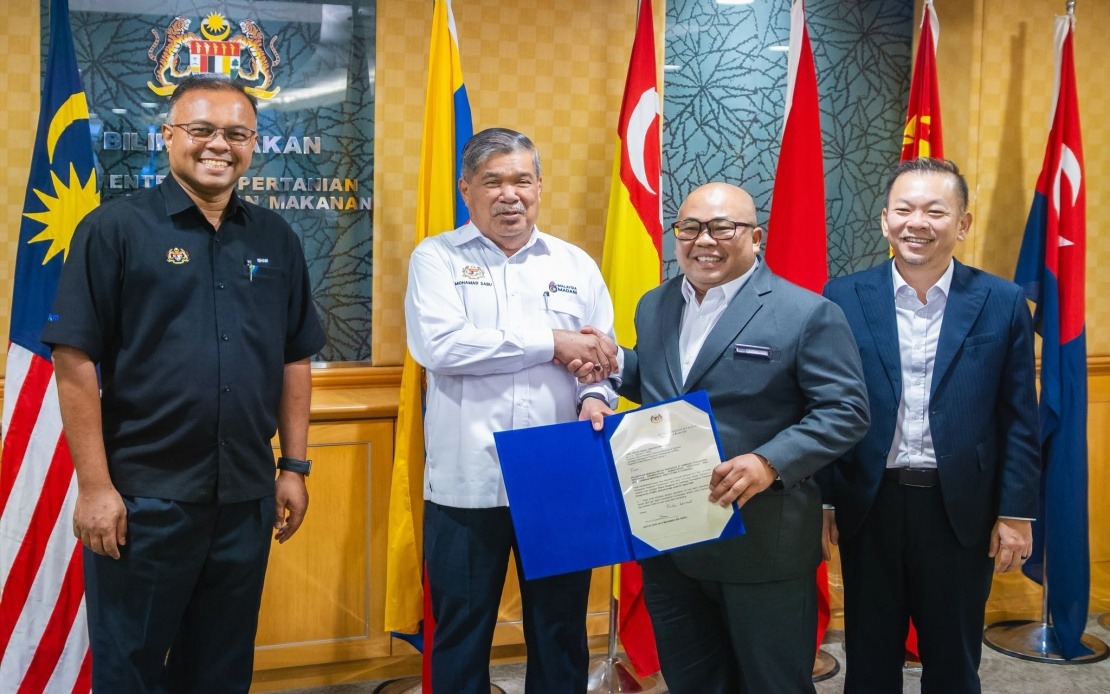
Faisal Iswardi Ismail has taken the helm at the Federal Agricultural Marketing Authority (FAMA), Malaysia's key institution for agricultural commerce and food security management. The Agriculture and Food Security Minister Datuk Seri Mohamad Sabu formally presented the appointment letter to Faisal on August 5, with the promotion effective from August 1. The ceremonial handover took place following a Cabinet meeting in Kuala Lumpur, marking a significant leadership transition within the authority that oversees the marketing of domestic agricultural produce across the nation.
Faisal's ascension to the top post represents a career progression from his previous role as deputy director-general handling food security and operations at FAMA. This internal promotion signals continuity in leadership while also rewarding experience within the organization. His familiarity with the authority's operations, having worked in senior management focusing on critical food security functions, positions him with established knowledge of current challenges and ongoing initiatives across FAMA's portfolio.
The minister's remarks underscored the substantial responsibilities that accompany this leadership appointment. Mohamad Sabu acknowledged that the confidence invested in Faisal and his organization extends far beyond ceremonial significance, emphasizing that FAMA occupies a cornerstone position within Malaysia's agricultural ecosystem. The authority's mandate encompasses critical functions that ripple across the entire food production and distribution network, making its performance central to national economic and food security objectives.
FAMA's responsibilities span the complex terrain of agricultural product promotion, logistics coordination, and market linkage development. The authority serves as a crucial intermediary between farmers and consumers, undertaking distribution functions, quality assurance processes, and market intelligence gathering. By facilitating smoother pathways from farm to market, FAMA reduces transaction costs and information asymmetries that might otherwise disadvantage smallholder farmers operating in a competitive commercial landscape.
The challenge of strengthening Malaysia's food supply chain has assumed heightened urgency in recent years, particularly following global disruptions that exposed vulnerabilities in international agricultural trade. Domestic production capabilities and efficient domestic distribution networks have emerged as strategic priorities for government planners. Faisal's appointment occurs within this context of renewed focus on food sovereignty and agricultural resilience, suggesting the ministry expects the new director-general to advance initiatives that enhance national self-sufficiency in key commodities.
Farmer income enhancement represents another pillar of FAMA's mandate that Mohamad Sabu highlighted. Malaysian agricultural communities have long contended with volatile commodity prices, seasonal income fluctuations, and market access challenges. By improving marketing efficiency and creating better connections between producers and buyers, FAMA aims to capture greater value at the farm level. This mission carries particular significance for rural communities whose economic wellbeing depends substantially on agricultural and agri-entrepreneurial activities.
The appointment also reflects broader organizational renewal within Malaysia's agricultural administration. Personnel transitions at senior levels often accompany shifts in strategic direction or intensified implementation of existing policies. Observers of agricultural governance will watch how Faisal approaches persistent sectoral challenges, including farmer training, adoption of agricultural technology, organic certification support, and export competitiveness in regional markets. His early decisions and policy emphases may signal the ministry's priorities for the coming period.
Regionally, Malaysia's agricultural sector operates within a competitive Southeast Asian context where countries like Thailand, Vietnam, and Indonesia have invested heavily in agricultural modernization and export-oriented production. The performance of institutions like FAMA influences national agricultural competitiveness and rural prosperity. Improvements in domestic marketing infrastructure and supply chain efficiency generate spillover effects throughout agricultural value chains, potentially enhancing Malaysia's position in regional agricultural trade.
The agri-food entrepreneurship dimension that Mohamad Sabu mentioned indicates recognition that commercial agricultural activity extends beyond traditional farming into food processing, value-added production, and branded agricultural products. Supporting agri-entrepreneurs requires marketing authority functions that extend beyond commodity trading into brand development, quality standards maintenance, and consumer market positioning. This broader conception of FAMA's role reflects evolving approaches to agricultural development that emphasize entrepreneurship and diversification rather than commodity production alone.
Faisal's appointment occurs at a moment when global agricultural markets face structural uncertainties. Climate variability, input cost volatility, and shifting consumer preferences toward sustainable and locally-sourced products create both challenges and opportunities for Malaysian agriculture. FAMA's capacity to anticipate market trends, facilitate farmer adaptation, and promote value-added agricultural products will influence how effectively the sector navigates these transformations.
The minister's benedictory message wishing Faisal smooth sailing in his duties carries practical significance within Malaysia's administrative culture, where leadership transitions often involve relationship-building with stakeholders and policy continuity assurances. The explicit ministerial endorsement conveyed through the appointment ceremony and subsequent social media acknowledgment reinforces Faisal's authority and provides political backing for initiatives he may pursue. This visible support from political leadership typically facilitates smoother execution of organizational priorities and stakeholder cooperation.

