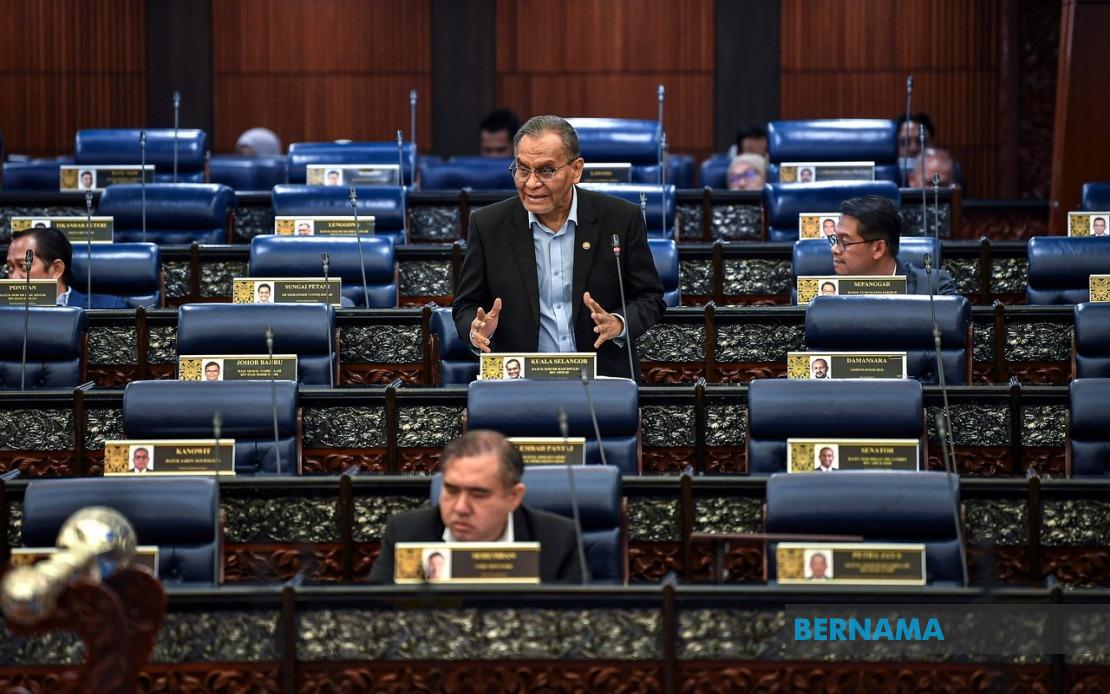
Health Minister Datuk Seri Dr Dzulkefly Ahmad has reaffirmed the government's commitment to preserving the private clinic sector as an essential component of Malaysia's healthcare infrastructure. Speaking during Ministers' Question Time in Parliament on June 23, Dzulkefly outlined a comprehensive strategy centred on outsourcing partnerships designed to help private general practitioner clinics remain financially viable and operationally competitive. The initiative reflects growing recognition that the private primary care network, often taken for granted, faces mounting economic pressures that threaten its survival and the broader health system's resilience.
The minister's statement came in response to parliamentary concerns about the alarming trajectory of clinic closures across the country. Between 2013 and the present, approximately 2,034 private medical clinics have shuttered their doors, signalling a systemic crisis within the sector. This contraction coincided with declining intake of house officers seeking to establish practices in the private sphere, creating a concerning supply-side problem that extends beyond simple financial stress. The closures represent a gradual erosion of grassroots healthcare capacity precisely at a moment when the government's public health system faces unprecedented demand and resource constraints.
Dzulkefly acknowledged firsthand experience with this deterioration, particularly during the COVID-19 pandemic when numerous private practices struggled with operational viability. His comments underscore that private GPs are not peripheral players in Malaysia's healthcare ecosystem but rather constitute a foundational pillar alongside public health clinics. The minister articulated a vision where the private sector does not merely survive as a minimal parallel system but actively thrives, delivering quality care that absorbs significant patient volumes and reduces pressure on overburdened government hospitals and polyclinics.
Central to the government's intervention strategy is a significant adjustment to fee structures. The minimum consultation fee for private practitioners has been raised to RM80, up substantially from the previous RM10 baseline. This regulatory adjustment, implemented through existing ministerial powers, represents one of the most concrete steps taken in recent years to improve private practitioner economics. While modest by urban standards, the increase acknowledges the reality that unsustainably low fees have driven many GPs toward closure or retirement, creating service gaps that public facilities cannot absorb.
Beyond fee increases, the ministry's proposed outsourcing arrangements merit deeper analysis. These partnerships represent a structural innovation aimed at enabling private clinics to diversify revenue streams and reduce operational isolation. Rather than remaining atomised solo practitioners or small partnerships, clinics could engage with larger organisations for specific services—whether diagnostic, pharmaceutical supply, administrative support, or patient referral arrangements—that generate economies of scale. Such collaboration models exist successfully in health systems globally, though their application in Malaysia's context requires careful calibration to preserve the independence that attracts practitioners to private medicine while adding the operational efficiencies that ensure viability.
The quantitative scale of Malaysia's primary care infrastructure illustrates why private clinic sustainability matters systemically. The public sector operates 2,916 Ministry of Health clinics nationwide, while the private sector comprises 10,208 registered GP clinics. This roughly three-to-one ratio of private-to-public primary care facilities means that any significant deterioration in private capacity directly amplifies pressures on already-stretched government services. The mathematics are straightforward: if another thousand private clinics close, the public system would need to absorb millions of additional patient encounters annually—a scenario the MOH cannot feasibly accommodate within existing budgets and staffing levels.
Dzulkefly's emphasis on public-private structural collaboration addresses a separate but related challenge: the growing burden of non-communicable diseases (NCDs) management across the population. Conditions including hypertension, diabetes, obesity, and cardiovascular disease increasingly dominate primary care workloads, consuming significant clinical time and requiring coordinated long-term monitoring rather than acute episodic treatment. The 13th Malaysia Plan explicitly incorporates collaborative NCD management frameworks between private and public facilities, recognising that fragmented treatment across parallel systems produces inferior outcomes and higher ultimate costs. Private clinics, typically closer to patients' residences and workplaces, can serve as strategic nodes in distributed NCD surveillance and management networks.
The minister cited international precedents—specifically the United Kingdom and Taiwan—where such integration has proven effective in reducing hospital congestion while improving chronic disease management outcomes. Both systems leverage private practitioners as essential components of comprehensive primary care strategies rather than treating them as parallel or competitive entities. Malaysia's approach appears to be moving cautiously toward similar integration, though implementation will require substantial policy development around data sharing, referral protocols, clinical standards, and financial incentives that align public and private interests.
The parliamentary exchange that prompted these statements originated from Deputy Dr Halimah Ali (PN-Kapar), who raised the decline in house officer recruitment to private practice as a critical indicator of sector health. This generational dimension adds urgency to sustainability measures. If young medical graduates perceive private practice as financially precarious or professionally limiting, they will increasingly concentrate in public sector positions or seek international opportunities. This brain drain would further weaken private clinic capacity and reduce competition that incentivises quality improvement within the public system.
Dzulkefly's characterisation of private GPs as the "backbone" and "frontline defence" of primary healthcare represents a significant rhetorical shift toward legitimising the sector's role rather than viewing it as a luxury service for affluent populations. This framing carries implications for regulatory policy, fee determination, and resource allocation going forward. When private practitioners are explicitly recognised as system partners rather than commercial alternatives, it becomes easier to justify government support mechanisms and collaborative arrangements that might otherwise appear to benefit private profit.
The sustainability challenge facing private clinics cannot be divorced from broader healthcare financing trends in Malaysia. Public sector clinics operate on subsidised or free consultation models funded through general taxation, meaning private practitioners directly compete against effectively zero-cost alternatives. This structural disadvantage becomes acute for lower and middle-income patients who have little financial incentive to pay private fees when MOH clinics exist. Government support for private sector viability must therefore operate at regulatory and structural levels—through fee floor policies, outsourcing facilitation, and demand management—rather than through direct subsidies that might distort market competition.
Moving forward, the success of the government's commitment will be measured not merely by policy announcements but by tangible improvements in private clinic survival rates, practitioner income stability, and healthcare quality metrics. The next phase requires detailed operational implementation: development of outsourcing frameworks, validation of fee adequacy, pilot programmes for public-private integration, and mechanisms to track whether closures decline and new practitioners enter the private sector. These measures must balance private sector viability with public health objectives and equitable access to care, ensuring that government support for private practitioners ultimately strengthens rather than fragments Malaysia's healthcare system.