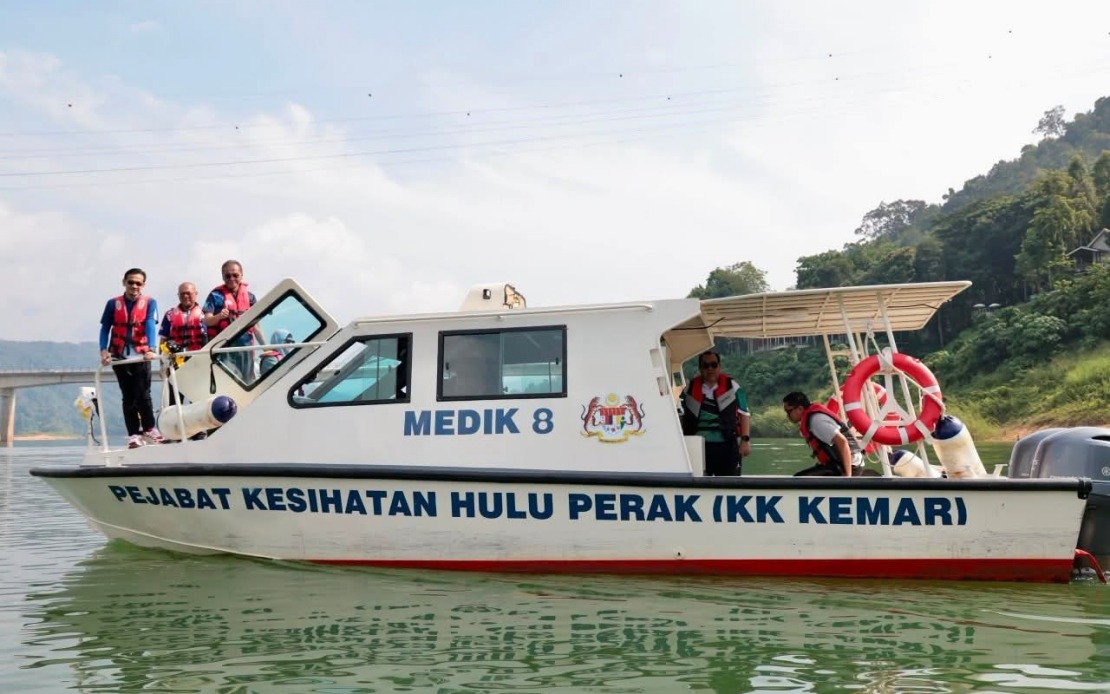
The Ministry of Health has taken a significant step toward bridging healthcare disparities in peninsular Malaysia's most isolated regions by introducing an eighth medical vessel into its river-based service operations. Launched at the Belum Rainforest Resort jetty in Gerik, the Medic Boat 8 represents a targeted investment in reaching the Kemar Resettlement Scheme population, where more than 4,500 Orang Asli residents face unique geographic barriers to accessing essential medical care. The deployment underscores the persistent challenges that Malaysia's interior Indigenous communities encounter in obtaining timely healthcare, a problem that conventional road-based systems have struggled to address.
Health Minister Datuk Seri Dr Dzulkefly Ahmad emphasised during the launch that the RM350,000 vessel constitutes a critical addition to the ministry's existing aquatic fleet. The 12-passenger multipurpose boat will operate alongside six other vessels already serving remote populations across the peninsula, fundamentally expanding the ministry's capacity to respond to medical emergencies in waterway-dependent areas. This incremental growth reflects the ministry's recognition that infrastructure development must match the genuine needs of communities whose geography dictates reliance on river transport rather than conventional roads and highways.
The physical isolation that characterises much of Hulu Perak's interior has historically meant that Orang Asli residents must navigate significant delays when seeking emergency treatment or routine medical services. Response times that urban populations measure in minutes can stretch to hours or even days in settlements accessible only by water. By positioning medical resources directly within waterway networks, the ministry aims to compress these response intervals and improve survival outcomes for time-critical conditions. The boat's capacity to transport both patients and medical personnel simultaneously creates a dual-purpose service model that responds to community needs rather than imposing a standardised urban healthcare paradigm onto fundamentally different settlement patterns.
Dr Dzulkefly Ahmad's framing of the initiative within Malaysia MADANI principles highlights how healthcare accessibility serves as a barometer of equitable governance. The minister's assertion that challenging terrain should never obstruct access to quality medical treatment reflects an ideological commitment that transcends symbolic gesturing, requiring sustained investment in unfamiliar operational models. The Orang Asli communities of Hulu Perak have historically experienced healthcare as a peripheral concern within national health planning, with limited capacity to advocate for their specific circumstances within Malaysia's broader medical bureaucracy. This deployment suggests a deliberate recalibration of priorities toward underserved populations whose needs diverge from mainstream service architecture.
The operational reality of maintaining medical services in interior waterway environments demands particular institutional commitment from healthcare personnel. The ministry's acknowledgement of health workers who navigate river currents and adverse weather conditions reflects the demanding conditions these professionals encounter. Doctors, nurses, and boat operators operating in these settings work under constraints that their counterparts in urban facilities do not face, managing equipment limitations, supply chain disruptions, and environmental unpredictability while maintaining professional standards. Recognition of this labour-intensive approach signals ministerial understanding that healthcare equity requires not merely financial investment but genuine operational sophistication adapted to non-standard environments.
The expansion to eight medical boats remains modest relative to the geographic scale of Malaysia's interior regions and the dispersed nature of Orang Asli settlements. While the Medic Boat 8 addresses immediate needs within Hulu Perak's river communities, similar populations throughout Peninsular Malaysia's interior—including regions of Pahang, Selangor, and Perak—continue operating with limited waterborne medical infrastructure. The precedent established by this deployment may encourage broader fleet expansion, yet resource constraints and competing health ministry priorities suggest that inland waterway medical services will likely remain a supplementary rather than primary healthcare delivery mechanism for years to come. Sustained funding and political commitment will prove essential if the current initiative evolves into comprehensive coverage rather than isolated intervention.
For Southeast Asian observers, Malaysia's approach to addressing healthcare access in Indigenous interior communities offers instructive lessons and cautionary observations. The region contains numerous populations whose geographic isolation mirrors that of Hulu Perak's Orang Asli, yet few governments have developed comparable waterborne medical infrastructure. Malaysia's willingness to invest in unconventional service delivery models potentially provides a template for neighbouring countries grappling with similar challenges. However, the relatively small scale of current provision also illustrates how financial and institutional constraints limit even well-intentioned governmental responses to deeply entrenched geographic healthcare disparities.
The deployment likewise intersects with broader discussions about Indigenous rights and self-determination in Malaysian public policy. While improved healthcare access represents a material benefit, it occurs within a context where Orang Asli communities have experienced displacement, resource extraction, and limited political voice. Medical boat services, however valuable tactically, cannot substitute for substantive engagement with Indigenous communities regarding their own health priorities, resource control, and institutional representation within the health system. The Medic Boat 8 should therefore be understood not as a complete solution to healthcare equity but rather as one component within a necessarily broader framework of institutional reform and power-sharing arrangements.
The timing of this initiative aligns with Malaysia's broader health sector modernisation agenda and heightened political attention to rural development following recent electoral cycles. Orang Asli constituencies have received increased policy focus as governmental awareness of their marginalisation has grown, translating into targeted investments across health, education, and infrastructure sectors. The medical boat programme exemplifies this pattern of expanded resource allocation, reflecting political calculations about electoral incentives and developmental legitimacy. Sustaining these initiatives beyond the immediate political cycle will require embedding them within permanent budgetary commitments and institutional structures rather than allowing them to persist as discrete projects dependent on ministerial patronage.
From a technical standpoint, the multipurpose design of the Medic Boat 8 indicates sophisticated operational thinking about maximising utility within resource constraints. A 12-passenger capacity permits simultaneous transport of medical teams, equipment, and multiple patients or community members, enhancing throughput compared to smaller vessels. The ministry's apparent willingness to invest in larger, more capable platforms suggests learning from experience with earlier boats and increasing confidence in the waterborne service model. However, operational scalability remains constrained by fuel costs, personnel availability, and maintenance requirements that intensify as fleet size grows. Future expansion will necessitate corresponding increases in operational budgets and technical support infrastructure that may face political resistance as overall health spending pressures mount.
The Health Minister's public statements emphasising personnel dedication and professional commitment serve an important motivational function within healthcare systems where morale and retention frequently challenge institutional effectiveness. Healthcare workers operating in challenging environments often experience isolation, limited career advancement opportunities, and recognition gaps compared to colleagues in well-resourced urban facilities. Ministerial acknowledgement of their contributions, particularly in high-stakes waterborne contexts, potentially strengthens institutional loyalty and professional satisfaction. This symbolic dimension complements the material contribution that improved equipment represents, together creating conditions where healthcare workers can experience both enhanced operational capacity and genuine recognition from governmental leadership.
Looking forward, the success of the Medic Boat 8 initiative will depend substantially on sustained funding, political priority, and genuine community partnership. Malaysian policymakers must recognise that healthcare equity for geographically isolated Indigenous populations requires long-term institutional commitment extending well beyond individual project launches. The boat service provides a crucial tool, yet comprehensive improvement in Orang Asli health outcomes necessitates simultaneous attention to underlying social determinants including education, economic opportunity, nutrition, and environmental health. The Medic Boat 8 therefore represents both genuine progress toward improved healthcare access and a reminder that incremental infrastructure improvements, while necessary, cannot substitute for the systematic institutional transformation that genuine equity demands.

