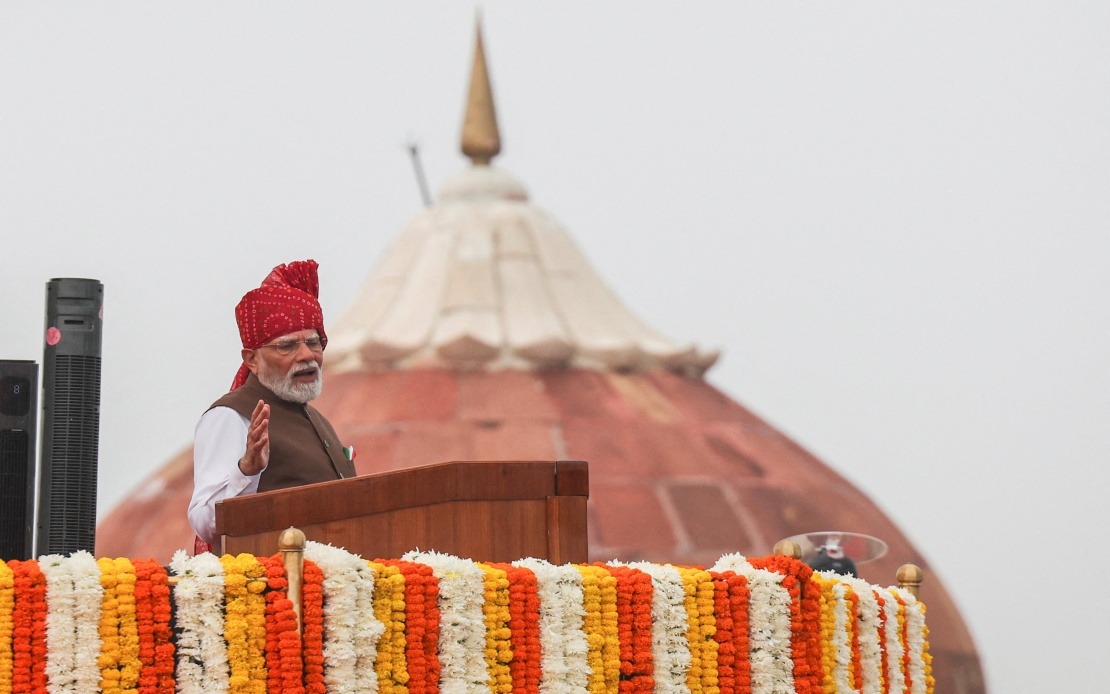
India is embarking on a transformative journey towards economic self-sufficiency and developed-nation status by 2047, Prime Minister Narendra Modi declared during his Independence Day address from the Red Fort in Delhi. The comprehensive vision articulated by Modi encompasses strategic sectors critical to India's long-term prosperity: advanced defence manufacturing, semiconductor production, nuclear energy, and renewable power generation. This push for domestic capability development represents a significant shift in India's economic strategy, emphasising local production and technological mastery over import dependency.
India's semiconductor ambitions form a cornerstone of this self-reliance initiative. Modi highlighted that three semiconductor fabrication plants have already commenced operations, with projections indicating another five to eight facilities will become operational within the next seven to eight years. This expansion of domestic chip-making capacity carries profound implications for the entire Asia-Pacific region, where semiconductor supply chains have become increasingly critical to national security and economic competitiveness. For Malaysian businesses and investors, India's semiconductor push could reshape regional manufacturing dynamics and create new collaboration opportunities in the electronics and technology sectors.
Nuclear energy represents another pillar of India's energy security strategy. The government aims to achieve 100 gigawatts of nuclear capacity by 2047, a substantial increase from current levels. Modi emphasised that India intends to commission five new nuclear reactors during the current decade and has recently achieved a significant technological breakthrough by mastering fast-breeder reactor technology. This accomplishment enhances India's capacity for fuel self-sufficiency, reducing its dependence on international uranium supplies and positioning the country as a more autonomous player in global nuclear energy markets.
Renewable energy development has already demonstrated remarkable progress under Modi's tenure. India's solar power capacity has surged dramatically from two gigawatts to 160 gigawatts over the past 12 years, reflecting a sustained commitment to clean energy transition. This exponential growth in renewable capacity not only supports India's environmental objectives but also illustrates the technological and industrial capabilities the nation has developed in green energy sectors. The trajectory suggests India is becoming a significant player in renewable technology manufacturing and installation, potentially influencing regional energy transition patterns across Southeast Asia.
Energy exploration and development beyond renewable sources also feature prominently in Modi's vision. India has allocated 850 billion rupees, equivalent to approximately US$8.9 billion, for offshore oil and gas exploration in areas that Modi characterised as previously inaccessible or economically unviable. This substantial investment in hydrocarbon exploration demonstrates India's multi-faceted approach to energy security, balancing renewable development with traditional energy sources to meet the nation's massive and growing power demands during its transition period.
Defence manufacturing capabilities represent a critical element of India's self-reliance agenda. Modi specifically highlighted the development and production of domestically manufactured military technologies including unmanned aerial vehicles, counter-drone systems, and hypersonic defence technologies. This emphasis on indigenous defence manufacturing responds to India's strategic vulnerabilities and its commitment to reducing military equipment imports. For the Southeast Asian region, India's growing defence capabilities have implications for regional security dynamics and the balance of power in the Indian Ocean and beyond.
Central to Modi's philosophy is a call for behavioural change among Indian consumers and businesses. He urged Indians to prioritise domestically produced goods, acknowledging that while imported products might be cheaper or more readily available, purchasing local manufactures builds national technological capabilities and tests domestic industrial strength. This message extends beyond simple economic nationalism; it reflects a broader conviction that true national development requires developing competitive local industries capable of meeting international standards without permanent protection from foreign competition.
The self-reliance framework outlined by Modi addresses a fundamental challenge facing India's development trajectory. Rapid economic growth has been accompanied by increased import dependency across critical sectors, creating vulnerabilities in supply chains and foreign exchange sustainability. By deliberately investing in domestic capabilities across semiconductors, nuclear technology, renewable energy, and defence manufacturing, India aims to create a more resilient and self-contained economic structure. This approach resonates with broader trends across Asia, where countries increasingly seek to reduce external dependencies and build sovereign technological capabilities.
For Malaysia and other Southeast Asian nations, India's self-reliance drive presents both opportunities and competitive challenges. Indian companies developing expertise in semiconductors, renewable energy technology, and defence manufacturing may become formidable regional competitors. Simultaneously, partnerships with Indian firms in these sectors could offer Malaysian companies access to growing markets and complementary technologies. The 2047 vision suggests India is preparing for a very long-term restructuring of its economy, implying sustained policy commitment and substantial capital allocation to these sectors over the next two decades.
The announcement also reflects India's strategic ambitions within the global system. By achieving technological self-sufficiency in semiconductors, nuclear energy, and advanced manufacturing, India positions itself to participate more fully in global supply chains as a producer rather than primarily as a consumer. This transition has implications for global trade patterns, technology standards, and geopolitical influence. India's ability to succeed in this endeavour will significantly influence its trajectory as a global power and its role within regional and international institutions.
Modi's vision ultimately hinges on sustained execution across multiple fronts. Transforming India's industrial base requires not only capital investment but also technological innovation, skilled workforce development, and institutional reforms. The timeline extending to 2047 provides sufficient duration for gradual implementation, yet also underscores the magnitude of transformation required. As India pursues this ambitious agenda, the international community, particularly neighbouring nations in Asia, will watch closely to assess whether India can successfully transition from import-dependent development to capability-driven growth while maintaining economic stability and competitive advantage.

