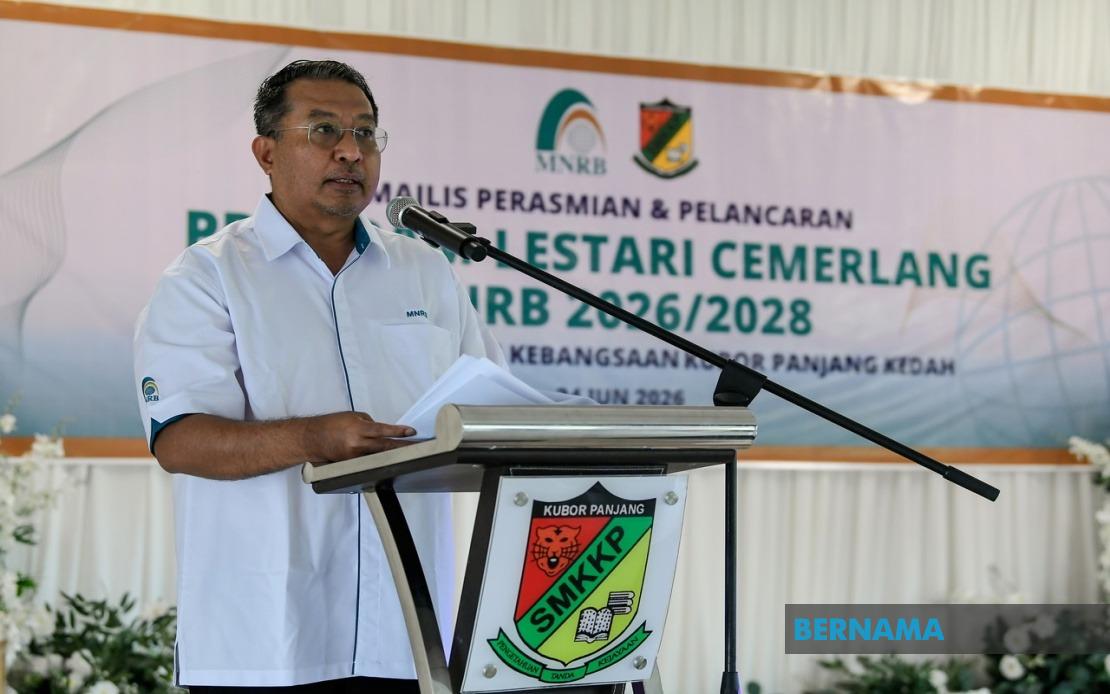
MNRB Holdings Berhad, a major investment holding company, has committed nearly RM600,000 to strengthen educational outcomes across six schools nationwide, marking the latest expansion of its long-standing corporate social responsibility effort. The Lestari Cemerlang Programme, officially launched at Sekolah Menengah Kebangsaan Kubor Panjang in Pendang, Kedah today, represents a comprehensive approach to school development that extends beyond conventional charitable giving to encompass sustained institutional partnerships.
Datuk Rudy Rodzila Che Lamin, MNRB's interim president and group chief executive officer, characterised the adopted school initiative as a cornerstone of the company's community engagement strategy since its inception in 2011. The programme deliberately targets schools in underserved communities, recognising that rural educational institutions often lack adequate resources for comprehensive student development. Rather than treating education support as a one-off donation, MNRB has positioned itself as a long-term partner invested in measurable improvements across multiple dimensions of school performance.
The scope of intervention extends well beyond financial transfers. MNRB has introduced supplementary academic support including intensive remedial classes targeting Form Five students preparing for critical national examinations. These initiatives address a persistent challenge in the Malaysian education system where disparities in school resources create unequal preparation opportunities. The company has additionally organised motivational camps designed to foster resilience and aspiration among students, recognising that psychological and social factors significantly influence academic trajectories. Complementing these student-focused programmes, MNRB has invested in infrastructure upgrades including the MNRB Smart e-Learning Room, outfitted with interactive smart television technology and broadband connectivity to facilitate digital learning methodologies.
The expansion to SMK Kubor Panjang marks the sixth school incorporated into the programme, with previous partnerships established in schools across Perak, Pahang, Negeri Sembilan, Melaka and Selangor. This geographic spread demonstrates a deliberate strategy to build institutional presence across multiple states while concentrating resources intensively within each partnership rather than diffusing efforts across numerous institutions. The Kedah state Education Department, represented by deputy director Ishak Awang at today's ceremony, has formally endorsed the partnership, suggesting alignment between MNRB's objectives and state-level educational priorities.
Beyond classroom support, MNRB has addressed tangible barriers to student participation in extracurricular activities. The sponsorship of sports jerseys removes financial obstacles that prevent talented students from economically disadvantaged backgrounds from participating in competitive sports programmes. Simultaneously, a school greening initiative promotes environmental awareness while enhancing campus aesthetics and potentially improving the psychological learning environment. These interventions reflect understanding that holistic student development requires addressing practical constraints alongside academic instruction.
A particularly significant component involves the Tabung Biasiswa MNRB, which provides tertiary education scholarships to high-performing students from adopted schools pursuing qualifications in fields aligned with MNRB's business operations. Hazlina Hazani, the group's chief people officer, disclosed that five SMK Kubor Panjang students have been selected as initial recipients, eligible for sponsorship through diploma, bachelor's and master's level qualifications. This scholarship framework creates pathways for talented youth from rural backgrounds to access higher education otherwise constrained by family financial circumstances.
The scholarship initiative has demonstrated tangible employment outcomes that distinguish it from purely philanthropic interventions. Fourteen students from previously adopted schools have received sponsorship through the fund, with eight subsequently securing employment positions within the MNRB organisation itself. This employment outcome represents more than charitable impact—it constitutes workforce development that benefits both graduates and the employing company. For the students, guaranteed employment prospects upon graduation significantly enhance motivation and reduce anxiety about post-qualification labour market placement. For MNRB, the arrangement creates a pipeline of employees whose academic excellence has been pre-screened and whose educational background ensures familiarity with the company's values and operational environment.
The Tabung Biasiswa MNRB specifically prioritises students pursuing qualifications in insurance, takaful and finance—sectors directly related to MNRB's core business activities. This targeted approach differs strategically from generic scholarship distribution. Rather than supporting students across all academic disciplines, MNRB concentrates resources on developing specialised human capital relevant to its operations, effectively converting educational investment into human resource development. This alignment between scholarship focus and business needs creates sustainability incentives that encourage long-term programme maintenance.
The initiative carries particular significance within Malaysia's contemporary educational landscape. Regional disparities in school resources remain pronounced, with rural institutions frequently disadvantaged relative to urban counterparts in terms of infrastructure, qualified teaching staff and exposure to technological learning tools. MNRB's structured partnership model offers one private sector approach to addressing these inequities without relying exclusively on government budget expansion. The company's thirteen-year programme history demonstrates commitment extending beyond trend-driven corporate social responsibility, suggesting institutional commitment to sustained engagement.
For students in beneficiary schools, the programme creates multiple reinforcing advantages. Improved learning facilities enhance educational quality directly. Motivational interventions and character development programmes address psychological factors influencing academic success. Scholarship pathways eliminate financial barriers to tertiary education. Employment placement opportunities provide concrete career prospects. Cumulatively, these interconnected interventions substantially alter life trajectories for participating individuals, particularly those from families lacking tertiary education experience or professional networks.
The expansion to six schools reflects growing corporate recognition that sustainable competitive advantage increasingly depends on talent development rather than solely on capital accumulation or operational efficiency. By investing in educational excellence in rural Malaysian communities, MNRB simultaneously develops future employee candidates, builds brand reputation and contributes to national human capital. This alignment of corporate interest with social benefit creates conditions for programme durability that pure charity often lacks.
Looking forward, the Lestari Cemerlang Programme's continuation and potential further expansion will depend on MNRB's assessment of return on investment measured both in business outcomes and social impact. The employment placement data—suggesting eight of fourteen scholarship recipients now working within MNRB—indicates the company perceives tangible value in the initiative. For Malaysian policymakers monitoring private sector education engagement, the MNRB model provides evidence of how structured corporate-school partnerships can extend educational opportunity to underserved communities when aligned with legitimate business development objectives.