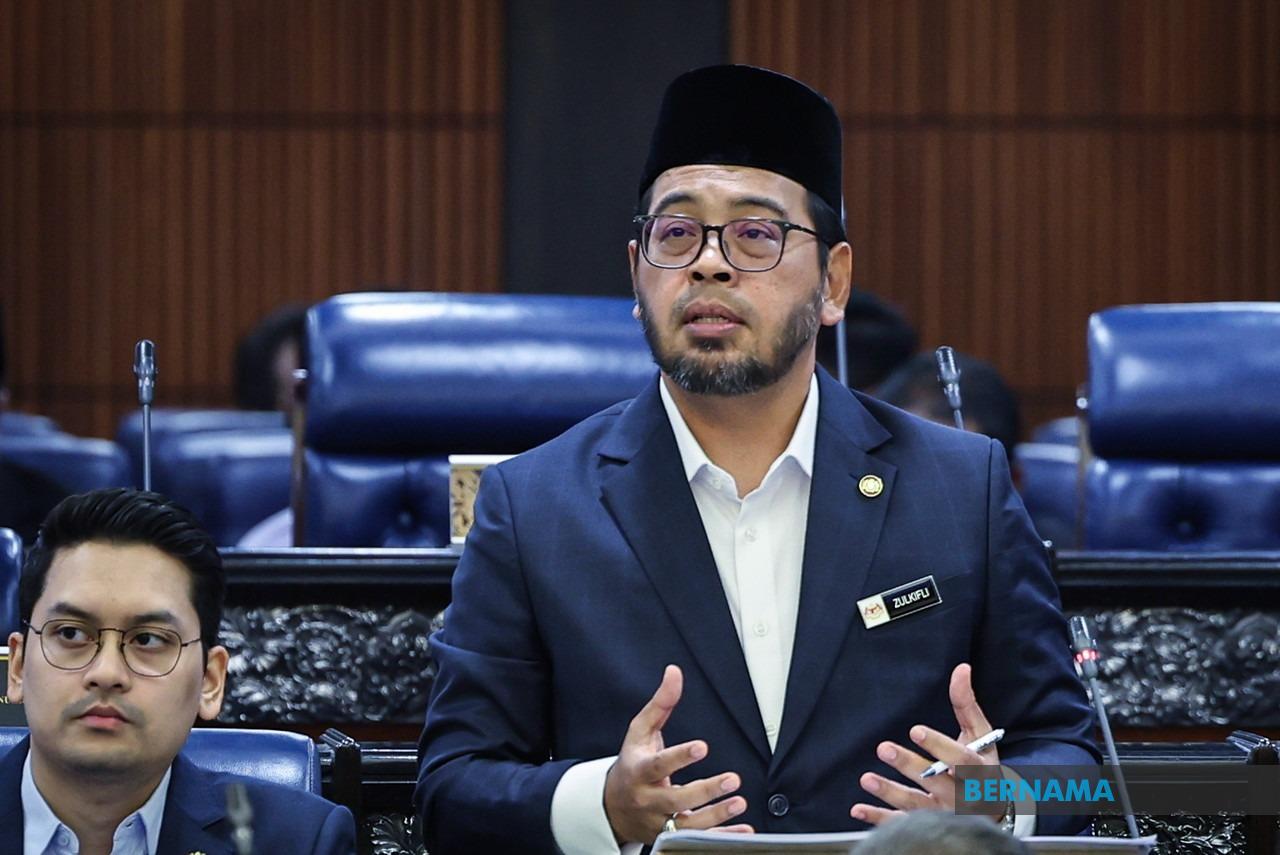
Religious Affairs Minister Dr Zulkifli Hasan painted a stark picture of Tabung Haji's financial misconduct during parliamentary debates on the Royal Commission of Inquiry findings, employing the everyday example of a single mother named Mak Cik Senah to illustrate how one of Malaysia's most important Islamic institutions had deceived depositors and regulators alike. His analogy captured the fundamental dishonesty at the heart of the scandal: while depositors appeared to receive healthy returns on their savings, the institution was quietly becoming insolvent through a sophisticated scheme of asset inflation and creative accounting that violated Malaysian law.
The minister explained that Tabung Haji's managers had artificially inflated the value of assets on paper to create an illusion of profitability and justify the distribution of dividends to account holders. In reality, the fund's true position was the reverse—its liabilities consistently exceeded its legitimate assets, meaning every dividend payment violated the Tabung Haji Act's core requirement that an institution can only distribute profits when its assets exceed its debts and obligations. This fundamental legal principle, though straightforward, had been systematically breached for years under the watch of fund management and oversight bodies.
Zulkifli drew a parallel to fraudulent schemes familiar to Malaysian audiences, describing the arrangement as comparable to a Ponzi scheme or the infamous Skim Pak Man Telo. In such arrangements, early investors receive returns not from genuine profits but from money contributed by newer participants or, in Tabung Haji's case, from fictitious asset valuations. The dividends paid to depositors were essentially funded by invisible money—valuations that existed only on spreadsheets rather than in legitimate assets. This characterization carries particular weight given Tabung Haji's status as a revered institution managing the savings of millions of Muslim Malaysians, many of whom regard their deposits as both financial security and part of their religious obligations.
The manipulation centred on a valuation method called Realisable Asset Value, or RAV, which was conducted outside the fund's audited financial statements. By using this approach, Tabung Haji's asset values appeared substantially higher than they actually were, creating the false impression of financial health. The scheme also involved changes to impairment policies and the application of what Zulkifli termed creative accounting—practices that violated Malaysian Financial Reporting Standards and prevented accurate reporting of the institution's true financial condition. These weren't accidental errors or differences of opinion among accountants; they were deliberate mechanisms designed to obscure deteriorating finances.
The extent of this deception became apparent through investigations by major auditing firms. PricewaterhouseCoopers, which conducted a comprehensive review in 2018, discovered that of RM4.6 billion in total assets claimed by Tabung Haji, only RM556 million had been assessed by professional valuers. This meant that approximately 88 per cent of the reported asset base lacked proper professional valuation, allowing managers to assign inflated values to holdings without credible justification. The audit firm's findings directly contradicted claims made by fund management about the institution's financial position, providing documentary evidence of the manipulation that would eventually trigger the RCI investigation.
Zulkifli took particular care to clarify the role of Ernst & Young, an audit firm often mentioned in connection with Tabung Haji, emphasizing that it had not served as the fund's auditor and had not been responsible for asset valuations. Instead, Ernst & Young was only engaged to review pro forma statements that Tabung Haji itself had prepared. This distinction matters because it establishes accountability: the responsibility for producing misleading financial information rested squarely with Tabung Haji's management and its primary auditor, not with peripheral review firms. The finding that PwC's 2018 report independently confirmed the manipulation underscored that this was not a matter of disputed accounting interpretation but a deliberate falsification of records.
The consequences of this misconduct extended far beyond the balance sheet. By continuing to distribute profits despite widening deficits between assets and liabilities, Tabung Haji's leadership directly jeopardized the institution's financial sustainability and threatened the security of deposits held by millions of Malaysians. Many of these depositors were ordinary working people—labourers, small traders, civil servants—who had entrusted their savings to Tabung Haji with the understanding that their money would be safeguarded and professionally managed. The breach of this trust represented not merely a financial crime but a betrayal of the confidence that Muslim Malaysians had placed in an institution positioned as a guardian of their religious and economic interests.
The government's response involved injecting more than RM10 billion into Tabung Haji to prevent the institution's collapse and protect depositors' savings. This extraordinary bail-out, while necessary to prevent catastrophic losses for millions of citizens, represented a massive transfer of public resources from the federal budget. Zulkifli used this figure to underscore the opportunity cost of the misconduct: those RM10 billion could have funded the construction of dozens or even hundreds of hospitals, schools, mosques, and other critical public infrastructure that communities desperately need. The bail-out thus imposed an invisible tax on Malaysian society, redirecting funds that might have addressed pressing social needs toward rescuing an institution that had been brought to financial ruin through deliberate malfeasance.
The case of Tabung Haji illuminates broader governance challenges within Malaysian institutions, particularly those managing collective assets held in trust by millions of ordinary Malaysians. The scandal reveals how inadequate oversight, weak audit mechanisms, and insufficient segregation of duties among managers and board members can permit sustained financial manipulation. The concentration of decision-making power in hands of individuals willing to bend rules created an environment where asset inflation and creative accounting could flourish for years before detection. These systemic vulnerabilities extended beyond Tabung Haji and raised uncomfortable questions about governance in other statutory bodies and large fund-managing institutions across Malaysia.
The RCI's findings and Zulkifli's parliamentary exposition represent a pivotal moment for accountability and reform. The minister's choice to use a simple, resonant analogy rather than technical jargon reflected an intention to communicate the seriousness of the breach to ordinary Malaysians whose life savings had been placed at risk. By comparing the situation to Mak Cik Senah—a figure representing countless ordinary Malaysians struggling to make ends meet—Zulkifli emphasized that this was not an abstract financial scandal but a direct assault on the economic security of vulnerable citizens. The parallel also highlighted the moral dimension of the misconduct: those responsible had effectively stolen from people who could least afford the loss.
Moving forward, the Tabung Haji case will likely serve as a catalyst for tighter regulatory oversight, enhanced audit standards for fund-managing institutions, and potentially criminal prosecutions of individuals responsible for the financial manipulation. For Malaysian depositors and the broader public, the scandal underscores the importance of vigilant monitoring of institutions entrusted with collective assets, particularly those serving disadvantaged or vulnerable populations. The lesson extends to Southeast Asia more broadly, where numerous countries rely on similar fund-management structures for retirement savings, religious endowments, and social security: inadequate governance in such institutions imposes costs far beyond the immediate financial harm, undermining public trust in essential social and financial systems.
Zulkifli's intervention in parliamentary debate, coupled with the RCI's detailed findings, marks a crucial step in ensuring accountability for the misconduct that brought Tabung Haji to the brink of collapse. Yet the resolution of this crisis remains incomplete: the full implications for institutional reform, regulatory enhancement, and personal accountability have yet to fully materialize. For millions of Malaysians whose savings remain tied to Tabung Haji's recovery, the challenge now lies in transforming the findings and rhetoric of accountability into concrete changes that restore confidence in the institution and prevent similar scandals from occurring within Malaysia's ecosystem of fund-managing bodies.

