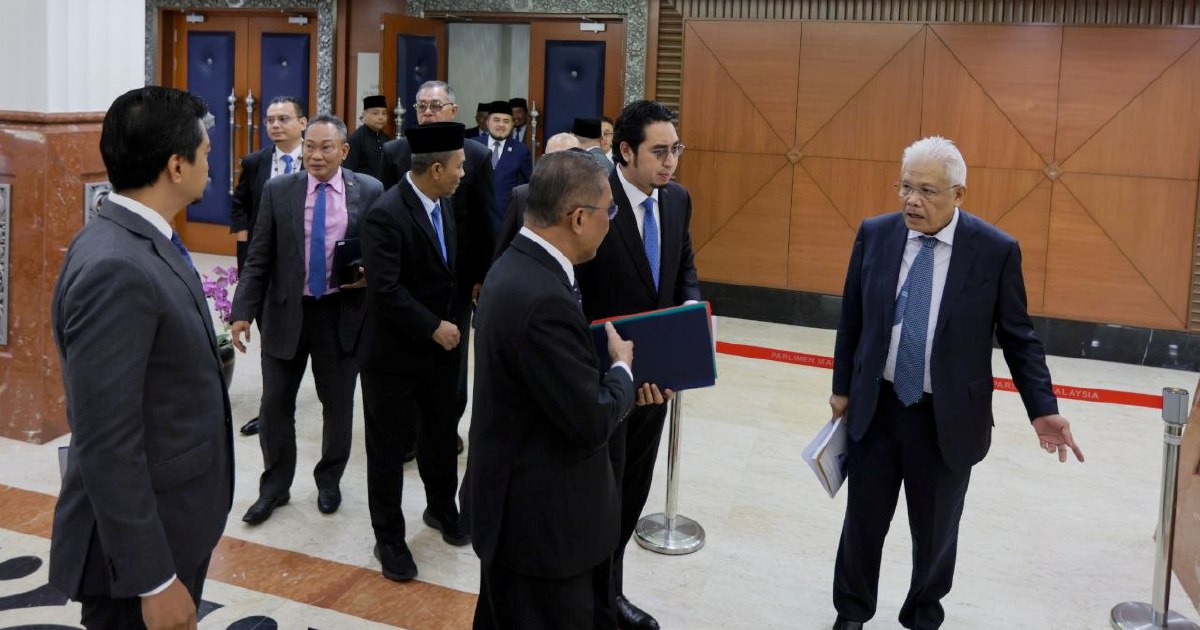
Religious Affairs Minister Dr Zulkifli Hasan has extended a call to opposition parliamentarians to return to the legislative chamber and participate in substantive debate surrounding the highly anticipated Royal Commission of Inquiry report on Tabung Haji, Malaysia's pilgrimage savings fund.
The appeal underscores growing pressure within government circles to ensure comprehensive parliamentary scrutiny of the RCI's conclusions regarding the embattled religious institution. Tabung Haji, which manages savings from millions of Malaysian Muslims preparing for the annual Hajj pilgrimage to Mecca, has faced mounting public concern over financial management and operational transparency in recent years. The RCI investigation was established to examine governance lapses and identify systemic weaknesses within the organisation.
Dr Zulkifli's invitation to the opposition reflects a recognition that the Tabung Haji matter transcends partisan politics and requires serious, cross-party examination in Parliament. The religious affairs minister's position in the Prime Minister's Department positions him as a key figure in managing this institutional crisis and restoring public confidence in one of Malaysia's most sacred financial institutions. His plea suggests that the government values input from all quarters of Parliament rather than attempting to manage the controversy through a government-dominated parliamentary process.
The Royal Commission of Inquiry represents a significant undertaking, presumably examining years of operational history, financial flows, and administrative decisions. Its findings are expected to carry substantial weight in determining whether criminal charges should be pursued, whether administrative reforms are necessary, and how best to restore the fund's integrity. The sensitivity of these matters—touching as they do on Islamic finance, public trust, and religious sensibilities—makes broad parliamentary engagement particularly important for legitimising any subsequent reforms or disciplinary actions.
Opposition participation in the forthcoming debate would likely bring additional scrutiny to the RCI's methodology, findings, and recommendations. Opposition MPs typically employ parliamentary questions and debate contributions to probe governmental explanations and propose alternative courses of action. Their involvement could strengthen the legislative process by ensuring multiple perspectives are considered and that potential solutions undergo rigorous testing against different ideological and practical frameworks.
Tabung Haji's challenges have generated considerable anxiety among its members, many of whom depend on the fund to support their spiritual obligations. The institution manages funds belonging to millions of Malaysians, making any mismanagement or governance failure a matter of direct concern to the public. Transparent parliamentary debate offers an opportunity to demonstrate to account holders that their concerns are being taken seriously and that systemic problems are being identified and addressed comprehensively.
The timing of this call for opposition participation also reflects the broader Malaysian political environment, where parliamentary cooperation across party lines remains rare but increasingly necessary for addressing large institutional matters. With various political coalitions holding fluctuating parliamentary positions, building consensus around major policy responses requires deliberate efforts to secure opposition backing, or at minimum, to prevent opposition boycotts that might undermine the legitimacy of parliamentary outcomes.
The RCI's investigation into Tabung Haji follows years of public criticism regarding the fund's investment decisions, financial performance relative to market benchmarks, and administrative competence. Previous concerns have included questions about board governance, executive compensation, and the prudence of high-risk investment strategies. The inquiry's mandate likely extended to examining whether regulatory oversight mechanisms functioned adequately and whether appropriate accountability frameworks existed to identify and prevent mismanagement.
In inviting opposition MPs to engage in the debate, Dr Zulkifli implicitly acknowledges that Parliament functions most effectively when major institutional matters receive examination and scrutiny from multiple perspectives. Democratic legitimacy for significant decisions—particularly those affecting millions of ordinary Malaysians—depends partly on visibility and cross-party participation in the legislative process. Opposition parties, regardless of their likelihood of forming government, retain an important role in questioning executive action and demanding transparency.
The forthcoming parliamentary debate will likely explore whether the RCI recommendations require legislative amendments, whether current Tabung Haji governance structures need restructuring, and what disciplinary or legal consequences should follow from any findings of institutional malfeasance. These are questions that benefit from broad parliamentary consideration rather than narrow government-controlled processes, particularly given public anxiety about the fund's management and widespread desire for reform.
Successful engagement with opposition parties on the Tabung Haji RCI matter could establish a useful precedent for handling other significant institutional crises in ways that command broader political legitimacy. It also signals that government is confident in the RCI's work and believes its findings can withstand vigorous parliamentary questioning—a message that may help restore public confidence in both the inquiry process and subsequent institutional reforms.

