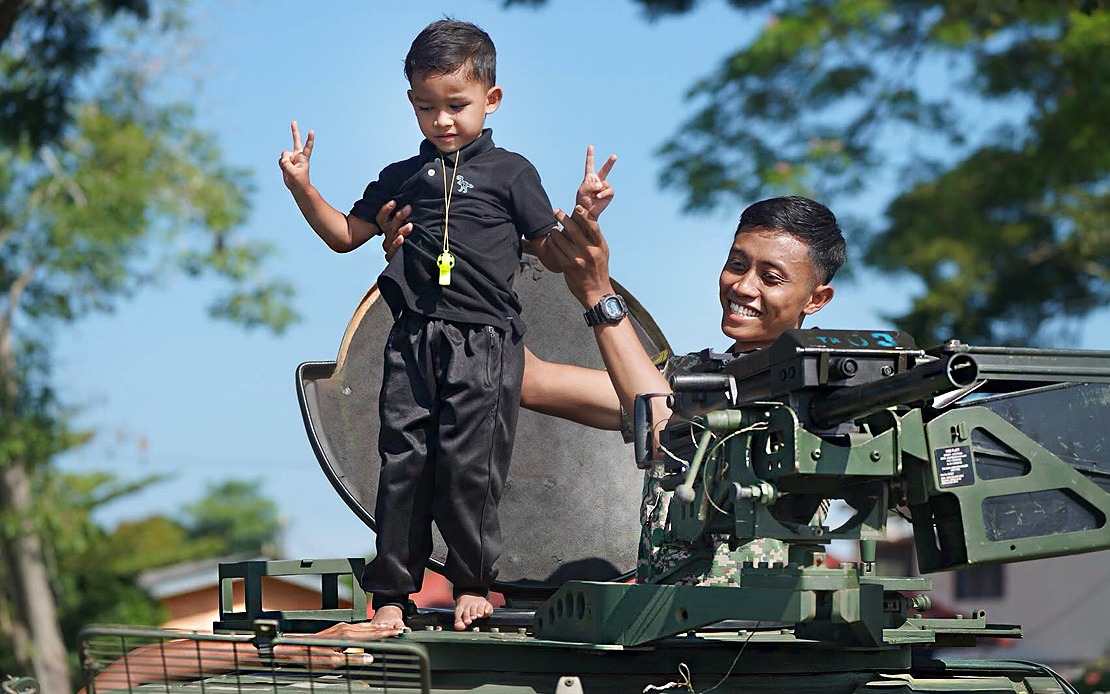
Malaysia's Defence Ministry has intensified efforts to build lasting relationships with local communities in Alor Gajah, rolling out a comprehensive welfare initiative that combines practical assistance with spiritual and social engagement. The 'Program Jiwa Murni MADANI' (PJM), launched at Padang Awam Kampung Gadek, represents a strategic approach to bridging the gap between the Malaysian Armed Forces and civilian populations, reinforcing what MINDEF characterises as civil-military cooperation through direct community participation.
The initiative reflects a deliberate shift in how Malaysia's defence establishment engages beyond traditional military functions. Rather than maintaining a distant posture, the programme positions MINDEF and the armed forces as active stakeholders in local development and welfare provision. This approach carries particular significance in a Malaysian context where building cohesive, inclusive communities remains a stated policy priority. By embedding the military in civilian welfare activities, the government aims to foster broader institutional legitimacy and demonstrate defence spending's tangible value to ordinary citizens.
The scope of activities unveiled in Alor Gajah indicates the breadth of this engagement strategy. Free medical screenings provided basic healthcare access to residents who might otherwise face barriers in seeking preventive services. Simultaneously, career and volunteer exhibitions offered pathways for community members to explore employment opportunities, while entrepreneurship sessions targeted those seeking business development guidance. The inclusion of RAHMAH Sales, referring to government-subsidised food initiatives, and sports competitions ensured that the programme addressed both economic pressures facing households and recreation needs often neglected in smaller municipalities.
Concrete infrastructure improvements underscore MINDEF's commitment to lasting change rather than symbolic gestures. The 9th Squadron of the Royal Engineers Regiment (9 SKN RAJD) undertook five distinct projects valued at RM179,200 across the district. These encompassed playground repairs in Kampung Baru, fence reconstruction at Sekolah Jenis Kebangsaan (Tamil) Durian Tunggal, futsal court improvements in Taman Seri Kelemak, roof work at Madrasah Seri Kemuning, and repairs to Surau Madrasah Khairiah. Such projects, targeting educational institutions, recreational spaces, and religious facilities, acknowledge that community welfare extends beyond immediate material needs to include spaces where social cohesion develops.
Deputy Defence Minister Adly Zahari's presentation of RM133,000 in Service Centre Initiative grants distributed support across eight recipients, reflecting careful consideration of diverse community constituencies. The grants targeted religious organisations including multiple suraus, demonstrating alignment with the Muslim-majority population's institutional needs. Simultaneously, grants to temple and shrine associations—Chee Sen Ting Temple Association in Machap Baru and Kuan Yen Shrine Association in Batang Pondok—extended the programme's inclusive reach across Malaysia's religious communities. Educational institutions such as SJKT Batang Melaka received support specifically for GreenLab development, signalling emphasis on contemporary learning environments addressing environmental awareness.
The distribution of 500 RAHMAH baskets to MAF veterans' associations and local residents carries particular significance for Malaysia's defence establishment. Veterans' welfare remains a contentious issue in Malaysian military circles, with ongoing debates about adequacy of pension and support systems. By directing RAHMAH assistance toward veterans' associations, MINDEF simultaneously addressed immediate economic hardship while reinforcing institutional care for those who served. This dual gesture potentially strengthens loyalty within military ranks while demonstrating to current service personnel that post-service welfare receives government attention.
Complementing the welfare programme, the Religious Corps of the Malaysian Armed Forces (KAGAT) organised the 'Program Ilmu dan Muafakat MADANI' (PIKAT) at Masjid Kelemak. This parallel initiative integrated congregational prayer, religious lectures, charitable contributions, and community engagement within explicitly Islamic frameworks. The combination of PIKAT and PJM reveals a sophisticated two-track approach: the secular programme addresses material and social needs accessible to all communities, while the religious programme deepens engagement with Muslim constituencies through spiritually-grounded activities. This bifurcated strategy acknowledges Malaysia's plural society while recognising Islam's particular institutional importance within the state apparatus.
The alignment of these initiatives with Malaysia's National Defence Strategic Plan (PSPN) 2026-2030, specifically Core 4 focusing on civil-military relations, indicates this represents not ad-hoc charity but systematic policy implementation. MINDEF's framing emphasises that strengthening community welfare and civil-military cooperation constitute integral components of national defence strategy. This conceptualisation expands defence beyond traditional security domains, positioning social cohesion, institutional legitimacy, and civilian-military trust as defence imperatives. For Malaysia, where concerns about polarisation and institutional confidence intermittently surface, such integration carries strategic weight.
For Alor Gajah residents, the immediate benefits are tangible: improved infrastructure, accessible healthcare, economic assistance, and enhanced recreational facilities. Yet the programme's significance extends beyond Malacca. As MINDEF replicates PJM and PIKAT across Malaysia's districts, cumulative effects could reshape how citizens perceive the defence establishment's role in civilian life. This represents calculated institutional repositioning—transforming the armed forces from entities primarily associated with security threats and emergency deployments into organisations recognised for community development contributions.
The initiative also addresses persistent challenges in Malaysian local governance. Municipal resources in smaller districts like Alor Gajah often prove insufficient for comprehensive infrastructure maintenance and community service provision. By deploying military engineering resources and defence ministry funding, the programme compensates for local capacity constraints while generating visible improvements that enhance government credibility. This approach proves especially valuable in constituencies where opposition sentiment runs strong, as tangible development benefits can shift perceptions of state performance regardless of partisan allegiances.
Looking forward, the sustainability of such programmes depends on consistent resource allocation and institutional commitment beyond individual initiatives. If MINDEF sustains PJM and PIKAT implementation across Malaysia's local authorities, cumulative community engagement could meaningfully reshape civil-military relations. Conversely, if these programmes remain sporadic or resource-constrained, they risk being perceived as electoral activities rather than systemic policy shifts. For Southeast Asian observers, Malaysia's defence ministry approach offers instructive lessons in how military institutions can reposition themselves as development actors, particularly in contexts where civil-military trust requires deliberate reconstruction.

