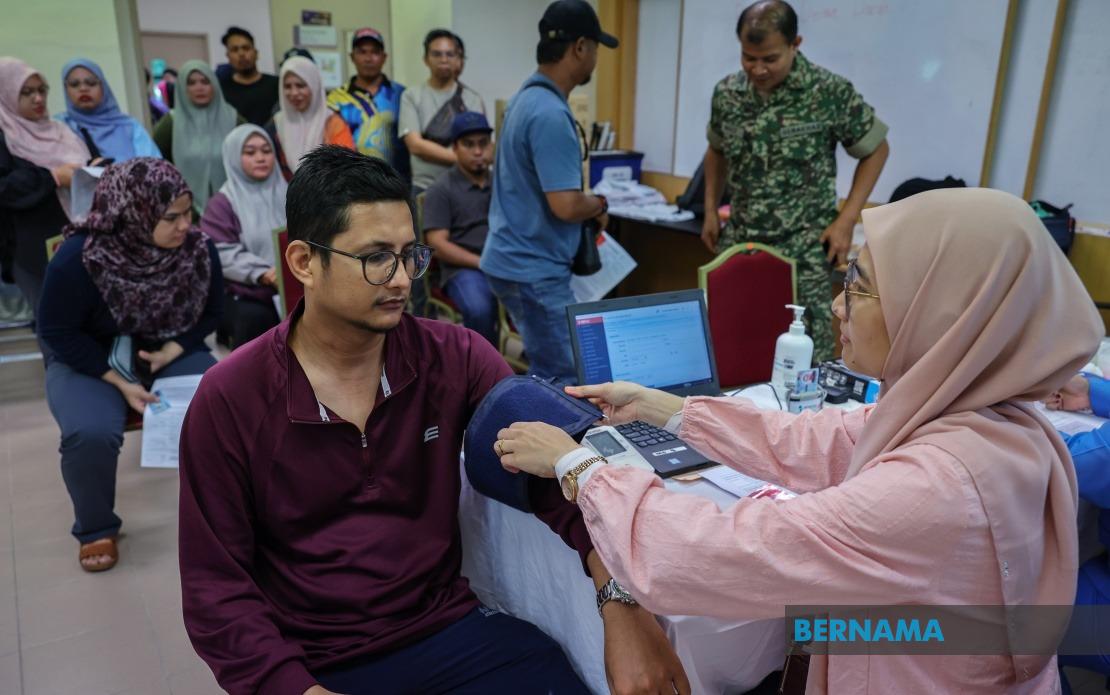
Malaysia's armed forces brought comprehensive healthcare services directly to residents of Baling district this week through a Civil-Military Cooperation (CIMIC) programme called 'Military with the People', demonstrating an evolving approach to civil-military engagement that extends beyond traditional defence roles. The two-day initiative, held at Sultan Abdul Halim Mu'adzam Shah International Islamic University (UniSHAMS) in Kuala Ketil, coincided with the completion of the Basic Commando Course (Series AK/1/26) and featured medical support from the Royal Medical Corps alongside cooperation with civilian health authorities.
The programme represents a strategic shift in how Malaysia's military institutions prioritise community outreach and public health collaboration. By establishing Medical Community Assistance Programme (MEDCAP) and Dental Community Assistance Programme (DENCAP) centres at the university campus, organisers created an accessible gateway for residents who might otherwise face barriers to basic healthcare in rural settings. The initiative also underscored growing recognition within the military establishment that strengthening public trust requires visible, tangible contributions to civilian wellbeing—a particularly important consideration in regions like Baling, where access to specialist dental and preventive health services remains limited.
Resonance with the community was immediate and substantial. Factory worker Siti Salmiah Said, 28, described how she utilised her day off to bring her entire family for dental examinations, receiving scaling treatment for herself and a filling for her six-year-old child without the customary delays associated with civilian dental clinics. Her account reflects a broader pattern observed throughout the programme: residents appreciated not merely the cost savings, but the elimination of appointment scheduling friction that typically consumes time and administrative effort. This efficiency advantage carries particular significance for working families in smaller towns where dental surgeries operate limited hours and maintain lengthy waiting lists.
Legal assistant Adam Ruzlan, 26, highlighted an additional dimension—the educational component embedded within clinical care. Military dental officers provided immediate treatment alongside oral health counselling, explaining specific dental conditions and establishing preventive care routines in ways that extended the value of individual consultations beyond the immediate intervention. Such patient education efforts help address broader public health literacy gaps in communities where professional health guidance may be sparse. For Ruzlan, receiving tartar and decay assessments alongside treatment recommendations transformed a simple check-up into a more comprehensive health engagement.
Factory worker G. Devindran, 37, drew an instructive comparison between this initiative and military health outreach he recalled from nearly three decades prior. His observation that current services demonstrated enhanced speed and improved equipment reflects genuine advances in how institutional healthcare delivery has evolved. Beyond dental services, Devindran underwent comprehensive metabolic screening—blood pressure, blood glucose, and body mass index assessments—enabling early identification of potential cardiovascular or metabolic risk factors. Such preventive screening capacity, when delivered accessibly to working-age adults, constitutes meaningful disease prevention infrastructure.
The responsiveness demonstrated by military medical personnel to acute situations further validated the programme's value. When a young attendee experienced dizziness and nausea during the event, Civil Defence Force personnel rapidly transported the child to the MEDCAP tent, where military staff conducted systematic vital sign monitoring before providing appropriate pharmaceutical intervention. Housewife Norhasliza Nayan, 44, whose son received this prompt attention, explicitly praised the efficiency and advocated for similar health initiatives at other large-scale community events. Her endorsement carries weight because it emerged from direct experience with emergency response under field conditions—precisely the scenario where institutional competence becomes most apparent.
The dental services framework, as explained by Capt. Dr Muhammad Afiq Ishak from the 2nd Medical Battalion, maintained rigorous clinical standards despite the field setting. Practitioners focused on foundational interventions—scaling, fillings, and extractions—while maintaining appropriate gatekeeping protocols. Patients requiring advanced care were referred to established dental clinics, preventing scope creep that might compromise quality. This tiered approach allowed the military to extend maximum benefit to patients with routine needs while ensuring that complex cases received specialist attention through civilian networks. The emphasis on oral health awareness promotion alongside treatment delivery indicated recognition that sustainable health improvement requires behavioural modification alongside clinical intervention.
Lt Dr Atiff Abdul Aziz, Medical Officer at the Special Warfare Training Centre, clarified the governance structure underpinning the initiative. Formal coordination between the Ministry of Health, through the Baling District Health Office, and the military ensured alignment with national health priorities rather than ad-hoc provision. The Baling District Health Office contributed general health screening and mental health awareness programming, addressing the increasing public health priority of psychological wellbeing and mental health stigma reduction. This institutional cooperation model demonstrates how military capabilities and civilian public health infrastructure can be orchestrated toward complementary objectives.
The blood donation component added another significant dimension to community health impact. Sultan Abdul Halim Hospital in Sungai Petani managed collection operations throughout the programme, targeting approximately 100 blood units daily to strengthen regional transfusion supplies. Blood shortage represents a critical constraint on emergency medical capacity throughout Malaysia, particularly in rural regions where donation centres are geographically distant. The 'Military with the People' programme thereby contributed to essential clinical infrastructure while engaging community members in voluntary contribution to public health.
For Malaysia's security establishment and healthcare system, this initiative illustrates emerging best practices in civil-military cooperation. Rather than positioning military medical assets as secondary or emergency-only resources, strategic deployment to civilian communities during peacetime generates mutual benefit: armed forces personnel gain practical field experience and community visibility, while civilian populations access healthcare services that might otherwise remain inaccessible. This approach proves especially valuable in regions like Baling, where economic constraints and geographic factors limit private healthcare availability.
The programme's success suggests potential for expansion across similar communities throughout Malaysia, particularly in interior areas and economically disadvantaged regions where specialist healthcare access remains limited. Replication would require sustained commitment from both defence and health ministries to resource planning and scheduling. Additionally, scaling such initiatives demands clarification of liability frameworks, quality assurance protocols, and performance metrics to ensure consistency across multiple deployments.
From a broader Southeast Asian perspective, Malaysia's CIMIC healthcare model offers a template worthy of regional study. As countries throughout the region grapple with healthcare access disparities between urban and rural populations, military institution engagement in civilian health delivery presents cost-effective alternatives to expanding traditional healthcare infrastructure. However, sustainable success depends upon maintaining professional standards, transparent governance, and genuine commitment to public health objectives rather than military public relations objectives.

