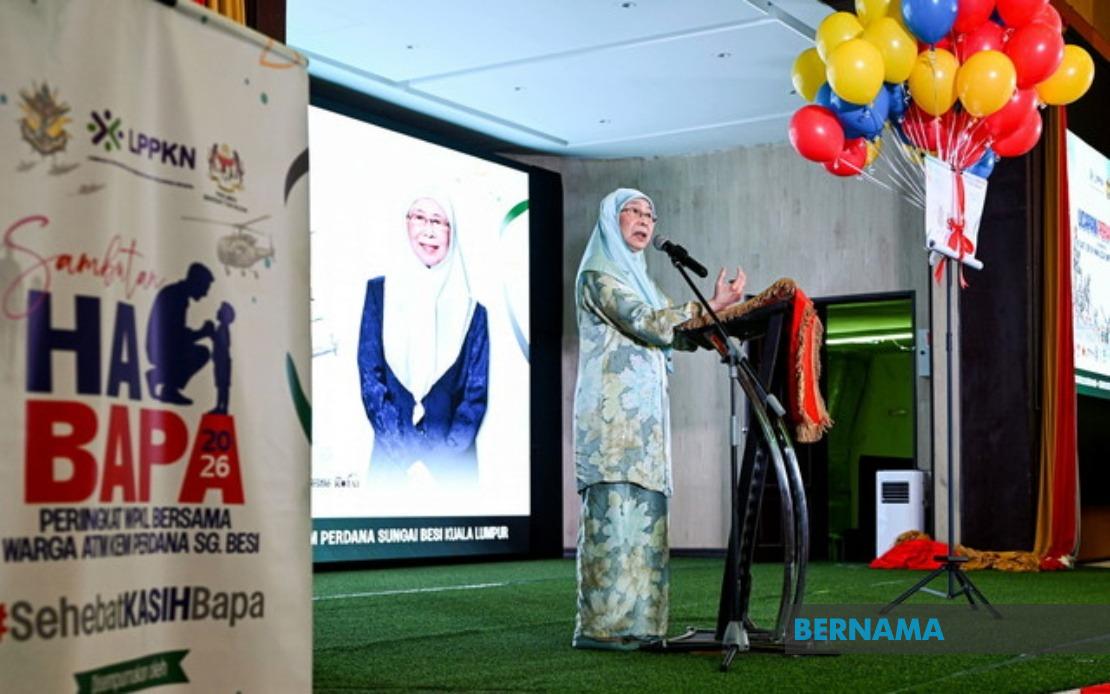
The Prime Minister's wife, Datuk Seri Dr Wan Azizah Wan Ismail, has underscored the critical need to continue supporting and empowering fathers serving in the Malaysian Armed Forces, recognising both their dual responsibilities to family and nation. Speaking at an official event in Kuala Lumpur, the Bandar Tun Razak Member of Parliament emphasised that military personnel who are fathers deserve targeted assistance to manage the unique challenges posed by their profession, which frequently demands extended separations from their families during operational duties and deployments.
Dr Wan Azizah stressed that comprehensive backing for these service members must extend beyond symbolic gestures to include concrete policy frameworks and institutional support systems. She specifically highlighted the National Family Compassion Policy, known locally as DKKN, as a mechanism designed to equip military fathers with the resources and flexibility needed to maintain meaningful family connections despite the demands of defending national sovereignty. The policy represents an acknowledgment that military service, while essential for national security, places considerable strain on the family structures of those who sacrifice their time and presence for the greater good.
The emphasis on strengthening the institution of the family through targeted support for fathers reflects a broader recognition that masculine engagement in parenting and household leadership yields significant social benefits. Dr Wan Azizah articulated the view that fathers themselves require empowerment—not merely passive appreciation—to fulfil their roles as primary architects of family stability and cultural transmission. This perspective acknowledges the evolving understanding of paternal responsibility in contemporary Malaysian society, moving beyond traditional narratives to embrace active, engaged fatherhood as essential to national wellbeing.
Dr Wan Azizah further elaborated on the importance of cultivating awareness regarding the multifaceted role fathers play as foundational pillars within family units. She called for concerted efforts to shift societal perceptions and expectations, ensuring that military fathers receive recognition not only for their patriotic service but also for their contributions to household management and child development. This dual recognition is particularly crucial given the heightened stakes involved when service members balance national duty with parental obligation.
The occasion was marked by a commemorative gathering held in the Federal Territory of Kuala Lumpur, themed 'Sehebat KASIH Bapa', which brought together approximately 500 attendees including military personnel, their spouses, children, and representatives from various government organisations. The event was jointly organised by the National Population and Family Development Board, known as LPPKN, and the Malaysian Armed Forces, demonstrating institutional commitment to addressing the welfare concerns of military families. The gathering served as both a celebration of paternal dedication and a platform for discussing practical support mechanisms.
The National Population and Family Development Board has developed several concrete initiatives aimed at fortifying support networks for fathers across Malaysian society, with particular application to military personnel. Among these programmes is the Fatherhood Module, a structured educational framework designed to enhance parenting competencies and equip fathers with contemporary evidence-based approaches to child-rearing and family leadership. Such modules address the specific challenges that military fathers encounter, including managing emotional distances, preparing children for extended absences, and maintaining household stability during operational periods.
Another flagship initiative is the Men Empowerment Network, abbreviated as MEN, which functions as a peer-support and knowledge-sharing platform for male family members across diverse occupational backgrounds. This network recognises that fathers benefit from community and collective learning, particularly when navigating sector-specific challenges. For military fathers, such networks can facilitate exchange of experiences, coping strategies, and practical solutions developed by peers facing analogous circumstances. The existence of these formal support structures signals institutional recognition that paternal wellbeing directly influences family stability and, by extension, the operational readiness and psychological resilience of service members.
The Malaysian context makes this discourse particularly salient, as the country maintains substantial military commitments both domestically and regionally, requiring continuous deployment of personnel across the Indian Ocean region and beyond. Military families in Malaysia have historically absorbed significant personal costs associated with national defence, often without commensurate public recognition or institutional support. The initiatives championed by Dr Wan Azizah and LPPKN represent attempts to redress this imbalance by placing military paternal welfare within broader national conversations about family policy and social support.
Regionally, Malaysia's approach reflects wider Southeast Asian trends recognising the intersection between military readiness and family wellbeing. Countries throughout the region have increasingly acknowledged that servicemembers operating under optimal personal and familial conditions demonstrate superior morale, retention rates, and psychological adjustment. The integration of family-focused policies into military personnel management thus serves dual purposes: enhancing the human welfare of those who serve while simultaneously strengthening institutional effectiveness through improved personnel stability and commitment.
Looking forward, the sustained emphasis on empowering military fathers suggests that Malaysian policymakers view this domain as requiring continued attention and resource allocation. As the country navigates security challenges in an increasingly complex regional environment, ensuring that military personnel maintain psychological equilibrium and family stability becomes strategically important. Dr Wan Azizah's remarks, delivered by someone in close proximity to the highest political authority, signal that family-centred military support is not a peripheral concern but rather an integral component of comprehensive national security architecture.

