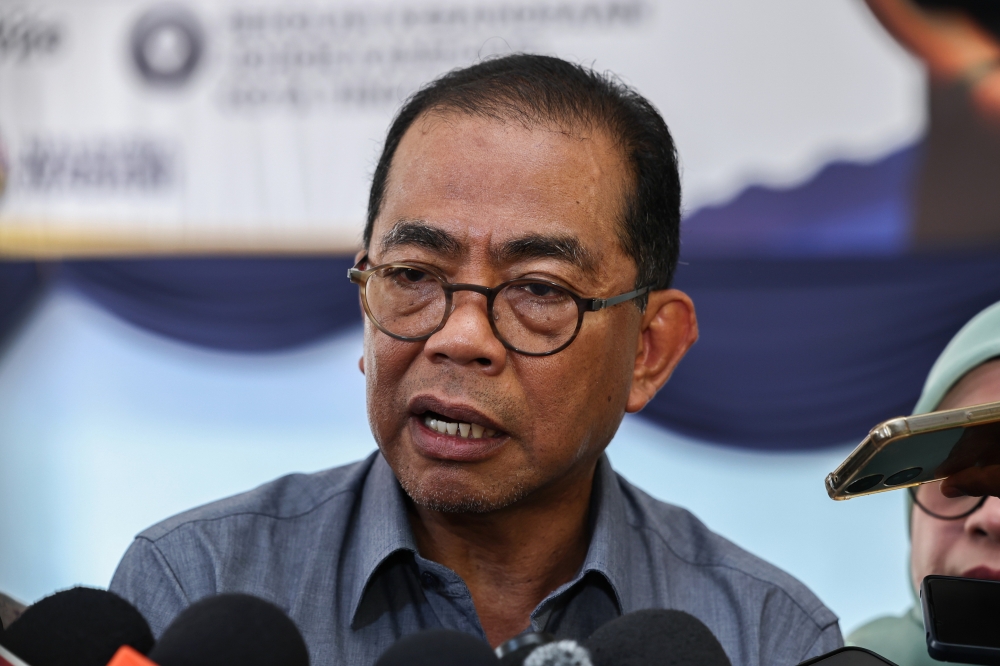
Defence Minister Datuk Seri Khaled Nordin has clarified that the Malaysian Armed Forces maintain the constitutional authority to undertake military exercises and training operations within state jurisdictions without requiring prior approval from state rulers. The statement, delivered in Parliament on July 16, addresses a longstanding question about the interplay between federal military powers and the institutional position of state monarchies under Malaysia's constitutional framework.
Khaled Nordin's pronouncement reflects the federal structure embedded within Malaysia's constitutional architecture, whereby defence and national security matters fall squarely within federal jurisdiction rather than state purview. The Defence Ministry's position aligns with Articles 73 and 74 of the Federal Constitution, which delineate the division of legislative powers between Parliament and state assemblies. Military affairs, including the deployment and movement of armed forces, are enumerated federal matters, placing them outside the scope of state authority—even where state rulers traditionally exercise ceremonial or advisory roles.
The clarification carries significant operational implications for the Malaysian Armed Forces, which oversees diverse training programmes across the peninsula, Sabah, and Sarawak. Regular military exercises, ranging from joint army-navy operations to emergency preparedness drills, constitute essential components of military readiness and inter-service coordination. Without the ability to conduct these exercises unimpeded by state-level administrative requirements, the military's capacity to maintain operational standards and respond to national security contingencies could face unnecessary constraints.
However, the distinction between constitutional authority and diplomatic practice warrants careful consideration. While the Defence Ministry's legal position appears sound, the relationship between the federal government and state rulers in Malaysia has historically been characterised by consultation and respect for ceremonial protocols. State rulers, as constitutional heads of state and custodians of Islamic affairs within their territories, command significant cultural and constitutional standing. The practical implementation of military exercises often involves coordination with state governments regarding land use, infrastructure access, and public safety measures—dimensions where engagement with state authorities remains customary and prudent.
This clarification may reflect an attempt to resolve ambiguities that have occasionally surfaced in civil-military relations within particular states. Some state administrations have periodically questioned the notification procedures or scope of federal military activities conducted within their boundaries, particularly when such operations involved significant resource deployment or occupied public spaces. The Defence Ministry's explicit assertion of federal authority appears designed to preempt future disputes by establishing clear constitutional precedent.
For Malaysia's states—particularly those with more assertive state governments or rulers with strong institutional profiles—the statement represents a reassertion of federal primacy in security and defence matters. This dynamic reflects the inherent tension within Malaysia's federal system, where substantive power concentrates at the federal level whilst states retain significant constitutional and ceremonial roles. Sabah and Sarawak, which possess greater autonomy under the Malaysia Agreement 1963, may view such pronouncements with particular interest, given the distinct constitutional arrangements governing these states.
The timing of Khaled Nordin's parliamentary statement may also signal the Defence Ministry's intent to clarify operational procedures following specific incidents or disputes that prompted parliamentary questioning. Parliamentary scrutiny of defence and security matters has intensified in recent years as legislators from various constituencies raise concerns about military activities, environmental impacts, or civilian coordination. By providing explicit constitutional guidance, the Defence Ministry seeks to anchor its authority in established constitutional doctrine rather than engage in case-by-case negotiation with individual state rulers or governments.
Southeast Asian security observers will note that this assertion of centralised military authority reflects patterns evident across the region. Nations such as Indonesia, Thailand, and the Philippines similarly maintain federal or national frameworks governing military operations, though the political salience and constitutional nuances differ significantly across these systems. In Malaysia's context, the statement reinforces the primacy of federal institutions in matters of national defence whilst acknowledging, implicitly, that coordination mechanisms with state authorities remain administratively necessary and constitutionally appropriate.
The clarification does not eliminate the importance of consultation and coordination between federal defence authorities and state administrations on practical matters. Military exercises often require coordination regarding road access, accommodation arrangements, and public notification procedures. State governments' role in local administration and public order means that effective military operations depend on cooperative relationships, even where legal authority rests unambiguously with the federal government. The Defence Ministry's assertion of constitutional authority should thus be understood as establishing the legal foundation for independent action, not as a licence to disregard state-level administrative considerations or the ceremonial roles of state rulers.
Looking forward, this statement likely aims to streamline military operational procedures and reduce administrative friction in conducting national defence activities. As Malaysia's security environment continues to evolve—encompassing maritime security concerns, transnational terrorism threats, and regional geopolitical developments—the Defence Ministry requires unambiguous authority to deploy and exercise military assets swiftly and comprehensively. Khaled Nordin's clarification thus represents both a constitutional reaffirmation and a practical assertion of federal efficiency in defence matters, establishing clear parameters for military autonomy whilst maintaining the broader constitutional framework that defines federal-state relations in Malaysia.

